English
Views: 388 Author: Site Editor Publish Time: 2026-04-10 Origin: Site


When people first hear about ESD Shoes, they often think they are just another type of work shoe. In reality, they are a very important part of static control in many professional environments. From electronics manufacturing to cleanrooms and industrial assembly lines, these shoes help reduce the risk caused by electrostatic discharge and support a safer, more stable workplace.
Many buyers also search for terms like esd safety shoes, Anti static shoes, and esd shoes for ladies. In most business and product contexts, these keywords are used in a similar way to describe footwear designed for static control and workplace protection. For beginners, the most important question is simple: how do ESD shoes actually work, and why are they necessary?
The answer starts with understanding static electricity. Every day, people generate static charges just by walking, moving, or working with certain materials. In normal life, that might only cause a small spark or mild shock. But in a factory, laboratory, or electronics workshop, that same small discharge can damage components, affect product quality, attract dust, or create unnecessary safety risks. That is why ESD footwear has become such an important solution.
This beginner-friendly guide explains how ESD shoes work, what materials make them effective, where they are commonly used, and what to consider when choosing the right pair.
Static electricity is easy to ignore because it often feels harmless. A tiny spark from touching a metal handle may be annoying, but it usually does not seem dangerous. In professional work environments, however, static buildup can become a serious issue.
In electronics production, a small electrostatic discharge can damage circuit boards, semiconductors, chips, and other sensitive parts. In cleanrooms, static can attract particles and dust, which may affect cleanliness and product consistency. In some industrial settings, reducing static is also part of maintaining safer day-to-day operations.
For this reason, companies that work with precision equipment, sensitive materials, or controlled production environments often use ESD Shoes as part of their overall protection system.
Static damage does not always cause visible failure right away. Sometimes the product still appears to work, but the discharge weakens its reliability. That hidden damage may only appear later, after installation or customer use.
product defects
rework and production delays
higher replacement costs
customer complaints
reduced brand trust
For beginners, this is one of the most important reasons to understand anti static footwear. It is not only about comfort or compliance. It is about protecting work quality from the ground up.

The main function of ESD Shoes is to control the buildup and release of static electricity on the human body. Rather than allowing static charges to accumulate and discharge suddenly, the shoes help guide that charge safely away.
This means the shoe acts like part of a controlled pathway between the worker and the floor. When designed properly, it reduces the chance of sudden electrostatic discharge by allowing electricity to pass through the shoe in a managed way.
Many Anti static shoes are also built to support daily workplace demands. Depending on the model, they may include slip resistance, oil resistance, protective toe caps, anti-puncture soles, breathable uppers, and ergonomic support.
People sometimes assume these shoes only protect products. In fact, many esd safety shoes are built to support both product safety and worker safety at the same time.
static dissipation
foot protection
workplace grip
long-hour comfort
clean production requirements
That combination is one reason why ESD footwear is used in so many industries.
To explain how they work, think about what happens when a person walks. Friction is created between the shoe sole and the floor. Clothing, movement, packaging, and surrounding materials can also contribute to static generation. If the charge remains on the body, it can build up over time.
Eventually, that charge needs somewhere to go. If the person touches a grounded metal object or a sensitive component, the electricity may discharge all at once. That sudden event is what ESD footwear is designed to reduce.
ESD Shoes work by using materials that allow electrical charges to move through the sole and down into the floor in a controlled way. This helps prevent the body from storing excess static electricity.
A beginner mistake is to imagine the shoe as something that acts like exposed metal. That is not how it works. The goal is not instant conductivity with no control. The goal is safe and gradual dissipation.
prevent sudden sparks
reduce charge accumulation
support stable performance
keep the footwear practical for daily work
This is why material selection and construction quality matter so much in anti static footwear.
The performance of Anti static shoes depends heavily on the materials used in the upper, sole, insole, and internal construction. Good ESD footwear is carefully designed so the static charge can travel through the shoe structure efficiently and safely.
Some models use specialized outsoles made with static-dissipative compounds. Others combine this with conductive stitching, insoles, or interior layers that improve overall performance.
The sole is one of the most important parts of any ESD shoe because it connects directly with the walking surface. If the sole does not support controlled dissipation, the shoe may not perform well.
stable anti static performance
good contact with the floor
slip resistance
wear resistance
comfort during long shifts
The upper part of many esd safety shoes is made from leather or durable synthetic materials. These materials are chosen not only for durability, but also for daily comfort and workplace suitability.
In industrial settings, leather uppers remain popular because they are strong, supportive, and long-lasting.
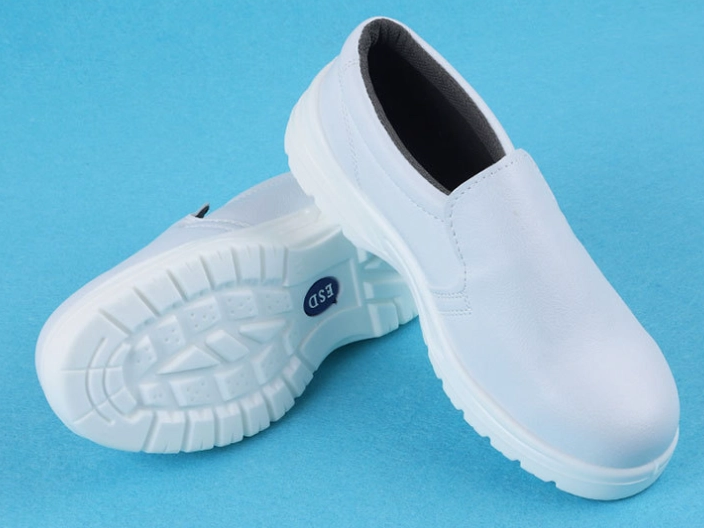
Even the best ESD shoes do not work alone. They perform best when paired with suitable flooring. The shoe and floor work together to create the path that static electricity follows.
If the floor surface does not support dissipation, the shoe cannot perform at its full potential. That is why many factories, cleanrooms, and electronics workshops use ESD floors, mats, or grounded surfaces as part of a complete system.
This allows charge to move from the shoe into the ground more effectively.
These reduce the chance of charge buildup on tables, tools, and equipment.
Clothing also affects electrostatic control, especially in clean environments.
Sensitive components need protection during storage and transport as well.
For beginners, this is an important point: ESD Shoes are highly effective, but they are strongest when used as part of a complete anti static solution.
One reason so many buyers search for esd safety shoes is that these products fit a wide range of workplaces. They are not limited to one industry.
Workers handling circuit boards, chips, and electronic devices need reliable static control every day. Footwear is one of the easiest ways to reduce risk during movement and routine operations.
In semiconductor environments, static control is extremely important. Even a very small discharge can cause costly problems.
Controlled environments often use Anti static shoes to help reduce particle attraction and maintain cleaner production conditions.
Labs working with precision devices, medical products, or technical materials often choose anti static footwear as part of standard PPE.
In workshops where workers need static control plus physical foot protection, esd safety shoes are often the preferred choice.
Warehouses storing or handling electronic goods also benefit from proper anti static footwear, especially where packaging and movement are frequent.
For beginners, the word “safety” in esd safety shoes usually means the shoes include additional protective functions beyond static control. That makes them especially useful in practical work environments where employees need more than one type of protection.
These help reduce injury risk from dropped tools or heavy objects.
Useful in environments where sharp objects may be present.
Important for factory floors, workshops, and warehouses.
Helpful in workplaces where the ground may be exposed to lubricants or light industrial oils.
This combination of anti static performance and physical safety is one reason these shoes are so widely used by manufacturers and industrial buyers.
Technical performance is critical, but comfort should never be overlooked. Workers often wear these shoes for many hours a day. If the shoe feels too heavy, too stiff, or badly fitted, the overall user experience will suffer.
Comfort matters because it affects how consistently the footwear is worn and how well workers can perform their tasks.
foot fatigue
discomfort during long shifts
poor walking posture
resistance to wearing PPE properly
That is also why more buyers now pay attention to style and fit options, including specialized products such as esd shoes for ladies.
Different users need different fits. Women working in electronics, laboratories, and factories often need footwear designed around better shape, sizing, and weight balance. Well-designed esd shoes for ladies help improve both comfort and professional appearance without sacrificing anti static performance.
Beginners often ask what they should look for when buying their first pair. The answer depends on the workplace, but several key factors apply in most cases.
A cleanroom, electronics line, and warehouse may all need anti static footwear, but not necessarily the same model. The correct shoe should match the real daily conditions.
Good ESD Shoes should feel durable and well-made. Buyers should pay attention to sole quality, upper material, stitching, fit, and overall finish.
If the workplace includes impact risk, puncture risk, or slippery floors, then esd safety shoes with added protection features are usually a better choice.
Even if the anti static performance is strong, uncomfortable shoes will not deliver the best long-term results.
stable walking support
practical grip
comfortable interior design
durability under daily use
a suitable fit for the wearer

People new to this topic often have very practical questions. Understanding these can make purchasing and daily use much easier.
Not exactly. Their purpose is to control static buildup and reduce the chance of harmful discharge. They help manage the charge rather than make static disappear in every possible situation.
No. Regular work shoes may offer safety features, but they are not necessarily built with the materials needed for controlled static dissipation.
No. They are also useful in cleanrooms, labs, technical warehouses, industrial plants, and other workplaces where static control matters.
Not at all. Today there are many lightweight and ergonomic styles available, including esd shoes for ladies and other comfort-focused models.
For companies, buying the right anti static footwear is not only a safety decision. It is also a quality and efficiency decision. Better shoes can help reduce product damage, support smoother workflows, and improve employee confidence.
A well-chosen pair of Anti static shoes can contribute to:
Fewer electrostatic issues during handling and assembly.
Especially when safety features are added.
Reduced hidden defects and more consistent results.
Durable footwear lowers replacement frequency and helps prevent avoidable losses.
In many workplaces, the cost of poor static control is far greater than the cost of investing in proper footwear.
The way ESD Shoes are designed and produced makes a major difference in how they perform. That is why experienced manufacturers are often the best choice for business buyers, distributors, and industrial users.
A professional supplier can usually offer:
more stable product quality
a wider range of styles
practical safety features
customization support
better understanding of workplace needs
This is especially useful for buyers who need anti static footwear for different markets, employee groups, or working conditions.
For companies looking for dependable ESD Shoes, working with an experienced manufacturer is especially important. With more than 15 years of manufacturing experience in anti static footwear, LEENOL provides high-quality solutions for factories, laboratories, cleanrooms, and industrial workplaces. Its product range includes esd safety shoes, Anti static shoes, and multiple styles such as esd shoes for ladies, helping global customers meet different workplace requirements with durable materials, practical protection, and stable anti static performance.
ESD Shoes work by helping static electricity move from the human body through the shoe and into the floor in a controlled way, reducing the chance of sudden electrostatic discharge.
In many product and search contexts, these terms are used very similarly. Both generally refer to footwear designed for static control in professional environments.
They are commonly used in electronics manufacturing, cleanrooms, laboratories, warehouses, and industrial workshops where both static control and foot protection are important.
Yes. Many manufacturers offer esd shoes for ladies with better fit, lighter designs, and comfortable construction while maintaining anti static performance.
They can still help, but they work best when used with compatible ESD flooring or a complete anti static system.