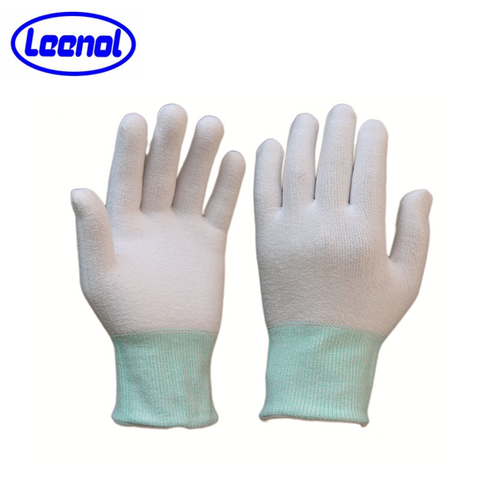
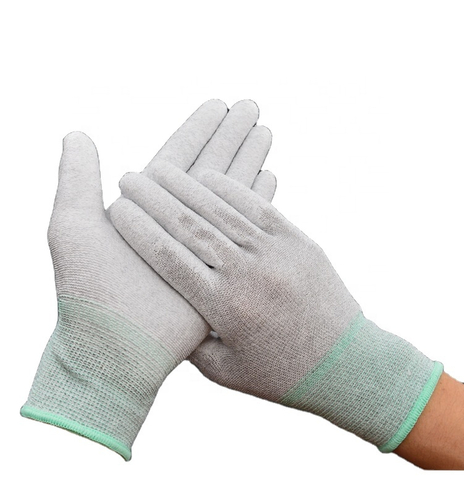
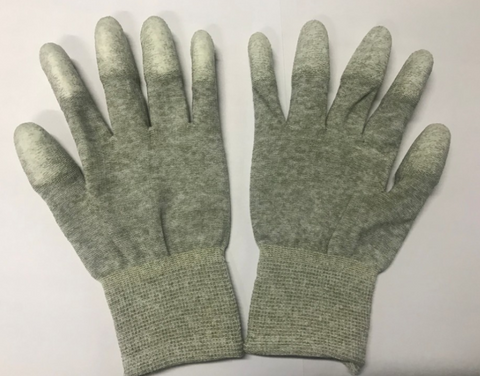
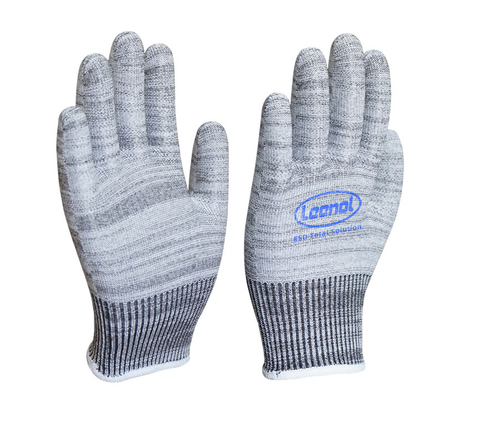
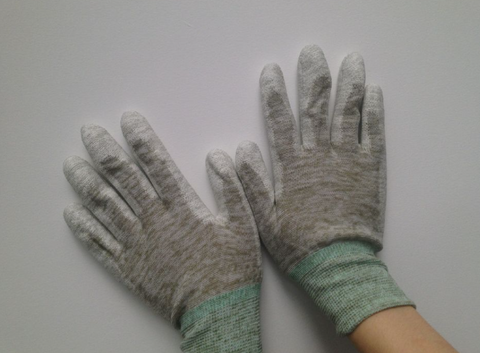
ESD gloves should be considered as mandatory safety equipment for working in most laboratory, cleanroom, biotec, and electronic works. However, ESD gloves must be used in conjunction with a grounding wrist strap in order to ensure the absolute lowest possibility of electrostatic discharge.
We stock everything from Seamless ESD Gloves, Disposable Nitrile Gloves, ESD Finger Tip Protection Gloves, PU Palm Protection Gloves – Our low-cost static dissipative glove range is the perfect solution for both EPA and Cleanroom use, each product comes with detailed features and benefits and is backed up a technical product spec sheet.
The ESD gloves are used for anti-static and clean room or workshop environments that require gloves to operate. Wearing anti-static gloves can prevent the operator's fingers from directly touching static-sensitive components, and can safely discharge the human body electrostatic charge carried by the operator. The ESD gloves are a must wear for workers in the semiconductor industry, optoelectronic industry, semiconductor manufacturing, electronic picture tube manufacturing, computer motherboard manufacturing enterprises, mobile phone manufacturing factories, etc.
ESD Gloves and Anti-Static Hand Protection for Electronics, Cleanrooms and Industrial Handling
LEENOL ESD gloves are intended for workplaces where operators must handle static-sensitive components while reducing direct hand contact and managing electrostatic charge. The category covers seamless ESD gloves, disposable nitrile gloves, fingertip protection, PU palm-protection gloves, conductive styles and cut-resistant ESD gloves. This makes the range relevant to both clean electronics operations and industrial environments where ESD control is combined with mechanical hand protection.
Why Glove Selection Is More Than an ESD Question
Hands are directly involved in component handling, so glove selection can affect static control, contamination, grip, dexterity and worker protection at the same time. LEENOL notes that ESD gloves can prevent operators' fingers from directly touching static-sensitive components and can help safely discharge electrostatic charge carried by the operator. The company also states that ESD gloves should be used together with an appropriate grounding wrist strap when personnel grounding is required.
For B2B buyers, the correct glove depends on the hazard profile. A thin conductive glove may be appropriate for PCB inspection, while a cut-resistant glove may be needed when an operator handles sheet metal or sharp component edges. Disposable nitrile gloves can address contamination or process-contact needs, but their ESD performance, thickness and cleanroom compatibility must be verified for the exact product. “ESD” should therefore be one line in the specification, not the entire specification.
Product Range and Use Cases
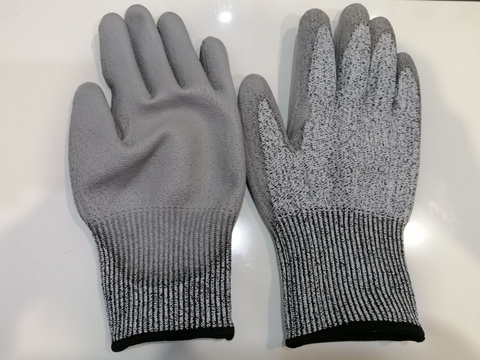
The category includes white nylon gloves with PU coating, gray carbon gloves, conductive copper-top-fit PU gloves, Class 5 cut-resistant ESD gloves, Grade D cut-resistant gloves and other protective working gloves. The listed applications include semiconductor manufacturing, optoelectronics, electronic picture tube production, computer motherboard manufacturing and mobile-phone factories. These products can also be considered for PCB assembly, component inspection, repair, material transfer and electronics warehousing.
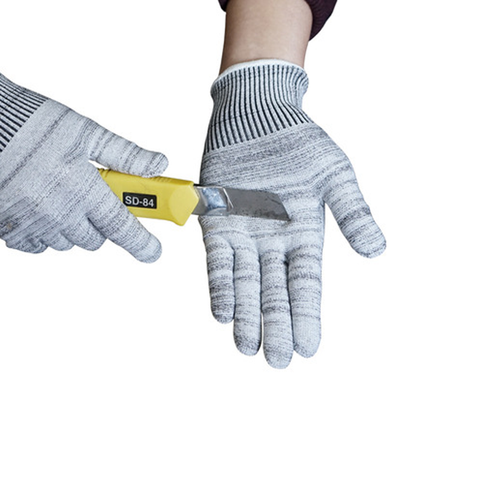
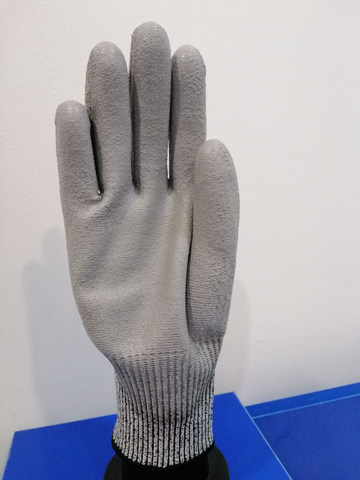
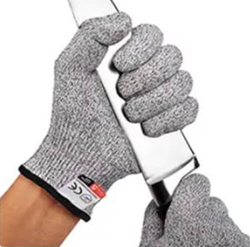
One representative product is the LEENOL HPPE Level 5 Cut Resistant Glove. It uses HPPE material, is gray, comes in S, M, L and XL, is described as breathable and anti-cut, and lists EN388 on the product page. The page does not provide the complete EN388 performance code, coating material, knitting gauge, abrasion result, tear result or puncture result, so these details should be requested before the glove is specified for a defined workplace hazard.
ESD Glove Selection Matrix
| Work condition | Potential glove type | Important procurement criteria |
|---|
| Fine electronics assembly | Seamless or thin ESD glove | Dexterity, fit, surface resistance, lint/contamination and fingertip sensitivity |
| PCB inspection and handling | ESD glove or fingertip protection | Finger coverage, touch sensitivity, static performance and cleanliness |
| Component handling with sharp edges | Cut-resistant ESD glove | Cut test method, full EN388 code, grip and dexterity |
| Cleanroom process requiring barrier protection | Disposable glove where appropriate | Material compatibility, cleanliness, powder policy and ESD performance |
| Mechanical handling inside an EPA | ESD industrial glove | Cut/abrasion resistance, coating, grip and static control |
Key Parameters for Technical Buyers
When comparing ESD gloves, specify material, coating, cuff style, size, surface or volume resistance, electrical test method, thickness, color, cleanroom classification if relevant, packaging quantity and applicable mechanical-protection standard. For cut-resistant products, include cut resistance, abrasion, tear and puncture data rather than relying only on a generic “Level 5” phrase. LEENOL's HPPE product page itself advises confirming the complete EN388 performance information for a specific hazard.
Size is another practical parameter. The HPPE glove is listed in S through XL. A correct fit is important because loose gloves can reduce control while excessively tight gloves can restrict movement. For high-volume factories, purchasing departments should define a size ratio based on actual workforce measurements and keep replenishment stock by size.
ESD Gloves and Personnel Grounding
Gloves should not be used as a substitute for personnel grounding. If the process requires a grounded operator, the glove and wrist strap should be selected as a compatible system. The glove's construction, material and cuff design can influence contact with the wrist strap. Before mass deployment, test the actual combination under the facility's ESD procedure rather than approving the two products independently.
LEENOL also offers an ESD wrist strap and grounding kit category for personnel grounding. For operators who also need a standardized uniform, the ESD clothing range can be evaluated as part of the same procurement project.
Industry Applications
Semiconductor and optoelectronic plants often require a combination of low contamination, dexterity and static control. PCB assembly lines may prioritize tactile feedback and component-safe handling. Repair departments may need gloves that allow technicians to manipulate connectors and small hardware without losing precision. Automotive electronics and industrial control manufacturers may require ESD protection together with cut resistance when metal housings or sharp components are involved.
Warehouse and logistics teams can also need protective gloves when sorting electronic assemblies or packaged components. The glove specification should follow the actual task: a static-sensitive bare PCB and a boxed metal component present different hazards. In a mixed facility, maintaining several approved glove SKUs may be more practical than forcing every employee to use one universal product.
How to Choose Between ESD and Cut Protection
| Priority | Selection approach |
|---|
| Static-sensitive electronics | Confirm ESD performance first, then optimize dexterity and contamination characteristics. |
| Sharp edges inside an EPA | Confirm the complete mechanical test result and ESD performance together. |
| Cleanroom handling | Confirm cleanliness, material, packaging and process compatibility in addition to ESD. |
| Long shifts | Prioritize correct sizing, breathability, cuff comfort and repeated-use durability. |
Customization and OEM Supply
For a customized glove program, LEENOL buyers should provide the intended operation, ESD target, mechanical hazards, required sizes, preferred material, coating, color, packaging, annual demand and destination market. If the glove will be used in a cleanroom, add the cleanroom class, acceptable materials and packaging controls. If branding is required, provide logo artwork and packaging specifications before sample approval.
For cut-resistant ESD products, ask LEENOL to confirm the current test method and complete certificate data. For electronic assembly gloves, request a sample and evaluate grip, dexterity, contamination and operator comfort on the actual production line. Send the specification through the LEENOL Contact Us page to start technical discussion and quotation.
FAQ
Can ESD gloves replace an ESD wrist strap?
No. Gloves and grounding equipment perform different roles. Where personnel grounding is required, use the approved grounding method together with compatible gloves.
What sizes are available for the LEENOL HPPE Level 5 glove?
The listed sizes are S, M, L and XL.
Is the HPPE glove suitable for chemical or heat hazards?
The current product information does not establish chemical or thermal protection. Those hazards require separate technical verification.
What should buyers request for a cut-resistant ESD glove?
Request the complete applicable mechanical test results, ESD data, material and coating information, size range, packaging and current test documentation.
 English