English
Views: 388 Author: Site Editor Publish Time: 2026-08-06 Origin: Site


When it comes to ESD clothing, the first thing many buyers look at is the garment’s appearance or its price. But experienced industrial buyers know the truth—material matters more than anything else. Whether you’re managing a production floor filled with microchips or working in a high-risk petrochemical site, the material you choose for your ESD garments determines how safe, durable, and effective your protection will be.
So, what is the best material for ESD clothing? That’s exactly what we’ll explore in this guide. We'll break down how materials affect performance, compare commonly used fabrics, explain how to evaluate them, and finally, show why the materials used in Shanghai Leenol Industrial Co., Ltd’s anti-static clothing are the smart choice for professionals who can't afford to compromise.
ESD garments are more than just uniforms. They are engineered tools that must function as a consistent barrier against static discharge. Unlike typical cotton or polyester workwear, ESD garments rely on technical fabric innovations to channel and neutralize static electricity safely and effectively.
There are two primary approaches to creating ESD fabrics:
Conductive fibers: These are embedded into the fabric, either as continuous filaments or dispersed through the weave. They often use carbon, metal, or metal-coated materials.
Conductive grids: These involve regular patterned lines of conductive yarn (usually carbon or steel) woven into the fabric to form a “grid” that provides uniform discharge pathways.
These fibers or grids act as microscopic escape routes for static charges that build up naturally on the human body. Without these channels, static can accumulate to levels as high as 25,000 volts—more than enough to damage electronics, ignite vapors, or attract contamination particles in cleanroom environments.
In addition to static control, the material determines many other performance aspects, such as:
Breathability and wearer comfort, which affects productivity
Durability, especially after repeated washing
Adaptability to high humidity, temperature, or abrasion
Appearance, which matters in cleanrooms or customer-facing environments
In short, the material is not just a layer of fabric—it’s the core of the garment’s protective function.
Different industries have different requirements, which is why ESD clothing comes in multiple material options. Let’s review three of the most widely used materials and evaluate their pros, cons, and best use cases.
This is by far the most commonly used fabric for ESD garments. The fabric is primarily polyester, blended with finely dispersed carbon filaments that form either a scattered pattern or a structured grid.
Pros:
Highly effective at discharging static electricity
Economical and widely available
Lightweight and suitable for warm environments
Resistance values typically within 10⁵ to 10⁹ ohm/cm, meeting international safety standards
Cons:
May feel less breathable compared to cotton blends
Requires proper washing techniques to maintain conductivity
Use Case:
Ideal for electronics assembly, automotive manufacturing, and general-purpose cleanroom work.
This blend uses polyester for durability and cotton for comfort. Conductive fibers are still integrated but at a lower density, making conductivity somewhat less reliable over time.
Pros:
Softer and more comfortable for long wear
Natural fiber blend offers improved moisture absorption
Better for moderate-risk environments where comfort is a priority
Cons:
Conductivity is more inconsistent
Performance may degrade faster after repeated washes
Not ideal for extremely sensitive electronic environments
Use Case:
Good for laboratories, educational institutions, or industries with occasional ESD-sensitive tasks.
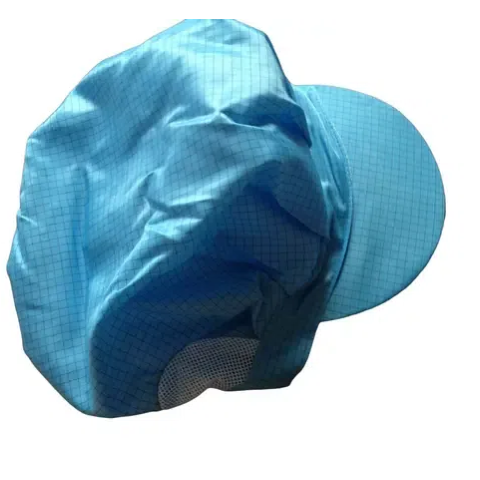
This high-performance fabric features tightly woven conductive fibers in a visible grid pattern. It is specifically designed for environments with the highest ESD sensitivity.
Pros:
Delivers superior, uniform static dissipation
Maintains properties over time and after many wash cycles
Offers the most reliable ESD protection under all conditions
Cons:
Higher cost compared to standard carbon fiber fabrics
Slightly heavier in feel, though still breathable
Use Case:
Used in semiconductor cleanrooms, defense and aerospace manufacturing, petrochemical processing, and pharmaceutical production.
Understanding these differences is key to making informed purchasing decisions. The “best” material isn’t the same for every buyer—it depends on your industry, safety requirements, and workplace conditions.
Once you know your operational environment, it’s time to evaluate the fabric itself. Here are the four most important things to consider when selecting ESD garment materials:
A good ESD fabric should have a resistance between 10⁵ and 10⁹ ohm/cm. This range is ideal for preventing sudden discharge while allowing continuous neutralization of static buildup. Always request resistance test reports from your supplier to verify performance.
Some fabrics lose conductivity after a few washes, which is unacceptable in industrial environments. Look for materials that retain at least 90% of their anti-static function after 20 or more laundering cycles. This is especially important for garments used daily.
Consider the environmental conditions your workers face. Will they be exposed to high humidity, heat, or abrasive surfaces? Polyester-carbon fabrics perform better than cotton blends under such conditions. Conductive grid fabrics excel in extreme or variable environments.
Also evaluate:
Flame resistance (for petrochemical industries)
Dust repellency (for cleanrooms)
Flexibility and comfort (for long shifts)
Trust only materials tested and certified according to IEC 61340 or similar ESD safety standards. Many manufacturers claim anti-static properties, but only those with verifiable certification can guarantee compliance.
At Leenol, every batch of ESD fabric undergoes internal testing and third-party verification to ensure consistent resistivity and performance stability.
At Shanghai Leenol Industrial Co., Ltd, we don’t settle for average. Our ESD clothing materials are selected and engineered for optimal static control, durability, and comfort. Here’s why our customers trust us:
Tightly woven conductive fibers: Whether it’s grid-based or filament-dispersed, our fabrics ensure that every square centimeter contributes to safe charge dissipation.
Consistent performance regardless of environment: Our materials are unaffected by humidity, temperature, or daily wear-and-tear. They’re made to last—and perform.
Tailored for industry-specific needs: We provide different fabric types for electronics, petrochemical, pharmaceutical, and aerospace clients—because each sector has unique safety needs.
Tested, trusted, and certified: Every material we offer has passed IEC 61340 and other relevant certifications, and many of our customers report extremely high satisfaction and reorder rates.
We also support OEM and custom fabric development for enterprises with specialized ESD protection needs.
In the world of ESD clothing, material selection is more than a technical detail—it’s the foundation of performance. Choosing the wrong fabric may mean inconsistent protection, quicker wear-out, or even non-compliance with industry regulations.
When safety, reliability, and comfort matter, the material makes all the difference. Whether you’re managing sensitive electronics, flammable compounds, or sterile pharmaceutical environments, selecting the right fabric ensures your team stays protected every step of the way.
At Shanghai Leenol Industrial Co., Ltd, we help businesses like yours make the right material choice from the start.
Still comparing fabrics? Contact us today for expert consultation and request samples of our industry-grade ESD materials. Make your next purchase an informed, safe, and smart investment.