English
Views: 0 Author: Site Editor Publish Time: 2025-11-28 Origin: Site


Electrostatic discharge (ESD) control is essential in modern electronic manufacturing, automotive assembly, cleanroom environments, laboratories, and the pharmaceutical industry. Among all ESD control devices, ESD shoes are one of the simplest and most effective ways to dissipate static charge and protect sensitive components. Yet many workers and purchasing managers still ask the same question: How do I identify ESD-rated footwear and avoid buying the wrong product?
This detailed guide explains the exact standards, labels, materials, construction features, test methods, industry applications, and emerging trends to help you confidently identify authentic ESD shoes. Whether you're comparing esd shoe specifications, analyzing esd shoes mens vs. esd shoes womens styles, or choosing reliable esd shoes women’s options for cleanroom teams, this article provides everything you need.
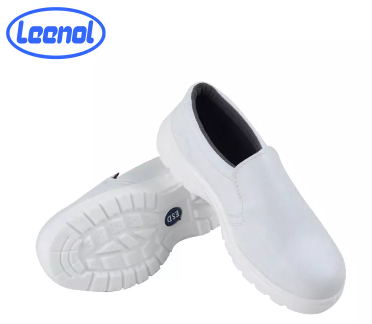
ESD shoes are specialized safety footwear designed to dissipate static electricity from the wearer’s body to the ground. Their purpose is to maintain a controlled low-resistance path to prevent electrostatic buildup that can damage microelectronics, ignite flammable chemicals, or interfere with sensitive instruments.
Prevent PCB and semiconductor damage
Reduce production line defects
Protect workers and equipment
Maintain compliance with ESD standards
Improve safety in laboratories and pharmaceutical cleanrooms
Industries where ESD shoes are commonly required:
| Industry | Reason ESD Shoes Are Needed |
|---|---|
| Electronic manufacturing | Protects ICs, PCBs, and microchips from ESD damage |
| Automotive manufacturing | Protects sensors, circuit boards, modules |
| Laboratories | Controls electrostatic interference |
| Pharmaceutical industry | Necessary for sterile, contamination-controlled workspaces |
All these workplaces rely heavily on anti-static solutions, especially ESD shoes, to maintain safe production environments.
To identify real ESD shoes, you must inspect five critical indicators:
Look for ESD symbols and labels
Verify resistance ratings (100 kΩ – 100 MΩ standard range)
Check sole materials engineered for static control
Inspect construction for conductive threads and inserts
Confirm compliance with global standards (EN 61340, ANSI, ASTM)
Below is a deep breakdown of each point.
Authentic ESD shoes will always carry recognizable ESD symbols. This is the simplest way to identify them.
Yellow ESD protected symbol (hand with sparks)
“ESD” printed on tongue, heel, or interior tag
Label with resistance rating (Ω symbol)
Standard compliance code (EN ISO 20345 / EN 61340)
Inside tongue tags
Insoles or footbed
Heel logo
Packaging label
Compliance certificate
If a pair of esd shoe options does not contain these markings, they are not ESD-rated.
ESD footwear must maintain electrical resistance within a specific controlled range.
| Rating Type | Resistance Requirement |
|---|---|
| ESD Footwear | 100 kΩ to 100 MΩ (1×10⁵ to 1×10⁸ ohms) |
| Anti-Static Footwear (general) | 100 kΩ to 1 GΩ |
| Conductive Footwear | <100 kΩ (not suitable for electronics)** |
ESD shoes should always fall into the middle category—neither too conductive nor too insulating.
You may see values such as:
1×10⁶ Ω
35 MΩ
0.1 MΩ
As long as it falls within the 100 kΩ–100 MΩ range, it qualifies as ESD-rated.
Genuine ESD shoes use specialized sole materials designed to dissipate static.
PU (polyurethane) with carbon additives
Rubber blended with conductive carbon black
EVA with anti-static particles
TPU with conductive fibers
| Component | ESD Function |
|---|---|
| Conductive midsole layer | Provides controlled dissipation path |
| Carbon insert in heel | Boosts discharge consistency |
| Anti-static insole | Ensures body-to-shoe conductivity |
| Conductive stitching | Prevents charge accumulation on upper |
If a shoe lacks conductive materials, it cannot function as ESD shoes, even if marketed as “anti-static.”
The easiest way to identify legitimate ESD footwear is to look for compliance with internationally recognized standards.
IEC 61340-5-1 (primary global ESD standard)
EN 61340-4-3 (footwear testing)
EN ISO 20345/20347 (safety shoe classification)
ANSI/ESD S20.20 (U.S. ESD workplace standard)
ASTM F1506 (static control in safety garments, referenced for footwear)**
Any ESD shoes listed with compliance to these standards are considered legitimate and safe for industry use.
To help users quickly identify differences, here is a comparison table:
| Feature | ESD Shoes | Anti-Static Shoes | Normal Shoes |
|---|---|---|---|
| Static Dissipation | High, controlled | Medium | None |
| Resistance Range | 100 kΩ – 100 MΩ | 100 kΩ – 1 GΩ | No standard |
| ESD Certified | Yes | Sometimes | No |
| Suitable for electronics | Yes | Possibly | No |
| Materials | Conductive carbon, PU, rubber | Anti-static PU | Non-conductive rubber |
| Applications | Electronics, auto, labs, pharma | Warehouses | Everyday use |
Even when purchasing certified ESD shoes, periodic testing ensures proper performance.
ESD footwear tester (standalone machine)
Resistance meter with electrode plates
ESD flooring + wrist tester combination test
Wear the ESD shoes normally
Stand with both feet on metal plates
Push the test button
Meter displays PASS/FAIL based on resistance range
In professional settings—especially in electronic manufacturing and the pharmaceutical industry—ESD shoes must be tested daily or weekly depending on workflow sensitivity.
Manufacturers offer distinct versions like esd shoes mens, esd shoes womens, and esd shoes women’s to match ergonomic needs.
| Category | Men’s ESD Shoes | Women’s ESD Shoes |
|---|---|---|
| Foot Shape | Wider heel, larger toe box | Narrow heel, softer arch |
| Size Range | EU 39–48 | EU 34–42 |
| Aesthetic | Industrial, sporty | Sleeker, lightweight |
| Typical Use | Automotive, electronic assembly | Labs, cleanrooms, pharmaceuticals |
Regardless of gender-specific design, both versions maintain identical static-dissipation performance.
This is the largest application area for ESD shoes. Workers assembling PCBs, microchips, and sensors must control static discharge to prevent catastrophic component damage.
Modern cars contain over 100 microelectronic modules, making ESD prevention vital during assembly. ESD shoes protect electronic control units (ECUs), airbag sensors, infotainment units, and more.
Precision research environments require esd shoe solutions to avoid interference with measurement instruments and sensitive analytical devices.
Sterile cleanrooms must remain free of particulate contamination and electrostatic disturbance. ESD shoes help prevent airborne particle attraction and electrostatic adhesion.
Below is a practical step-by-step method for selecting the correct ESD shoes for your application.
Are you working with PCBs?
Are you in a cleanroom?
Is slip resistance required?
Do you need safety toe caps?
Always choose ESD shoes rated 100 kΩ–100 MΩ.
| Environment | Best ESD Shoes Type |
|---|---|
| Cleanroom | Low-lint, lightweight ESD shoes |
| Automotive | Heavy-duty, toe-cap ESD shoes |
| Labs | Slip-resistant, breathable ESD shoes |
| Pharma | Smooth-surface, contamination-controlled ESD shoes |
For long shifts, look for:
Anti-fatigue insoles
Breathable mesh uppers
Ergonomic arch support
Never buy ESD shoes lacking:
IEC 61340 compliance
ESD labeling
Resistance test results
No. Anti-static shoes reduce static buildup but may not meet ESD-specific resistance requirements. ESD shoes always meet strict ESD standards.
Daily in electronics; weekly in less sensitive industries.
They work better with ESD flooring, but certified ESD shoes still dissipate static even on normal surfaces.
Yes, but outdoor dirt may affect conductivity and should be cleaned regularly.
Yes. They help maintain cleanroom standards, reduce particle adhesion, and prevent electrostatic contamination.
No. They dissipate static electricity but do not provide electrical hazard protection.
Identifying authentic ESD shoes is essential for maintaining safety and compliance in electronics, automotive manufacturing, laboratories, and the pharmaceutical industry. By examining ESD symbols, resistance ratings, materials, construction, and compliance standards, you can confidently select reliable ESD shoes, whether you're choosing esd shoe options for factories or comparing esd shoes mens, esd shoes womens, and esd shoes women’s products for your team.
The rise of lightweight, smart, and sustainable ESD footwear continues to redefine workplace safety. As global manufacturing evolves, high-quality ESD shoes will remain one of the most important tools for static control and product protection.