English
Views: 288 Author: Site Editor Publish Time: 2026-08-08 Origin: Site


Electronics assembly involves a constant balance between precision, cleanliness, operator comfort, and electrostatic discharge control. A component may look perfectly normal after handling but still suffer latent damage from an electrostatic discharge that occurred during assembly. For this reason, ESD Gloves are commonly used when workers handle circuit boards, semiconductors, electronic modules, optical components, and other static-sensitive products.
When selecting gloves, two terms appear frequently: PU-coated gloves and carbon fiber gloves. This sometimes creates the impression that manufacturers have to choose one or the other.
In practice, the distinction is more complicated.
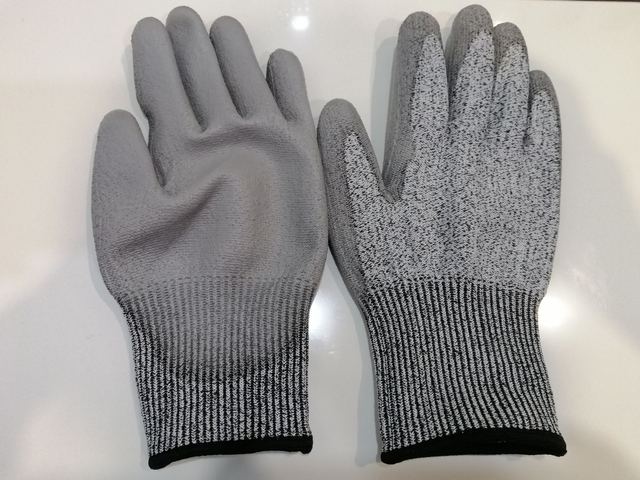
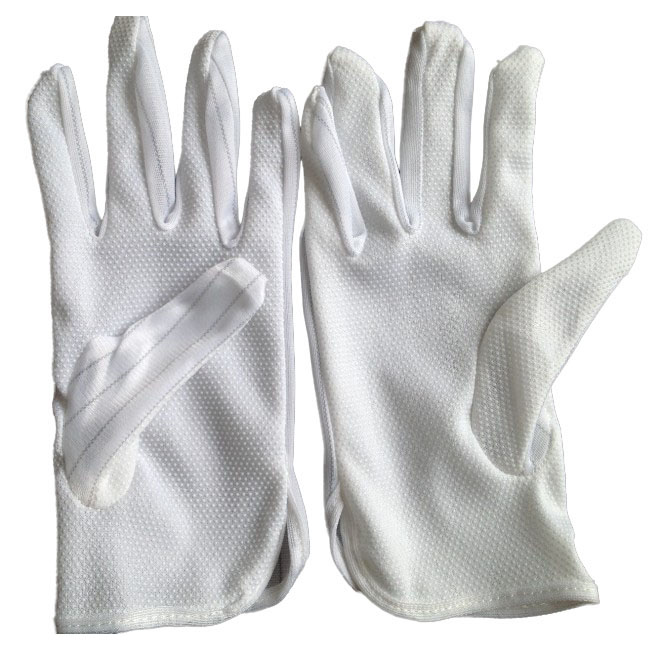
PU describes the coating applied to the fingertips or palm, mainly to improve grip, abrasion resistance, and handling control. Carbon fiber, by contrast, usually refers to conductive fibers incorporated into the knitted glove liner to help dissipate electrostatic charge. In fact, many ESD gloves combine a carbon-fiber-containing liner with a PU coating.
So, rather than simply asking whether PU-coated or carbon fiber ESD gloves are better, electronics manufacturers should ask a more useful question: which glove construction provides the right combination of static control, grip, dexterity, cleanliness, and durability for a particular workstation?
 |  |  |
The simplest way to understand the difference is to look at what each material does.
Carbon fiber is primarily associated with the glove's electrostatic properties. Conductive carbon filaments can be knitted together with polyester or nylon yarn to create a path that helps control accumulated charge.
PU, or polyurethane, is generally added as a surface coating. It may cover only the fingertips or extend across the palm. Its main purpose is to improve grip and wear resistance without making the glove excessively thick.
This means PU coated ESD gloves can also be carbon fiber ESD gloves.
A typical glove for electronics assembly may therefore consist of:
A polyester or nylon knitted liner
Conductive carbon yarn integrated into the liner
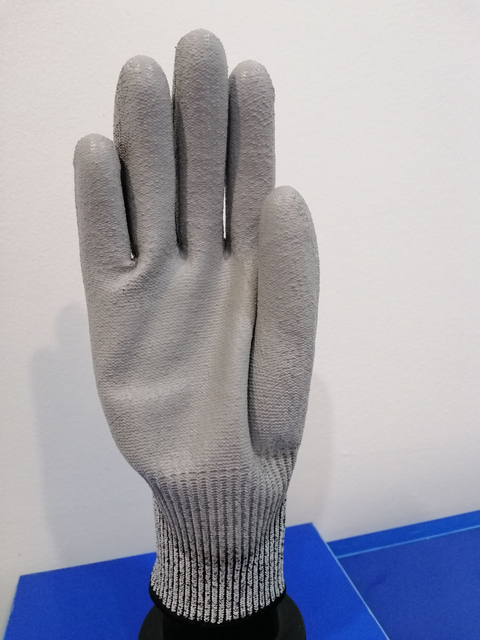
PU coating on the fingertips or palm
An elastic cuff for a secure fit
LEENOL, for example, describes ESD glove structures using polyester or nylon liners with conductive carbon filament together with PU-coated fingertip or palm areas. Its carbon-fiber glove range is designed for static dissipation while PU treatment is used to improve anti-slip performance and tactile handling.
The important purchasing lesson is that coating material and conductive material should be evaluated separately.
Static electricity can develop through contact, separation, friction, and movement. In an electronics production environment, workers constantly move their hands, touch tools, pick up trays, handle packaging, and manipulate components.
Without proper control measures, charge can accumulate on people or materials.
When a charged person contacts a sensitive electronic component, that charge may discharge rapidly. Depending on the sensitivity of the device, even an event that the operator cannot feel may be undesirable.
Anti static gloves are designed to help control this risk by incorporating conductive or static-dissipative materials.
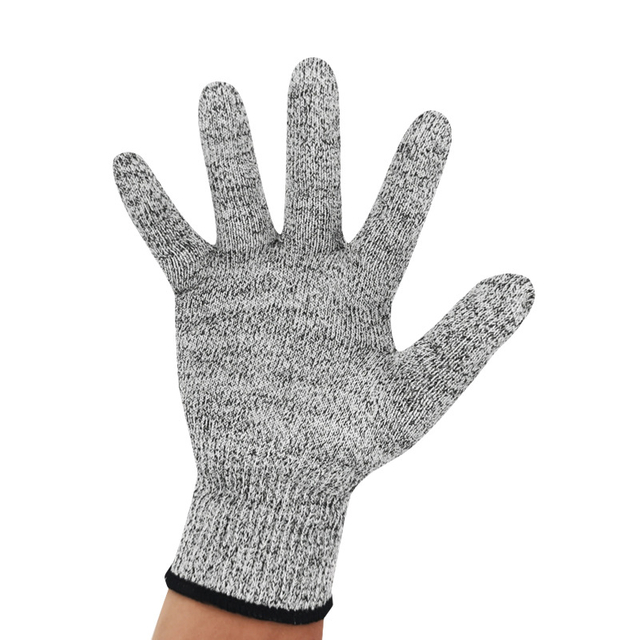
In carbon fiber gloves, conductive yarn is distributed through the knitted material. The visible dark lines or grid pattern found on many ESD gloves often comes from these conductive fibers.
Instead of allowing charge to remain isolated on an ordinary insulating fabric, the conductive structure helps charge move in a controlled manner as part of the workstation's overall ESD control system.
LEENOL lists a surface resistance range of approximately 10⁶–10⁹ Ω for its ESD carbon glove category.
However, gloves should not be considered a stand-alone solution.
Their actual effectiveness depends on the entire Electrostatic Protected Area, or EPA. Flooring, footwear, wrist straps, grounded workstations, ESD chairs, packaging, garments, humidity control, and operator procedures may all influence the result.
PU coating is not normally the primary conductive mechanism of the glove.
Instead, it improves the physical interface between the worker's hand and the component.
A thin PU coating can provide:
Better friction when gripping smooth components
More secure handling of small parts
Improved abrasion resistance
Reduced slipping during repetitive assembly
Protection against fingerprints and direct skin contact
This distinction matters when comparing conductive gloves for electronics. A glove should not be selected simply because its palm is coated. Buyers need to understand what conductive material is incorporated into the glove and whether its ESD performance suits the intended application.
For grip, PU coating generally has the advantage.
Many electronic components have smooth surfaces. Printed circuit boards, connectors, housings, glass panels, small fasteners, and electronic modules can become difficult to control when workers are wearing an uncoated textile glove.
Even a small amount of slipping can matter on a precision line.
For very small components, fingertip PU coating is often a practical configuration.
Only the working surface of the fingertips is coated, leaving much of the hand breathable and flexible. This design is often suitable for:
Component installation
PCB inspection
Connector assembly
Small screw handling
Electronic repair
Precision testing
Optical component handling
Workers maintain relatively good fingertip control while gaining additional friction where it is most useful.
For this reason, ESD gloves for electronics assembly frequently use fingertip coatings rather than thick full-hand coatings.
Palm-coated gloves extend the PU layer across most of the gripping surface.
This can be useful when operators repeatedly handle:
Larger PCBs
Electronic housings
Equipment panels
Trays
Assemblies
Tools
Packaging containers
The larger coated area generally provides stronger overall grip and additional resistance to wear.
The trade-off is that palm-coated gloves can feel slightly less breathable than fingertip-coated versions, especially during long shifts.
There is no single winner because glove construction matters more than the product name.
A lightweight carbon fiber knitted glove can provide excellent flexibility because the textile structure conforms closely to the fingers. If it has no coating, tactile sensitivity may be high, but grip on smooth surfaces can be weaker.
A thin PU-coated glove can also provide excellent dexterity as long as the coating remains thin and flexible.
For precision assembly, the best solution is often a combination: a lightweight conductive knitted liner with a thin PU fingertip coating.
This provides three important characteristics at the same time:
Static-control capability from conductive yarn
Close hand fit from the knitted structure
Grip at the fingertips from the PU coating
That is why buyers should look beyond broad labels such as "PU glove" or "carbon glove."
The actual construction determines performance.
PCB assembly is one of the clearest examples of why a combined glove structure can be preferable.
Workers may need to lift bare circuit boards, position connectors, inspect solder joints, operate fixtures, or transfer boards between production steps. The work demands good hand control while minimizing contamination and electrostatic risk.
For many of these operations, ESD gloves for PCB assembly should provide:
Reliable static-dissipative performance
Low-lint construction
Good fingertip sensitivity
Secure grip
Comfortable fit
Minimal interference with small-part handling
A carbon-fiber conductive liner addresses the static-control requirement, while a PU fingertip coating can improve handling.
If workers mainly perform visual inspection or very delicate positioning, fingertip coating may be sufficient.
If they frequently pick up larger boards, metal housings, or trays, palm coating may provide more dependable grip.
The glove therefore needs to match the task rather than simply the department name.
Semiconductor manufacturing introduces another consideration: contamination control.
In these environments, preventing static discharge is only part of the job. Particle generation, lint, skin oils, fingerprints, and other contamination sources may also need to be controlled.
This changes the purchasing criteria.
For ESD cleanroom gloves, buyers should evaluate whether the material and manufacturing process are appropriate for the cleanliness requirements of the facility.
A glove that performs well at a general electronics assembly bench may not automatically be suitable for a high-control cleanroom.
Important considerations can include:
Particle shedding
Glove cleanliness
Packaging method
Conductive performance
Material compatibility
Washing procedures
Contamination requirements of the process
Usually, the knitted portion of a carbon fiber glove is highly breathable compared with a glove that has extensive surface coating.
Air can move through the knitted fabric, and perspiration can escape more easily.
This becomes important when operators wear gloves for several hours at a time.
Excessive sweating creates more than a comfort problem. An uncomfortable worker may adjust or remove gloves more frequently, potentially disrupting process discipline. Wet hands can also make glove changes unpleasant and reduce operator acceptance.
An uncoated or fingertip-coated carbon fiber glove therefore offers a useful balance for long-duration precision work.
Palm-coated versions trade some breathability for better grip and wear resistance.
Neither is inherently wrong. The question is whether the workstation requires maximum tactile sensitivity or stronger contact performance.
Durability depends on how the glove is used.
A bare knitted glove may eventually show wear where workers repeatedly contact parts or work surfaces. PU coating protects these high-contact areas and can extend useful glove life under repetitive handling conditions.
Palm-coated gloves generally offer greater abrasion protection than fingertip-only versions because a larger surface is protected.
However, coating condition should be monitored.
A glove should be replaced if:
The coating begins peeling
Conductive fibers are visibly damaged
The knitted fabric is torn
Grip deteriorates noticeably
The glove becomes permanently contaminated
Washing or use changes its expected ESD properties
Reusable gloves can reduce consumption compared with single-use options, but only when companies have clear inspection, cleaning, and replacement procedures.
Using a visibly worn ESD glove simply because it remains wearable can create unnecessary process risk.
Instead of choosing coating coverage by habit, look at the operator's actual hand movements.
The worker performs delicate operations requiring maximum flexibility and tactile feedback.
Typical examples include:
Small electronic component assembly
PCB inspection
Precision repair
Connector positioning
Semiconductor handling
Small-part sorting
Quality inspection
The limited coating keeps most of the glove breathable while improving grip exactly where the component is held.
The operator needs stronger overall grip or handles larger objects repeatedly.
Typical examples include:
PCB transfer
Electronic module assembly
Equipment installation
Material handling
Tray movement
Housing assembly
Repetitive production work
Palm coating also protects a larger portion of the glove against mechanical wear.
For mixed-production facilities, stocking both configurations can make more sense than forcing every workstation to use the same glove.
Not every electronics workstation needs PU.
An uncoated carbon fiber glove may be suitable when maximum breathability and textile flexibility are more important than surface grip.
Possible applications include:
Visual inspection
Light component sorting
Low-friction handling tasks
Some packaging operations
General EPA activities
The absence of PU also removes an additional surface material from the handling interface.
However, operators working with smooth, polished, or very small components may find uncoated fabric less secure.
A practical trial on the actual production line can reveal this difference quickly.
Technical purchasing specifications often focus on resistance values and materials while ignoring fit.
That is a mistake.
Electronics assembly can involve thousands of repeated finger movements during a single shift. A glove that bunches at the fingertips, traps excessive heat, restricts finger movement, or slides around the hand can slow workers down.
Poor fit can affect:
Assembly speed
Handling accuracy
Worker fatigue
Glove compliance
Component control
Defect rates
For repetitive precision operations, a lightweight seamless knitted design is generally preferable to a bulky glove.
Correct sizing is equally important.
A glove that is too large can reduce tactile control. One that is too tight may cause fatigue and become uncomfortable during extended wear.
Procurement teams should therefore evaluate several sizes rather than assuming one standard size will suit most workers.
A product sample should be evaluated under real production conditions whenever possible.
Do not judge gloves only from a catalog image.
Before placing a larger order, consider the following factors.
Ask for relevant electrical resistance information and confirm that the glove construction is appropriate for your ESD control program.
Determine whether carbon fiber, conductive yarn, copper fiber, or another conductive material is used.
The term "anti-static" alone does not explain the construction.
Specify whether the glove needs:
No coating
PU fingertips
PU palm coating
This directly affects grip, breathability, and wear resistance.
Smaller parts usually demand greater fingertip sensitivity.
Large boards, trays, or assemblies may benefit from a broader coated gripping surface.
If the gloves will enter a controlled environment, evaluate lint, particle generation, packaging, and facility-specific cleanroom requirements.
Workers wearing gloves for long periods generally benefit from breathable materials and a close, comfortable fit.
Determine whether the gloves can be washed and reused and establish a replacement policy.
LEENOL notes that several of its ESD glove constructions are washable and reusable, but washing procedures should follow the specifications supplied for the particular glove.
Test the glove at the actual workstation.
Have operators handle the same components, tools, trays, and fixtures they use during production. A short production trial can reveal grip or comfort issues that are not obvious from technical specifications.
For most electronics manufacturers, this should not be treated as a strict either-or decision.
If static dissipation is the primary concern, the conductive structure of the glove is fundamental. Carbon fiber incorporated into the knitted liner is commonly used to provide this function.
If handling control is a major concern, PU coating offers an additional advantage by increasing friction on the fingertips or palm.
This leads to a practical selection rule:
Choose the conductive liner for ESD control and choose the coating according to the handling task.
For delicate component assembly, a carbon-fiber liner with PU-coated fingertips can provide an effective combination of static control, dexterity, and grip.
For repetitive handling of larger parts, a carbon-fiber liner with palm PU coating may offer better durability and gripping security.
For inspection or lightweight tasks where grip is less important, an uncoated carbon fiber glove may provide better breathability and sufficient flexibility.
The best ESD Gloves are therefore not necessarily the gloves with the most coating or the highest number of features. They are the gloves whose electrical, mechanical, cleanliness, and ergonomic properties fit the exact production process.
No. A PU coating by itself does not mean that a glove is suitable for an electrostatic protected area. Standard industrial PU gloves may be designed primarily for grip and abrasion resistance.
For electronics applications, check whether the glove incorporates conductive or static-dissipative materials and review the manufacturer's electrical performance specifications.
The terms can overlap. Many ESD gloves use nylon or polyester as the primary knitted material while conductive carbon fibers are integrated into the fabric.
Rather than comparing "nylon" and "carbon" as completely separate categories, check the complete material structure, conductive yarn arrangement, resistance characteristics, coating, cleanliness, and intended use.
PU fingertip gloves are generally preferable for very fine assembly because they preserve more breathability and flexibility while improving fingertip grip.
Palm-coated gloves provide a larger gripping surface and greater wear resistance, which can make them more suitable for repetitive handling of PCBs, housings, trays, and larger electronic assemblies.
No. ESD gloves should be treated as one part of a broader ESD control system rather than a replacement for grounding procedures.
Electronics facilities may use combinations of wrist straps, ESD flooring, footwear, grounded workstations, ESD furniture, garments, packaging materials, and other control measures according to their process requirements.
Manufacturers should look for suppliers that can provide several glove constructions instead of offering one generic solution for every workstation. LEENOL supplies ESD carbon gloves, nylon gloves, PU-coated configurations and other anti-static consumables for electronics, semiconductor, cleanroom and precision manufacturing environments. As an ESD TOTAL SOLUTION supplier, LEENOL also provides related ESD storage, packaging, workbench, clothing and cleanroom products, allowing factories and laboratories to coordinate ESD Gloves with a broader electrostatic-control system rather than sourcing each element in isolation.