English
Views: 0 Author: Site Editor Publish Time: 2026-03-18 Origin: Site


Sticky mats, also known as tacky mats, are specialized floor mats designed to capture dust, dirt, and other contaminants from shoes, wheels, and equipment before they enter sensitive environments. These mats are widely used in clean rooms, laboratories, hospitals, workshops, and food processing areas, where maintaining a dust-free environment is crucial.
LEENOL Sticky Mats combine advanced manufacturing techniques, including multi-layer co-extrusion film blowing and pressure-sensitive adhesive coatings, to trap particles effectively. The mats are designed to maintain a clean environment while being durable, customizable, and easy to use.
The question arises for many facilities managers and operators: Do sticky mats actually help? This article explores the effectiveness of sticky mats, how they work, their applications, benefits, and best practices for using them.

Sticky mats operate using a simple yet highly effective principle: adhesion. The mat’s surface is coated with a pressure-sensitive adhesive that traps dust, dirt, and debris as people walk across it or as wheels roll over it. Over time, the top layer of the mat can be peeled away, exposing a fresh adhesive surface.
Key features include:
Multi-layer design: LEENOL Sticky Mats use multiple layers of adhesive-coated film, which ensures long-lasting performance and ease of use.
Pressure-sensitive adhesive: This allows dirt and dust particles to stick to the surface without leaving residue on shoes or wheels.
Effective for foot traffic and equipment: Mats capture particles from shoes, carts, and trolleys, preventing contaminants from entering controlled areas.
The sticky surface captures dust in three ways:
Direct contact: Particles adhere immediately when shoes or wheels step on the mat.
Static attraction: Slight electrostatic forces help attract fine dust particles to the adhesive surface.
Layered shedding: After the top adhesive layer fills with particles, it can be peeled away to expose a new layer, maintaining effectiveness over time.
LEENOL Sticky Mats provide an exceptional dust removal efficiency of ≥99.9%, making them suitable for high-traffic environments where contamination control is critical. By capturing nearly all particulate matter before it enters clean rooms, labs, or hospitals, these mats significantly reduce the risk of contamination-related issues.
While air filters, ventilation systems, and routine cleaning contribute to maintaining cleanliness, sticky mats are unique because they:
Prevent dust from entering controlled areas at the source, rather than removing it after contamination occurs.
Are immediate and passive, requiring no energy or complex equipment.
Complement other environmental controls to provide a multi-layered contamination prevention strategy.
Studies in cleanroom environments show that sticky mats can reduce dust and particle counts by a substantial margin, particularly when placed at key entry points for personnel and equipment.
These mats are made from PE film with multiple adhesive layers. When the top layer is dirty, it can be easily peeled away to reveal a fresh layer. They are:
Lightweight and easy to position
Available in multiple sizes, such as 18"*36", 18"*45", 24"*36", and 26"*45"
Ideal for clean rooms, laboratories, and hospital entrances
Made from PU material, washable mats offer long-term reusability:
Easy to clean with water or mild detergents
Provide excellent dust removal and long service life
Environmentally friendly, recyclable, and degradable
Suitable for high-traffic workshops or repeated use areas
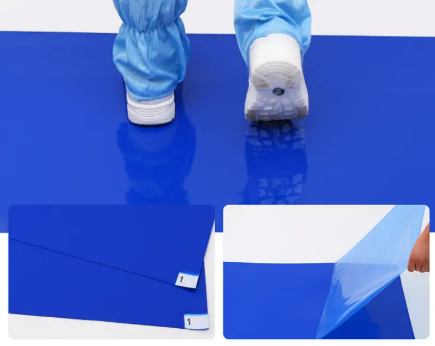
Sticky mats are widely used across different sectors for contamination control:
In cleanroom environments, even microscopic dust can interfere with manufacturing processes, especially in semiconductors, pharmaceuticals, and biotechnology. Sticky mats at entrances prevent contaminants from being carried in by personnel and equipment.
Research labs handling chemicals, biological samples, or sensitive instruments benefit from sticky mats, which prevent dust from compromising experiments or introducing external contamination.
In industrial workshops, sticky mats help prevent dust and debris from being transferred between production zones, protecting both equipment and final products.
Hospitals require high levels of cleanliness to reduce the risk of infection. Sticky mats at entrances and operating rooms capture particles from shoes, minimizing contamination and ensuring patient safety.
Sticky mats prevent contamination in food processing and preparation areas, helping facilities meet hygiene and safety standards while maintaining a dust-free environment.
Sticky mats intercept dust and particles at the point of entry, making them far more effective than relying solely on air filtration or periodic cleaning.
Peel-off mats are low-cost, disposable, and highly efficient.
Washable mats offer long-term durability, reducing replacement frequency.
LEENOL Sticky Mats can be customized in size, color, and material to match facility requirements, ensuring coverage in critical areas and integration with workflow.
Designed to withstand heavy foot traffic and equipment wheels
Multi-layer adhesive maintains performance over extended periods
Provides consistent dust removal without losing effectiveness
Washable sticky mats use recyclable and biodegradable materials, contributing to sustainability while maintaining high contamination control standards.
While sticky mats are highly effective, proper use is critical:
Placement matters: Mats should be installed at all points of entry and high-traffic zones to maximize dust removal.
Regular maintenance: Peel-off layers must be replaced promptly, and washable mats cleaned regularly to maintain efficiency.
Not a substitute for other contamination controls: Sticky mats complement, but do not replace, air filtration, gowning procedures, or cleanroom protocols.
Position mats directly at doorways, entrances, and areas where equipment enters sensitive zones.
For peel-off mats, replace top layers when 70–80% of the surface is covered with dirt.
Washable mats should be cleaned according to manufacturer instructions to maintain adhesive performance.
Combine sticky mats with foot traffic control, gowning, and air filtration to optimize contamination control.
Yes, sticky mats are highly effective in preventing dust and particle contamination. By intercepting debris at the point of entry, they reduce the risk of contamination in clean rooms, laboratories, hospitals, and workshops.
LEENOL Sticky Mats stand out because of their high dust removal efficiency (≥99.9%), durability, and customizable options. They are available in both peel-off and washable formats, making them suitable for diverse environments.
Sticky mats provide immediate, cost-effective contamination control.
They protect sensitive environments by capturing dirt and dust from foot traffic and equipment wheels.
Proper placement, regular maintenance, and combination with other contamination controls ensure maximum effectiveness.
LEENOL Sticky Mats also offer eco-friendly options, contributing to sustainability in cleanroom and industrial operations.
In conclusion, sticky mats are more than a convenience—they are an essential tool for maintaining pristine and safe environments, and when used correctly, they deliver measurable improvements in contamination control.