English
Views: 286 Author: Site Editor Publish Time: 2025-12-30 Origin: Site


Electrostatic discharge (ESD) — yup, that invisible little zap — is actually a huge deal in places where people handle delicate electronic stuff, precision instruments, and products that need super clean environments every day. Even a tiny static spark can totally wreck a circuit board or sensor, which is not fun if you’re trying to build the next smartphone or cool scientific gadget. That’s exactly why ESD gloves are so important.
In this guide, we’ll talk about when ESD gloves should be used, how they’re different from ESD cleanroom gloves, and why knowing the difference can save your project, your boss’s budget, and sometimes your sanity. We’ll even drop some real comparisons, examples, and trends so you really get this whole thing.
Okay, imagine this: you’re in a lab or electronics factory, and you’re holding a tiny circuit board. You walk across the floor, build up static on your body, and then touch the board. Even if you don’t feel a spark, that tiny discharge can fry sensitive parts or make them fail later. That’s what electrostatic discharge (ESD) does — it’s the sudden flow of electric current between objects at different charges, and it can totally destroy electronics.
Now, regular gloves might protect your hands from chemicals or cuts, but ESD gloves specifically help manage static electricity. They’re made with materials that either conduct or safely dissipate static, so that charge doesn’t build up and zap something fragile.
In simple terms, ESD gloves are special gloves designed to deal with static electricity. They’re usually made from materials like nylon, polyester with conductive fibers, or specially treated nitrile that helps static charges move away instead of building up on your hands.
Here’s what makes ESD gloves unique:
Static‑dissipative materials that help static flow safely rather than explode into a component.

Conductive fibers (like carbon or metal threads) woven into the glove to help control charge.
Designed to be worn with grounding systems (like wrist straps) so static has a safe path to the ground.
Basically, these gloves are not ordinary — they’re engineered to protect sensitive electronics.
Let’s break this down like real situations, so you know the exact times these gloves are worth wearing.
This is the obvious one. If you’re grabbing:
Integrated circuits (ICs)
Printed circuit boards (PCBs)
Semiconductor wafers
You need ESD gloves because even a tiny static event can permanently wreck these items. Trust me, this is where they’re always recommended — no exceptions.
Example: In a factory assembling smartphones, workers wear ESD gloves while handling parts to avoid tiny micro‑discharges that could cause defects later on.
When assembling sensitive electronics or fixing devices, ESD gloves are critical. Whether it’s debugging, soldering, or moving components, these gloves help protect both the parts and the people.
Industries usually designate "Electrostatic Protected Areas" (EPAs), where PPE like ESD gloves are mandatory.
If you’re in a cleanroom where both particle contamination and static discharge are concerns — like in semiconductor manufacturing or aerospace electronics — then ESD cleanroom gloves are a must. These are like ESD gloves plus advanced contamination control.
In cleanrooms, it’s not just about static — they also care about controlling particles and residues to meet ISO cleanliness standards.
Even during packaging, static can sneak up and cause issues. If you’re placing boards or chips into trays or before they’re boxed, ESD gloves help make sure nothing gets dinged by static before shipping.
Testing new designs, building prototypes, or doing research — static doesn’t care what room you’re in! So any time you’re touching components that are ESD‑susceptible, gloves shouldn’t be an afterthought.
This one’s less obvious: static can also ignite flammable vapors. While ESD gloves don’t protect you from high‑voltage shock, they can help reduce static buildup in environments with flammable gases or aerosol processing. This is more industrial, but it’s a real concern in some manufacturing sites.
People often mix these up — and honestly, I get why. They both deal with static — but here’s the real deal:
| Feature | ESD Gloves | ESD Cleanroom Gloves |
|---|---|---|
| Static control | ✔️ Essential | ✔️ Essential |
| Contamination control | ✖️ Minimal | ✔️ High level |
| Suitable for cleanrooms | Sometimes | ✔️ Certain cleanroom classes |
| Typical materials | Nylon, polyester, nitrile | Powder‑free nitrile, low‑lint variants |
| Typical use | Labs, factories, repair | Cleanrooms, aerospace, pharma |
ESD cleanroom gloves are basically ESD gloves plus strict contamination specs so they can be used in cleanrooms where particle count matters.
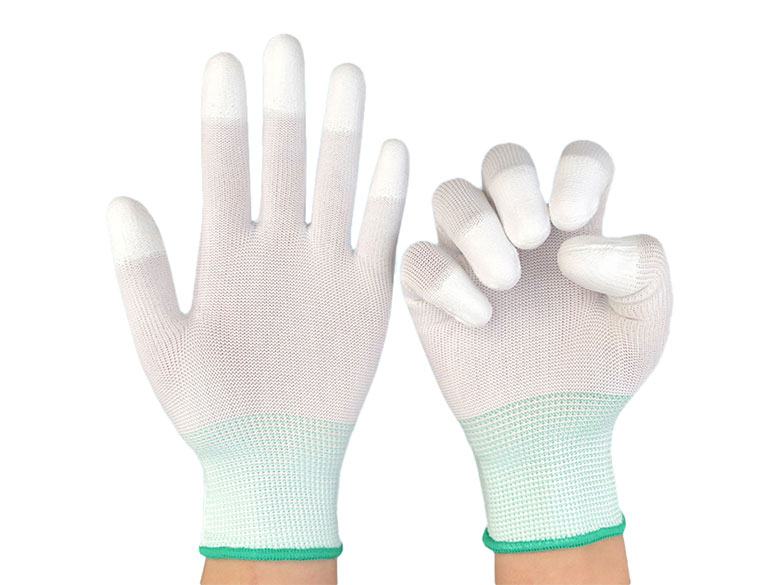
Different jobs call for different gloves — kind of like shoes for running vs skateboarding.
| Material | Static Control | Best Use Case | Notes |
|---|---|---|---|
| Nylon with conductive fiber | High | Light handling | Good static dissipation |
| Polyester with carbon | Very high | Cleanrooms | Low particle shedding |
| Nitrile coated | High | Assembly + grip | Great compromise |
| Vinyl static dissipative | Moderate | Casual ESD tasks | Lower cost, less durability |
Often, ESD cleanroom gloves are nitrile or polyester variants that are manufactured to minimize particle contamination while still handling static.
Here are some real industry examples where ESD glove use is standard:
Microprocessor, PCB, and consumer electronics assembly lines often make full ESD protection—including gloves—mandatory in static‑controlled zones (EPAs).
These cleanrooms require both static control and contamination control, so ESD cleanroom gloves are often specified. Materials matter as much as the static specs.
Even in sterile environments focused on cleanliness, static can still affect sensitive instruments, so you’ll find ESD cleanroom gloves where both contamination and static are concerns.
Many medical device electronics and automotive control modules are sensitive — so ESD gloves help protect those systems during assembly, inspection, or testing.
Here’s what people in the industry are talking about lately:
Some next‑gen gloves integrate sensors that track static exposure and wear over time, sending data to monitoring systems to optimize safety and quality.
With sustainability becoming a bigger priority, manufacturers are developing ESD gloves you can wash and reuse without losing static performance.
As cleanroom standards get stricter (like higher ISO classes), glove designs are improving to both reduce particle release and handle static control better than ever.
Understanding when to use ESD gloves is basically a baseline for protecting sensitive electronics, reducing damage, and ensuring quality across many high‑tech environments. Whether you’re on an assembly line, in a lab, or managing a cleanroom process, knowing the difference between ESD gloves and ESD cleanroom gloves — and using them correctly — can save money, time, and headaches.
Just remember: ESD gloves don’t work alone. They’re part of a bigger ESD control program that usually includes grounding straps, ionizers, and compliant work practices. If your environment needs both static control and contamination control, go for ESD cleanroom gloves — that’s like hiring a superhero glove.
1. When don’t you need ESD gloves?
If there are no sensitive components and static isn’t a real risk, and if grounding systems already handle static safely, you might skip them — but always check with safety protocols first.
2. Are disposable ESD gloves okay for long tasks?
Yeah, they’re fine for shorter jobs, but for long shifts or precision work, reusable ones with comfort features and breathability are usually better.
3. How often should ESD gloves be replaced?
Replace them when you see wear, contamination, or if static performance degrades — many companies test gloves regularly as part of their ESD program.
4. Can regular gloves provide ESD protection?
Nope — unless they’re specifically designed with static‑dissipative or conductive properties.
5. Are ESD gloves mandatory in every cleanroom?
Not always. It depends on the cleanroom class and whether the processes involve ESD‑sensitive items. — sometimes you only need anti‑static measures in designated EPA zones.