English
Views: 0 Author: Site Editor Publish Time: 2026-05-30 Origin: Site


In electronics manufacturing, semiconductor production, laboratory environments, and cleanroom operations, static electricity is something no one can afford to ignore. A tiny electrostatic discharge that is invisible to the human eye can damage sensitive components, reduce product reliability, or even lead to expensive production losses. That’s why choosing the right ESD gloves is far more important than many people initially think.
At first glance, all anti-static gloves may seem similar. However, once you start comparing materials, coatings, conductivity levels, comfort, cleanroom compatibility, and actual working environments, the differences become very clear. A glove that works perfectly for PCB assembly may not be suitable for semiconductor packaging or precision inspection work.
This guide breaks down everything you need to know about selecting the right anti static gloves, including material types, application scenarios, key performance factors, and common mistakes buyers often make.
ESD Gloves are specially designed gloves used to prevent electrostatic discharge during handling and manufacturing processes. Unlike ordinary work gloves, they are made with conductive or dissipative materials that help safely transfer static electricity away from the operator.
In industries where sensitive electronic components are involved, even a small static discharge can damage integrated circuits, microchips, or precision instruments. ESD gloves help minimize that risk while also improving cleanliness and handling precision.
Most anti static gloves are made using nylon, polyester, carbon fiber, polyurethane coatings, or blended conductive yarns. The exact material combination depends on the intended application.
Typical industries using ESD gloves include:
Electronics manufacturing
PCB assembly
Semiconductor production
Automotive electronics
Aerospace
Medical device manufacturing
Optical equipment production
Cleanroom laboratories

Many companies focus heavily on ESD flooring, wrist straps, and ionizing equipment but underestimate the importance of gloves. In reality, gloves are in direct contact with products throughout production.
The wrong glove choice can create several problems:
Poor static dissipation
Particle contamination
Reduced grip during assembly
Operator discomfort
Excessive sweating during long shifts
Fingerprint contamination
Product scratches
Reduced productivity
A well-chosen glove improves both protection and work efficiency. Workers can handle components more comfortably and accurately, especially during repetitive assembly tasks.
Not all ESD gloves are designed the same way. Understanding the major categories can help narrow down the best option for your environment.
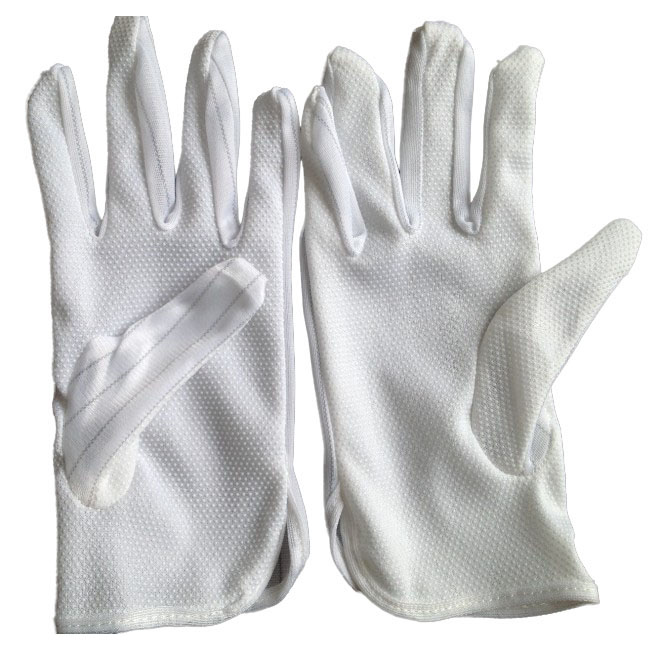
ESD Carbon Gloves are among the most commonly used anti-static gloves in electronics manufacturing. These gloves contain carbon fiber threads woven into the fabric, creating a conductive grid that helps dissipate static electricity.
They are lightweight, breathable, and suitable for long working hours.
Common features include:
Good electrostatic dissipation
Comfortable fit
Breathable fabric
Reusable and washable
Suitable for dry environments
These gloves are widely used in:
PCB production
Electronic assembly
Inspection lines
Semiconductor handling
One reason many factories prefer carbon gloves is their balance between cost and performance. They provide reliable ESD protection without significantly increasing operational expenses.
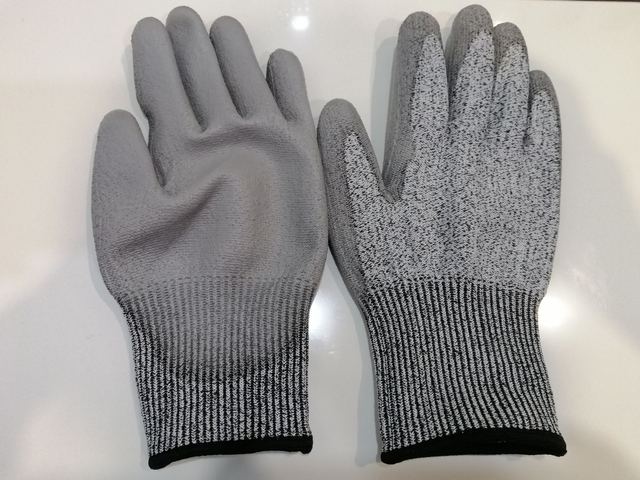
ESD PU Palm Nylon Gloves combine anti-static nylon fabric with polyurethane-coated palms or fingertips. This design improves grip while maintaining ESD protection.
Compared with standard carbon gloves, PU-coated gloves are better for precision handling because the coating helps operators securely grip small components without slipping.
Advantages include:
Excellent dexterity
Better grip performance
Reduced hand fatigue
Improved handling accuracy
Low particle generation
These gloves are particularly useful for:
Smartphone assembly
Precision electronics
Semiconductor packaging
Optical instrument handling
Delicate component installation
Some factories choose fingertip-coated versions for maximum flexibility, while others prefer full palm coating for additional grip and durability.
This is one detail buyers often overlook.
Finger-coated gloves provide coating only on the fingertips. They offer:
Better breathability
Higher flexibility
Improved tactile sensitivity
They are ideal for fine assembly work.
Palm-coated gloves cover the entire palm area with PU coating. They provide:
Stronger grip
Better wear resistance
Longer service life
These are more suitable for handling larger components or repetitive operations.
Choosing the right gloves involves more than simply selecting the cheapest option available. Several technical and practical factors should be evaluated carefully.
The primary purpose of ESD gloves is static control. Always verify whether the gloves meet recognized ESD standards.
Common standards include:
ANSI/ESD S20.20
IEC 61340-5-1
Reliable manufacturers usually provide surface resistance or volume resistance data.
Good quality ESD gloves typically fall within the static dissipative range rather than being overly conductive.
Different environments require different glove characteristics.
In dry conditions, static buildup becomes more severe. Gloves with stronger conductivity and carbon fiber integration are usually preferred.
Cleanrooms require gloves with:
Low particle shedding
Low ionic contamination
Cleanroom-compatible packaging
Some gloves are specifically manufactured for Class 100 or ISO-certified cleanrooms.
If operators handle oils or light chemicals, PU-coated gloves may offer better resistance and durability.
Workers may wear gloves for 8 to 12 hours per shift. If gloves are uncomfortable, productivity suffers quickly.
Look for:
Breathable fabric
Seamless knitting
Elastic wrist design
Lightweight construction
Sweat reduction performance
A glove that feels slightly more expensive upfront may actually save money long-term by improving efficiency and reducing replacement frequency.
Grip matters more than many people realize.
Poor grip can lead to:
Dropped components
Product damage
Worker fatigue
Slower assembly speed
For precision work, ESD PU Palm Nylon Gloves are often preferred because the PU coating enhances friction without sacrificing dexterity.
Improper sizing is one of the most common issues in factories.
Restrict movement
Cause hand fatigue
Reduce comfort
Reduce handling precision
Increase slipping risk
Affect productivity
Most manufacturers provide size charts ranging from XS to XL. Proper fitting should allow natural finger movement without excess fabric bunching.
Another important consideration is whether reusable or disposable gloves are more suitable for your operation.
Advantages:
Cost-effective for long-term use
Durable
Better environmental sustainability
Best for:
Electronics assembly
Equipment maintenance
General ESD production areas
Advantages:
High cleanliness
Reduced contamination risk
Convenient replacement
Best for:
Semiconductor production
Medical electronics
High-grade cleanrooms
Your production environment largely determines which option is more practical.
Many purchasing teams focus only on price, which can create bigger issues later.
Here are several common mistakes:
Always verify ESD compliance documentation.
Some standard work gloves may claim anti-static properties without proper conductive performance.
Uncomfortable gloves often lead workers to remove them during tasks, defeating the purpose entirely.
Different production stages often require different glove designs.
For example:
Inspection lines may need fingertip-coated gloves
Packaging departments may prefer palm-coated gloves
Cleanrooms may require low-lint gloves
The lifespan of ESD gloves depends on:
Frequency of use
Washing method
Working conditions
Material quality
Generally, reusable gloves can last several weeks to several months under proper usage.
However, gloves should be replaced immediately if you notice:
Reduced elasticity
Surface wear
Torn fabric
Damaged coating
Failed ESD testing
Regular inspection is essential to maintain ESD protection effectiveness.
Good maintenance extends glove lifespan and preserves ESD performance.
Recommended practices include:
Wash with mild detergent
Avoid bleach or harsh chemicals
Air dry naturally
Store in clean, dry environments
Avoid excessive heat exposure
Improper washing can damage conductive fibers and reduce anti-static performance over time.
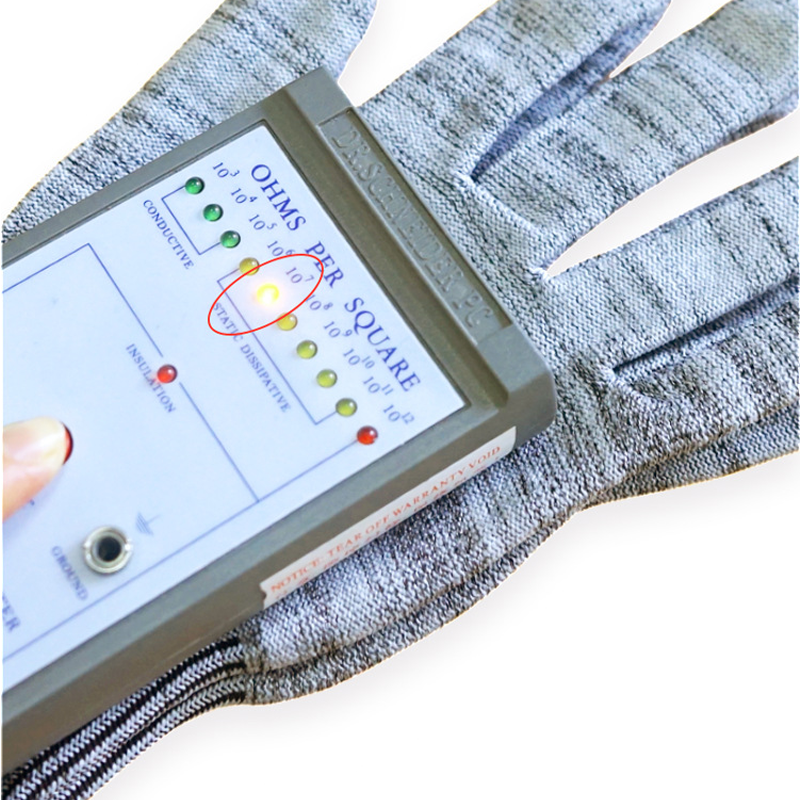
Even high-quality gloves should be tested periodically.
Factories with strict ESD programs often conduct routine checks to ensure gloves continue meeting resistance requirements.
Testing helps identify:
Conductive degradation
Material damage
Contamination issues
This is especially important in semiconductor and high-reliability electronics manufacturing.
A reliable supplier should offer more than just products.
Look for suppliers that provide:
Technical support
Product testing data
Customization options
Stable production capacity
Fast delivery
International certifications
Experienced ESD solution providers can also help evaluate your working environment and recommend the most suitable glove type for different production areas.
As electronics become smaller and more sensitive, ESD control requirements continue evolving.
Several trends are becoming more common:
Manufacturers are developing lighter and softer fabrics to improve long-term wear comfort.
Advanced low-particle materials are increasingly used in semiconductor industries.
Sustainability is becoming more important, including reusable glove systems and environmentally friendly materials.
Modern gloves focus heavily on tactile sensitivity for microelectronics assembly.
When selecting ESD products, consistency and reliability matter just as much as pricing. Many global manufacturers prefer working with experienced suppliers that understand both ESD protection requirements and actual factory operations.
LEENOL is a professional “ESD Total Solution” provider specializing in anti-static and cleanroom products for factories and laboratories. Its product range includes ESD gloves, anti-static clothing, ESD workbenches, cleanroom supplies, packaging materials, storage systems, testing equipment, and more.
With over 15 years of industry experience, multiple production lines, and exports to more than 70 countries, LEENOL provides customized ESD solutions for electronics manufacturing, semiconductor production, laboratories, and industrial applications. The company also offers technical support, stable supply capability, and one-stop sourcing services for customers worldwide.
For businesses looking for reliable anti static gloves, including ESD Carbon Gloves and ESD PU Palm Nylon Gloves, working with an experienced supplier can help ensure both product quality and long-term operational efficiency.
ESD gloves are used to prevent electrostatic discharge during the handling of sensitive electronic components. They help protect products from static damage while also reducing contamination from fingerprints and particles.
Regular work gloves mainly provide physical protection, while anti static gloves are specifically designed with conductive or dissipative materials that safely control static electricity.
Yes. ESD PU Palm Nylon Gloves offer improved grip and better handling accuracy, making them ideal for precision electronics assembly and delicate component handling.
Many reusable ESD gloves can be washed multiple times if proper cleaning methods are followed. However, their ESD performance should be checked regularly to ensure effectiveness.
The correct glove size should fit snugly without restricting movement. Gloves that are too loose reduce precision, while overly tight gloves can cause discomfort and fatigue during long working hours.