English
Views: 169 Author: Site Editor Publish Time: 2025-12-22 Origin: Site


Sticky mats—also known as tacky mats or cleanroom mats—are deceptively simple tools that play a vital role in maintaining cleanliness and controlling contamination in a surprising variety of environments. These adhesive mats help trap dirt, dust, and microscopic particles from shoes and equipment wheels before they enter sensitive areas. In this article, we’ll explore the many places where sticky mats are commonly used, why they're important, how they work, and the practical benefits they bring to businesses and facilities around the world.
Sticky mats are floor mats with an adhesive surface designed to capture contaminants from footwear and cart wheels. They are particularly useful in environments where even small amounts of dust or particulate matter can have serious consequences. Sticky mats typically come in two styles:
Disposable sticky mats: These consist of multiple adhesive layers stacked on top of each other. As the top layer becomes loaded with dirt, it’s peeled away to expose a fresh, sticky surface.
Permanent or washable sticky mats: These mats are made from polymer materials and rely on electrostatic forces or a regenerating sticky surface to attract and hold contaminants. They can be cleaned and reused multiple times.
Regardless of type, sticky mats are used to physically remove particles from shoes and wheels before they enter controlled spaces—a foundational step in contamination control.
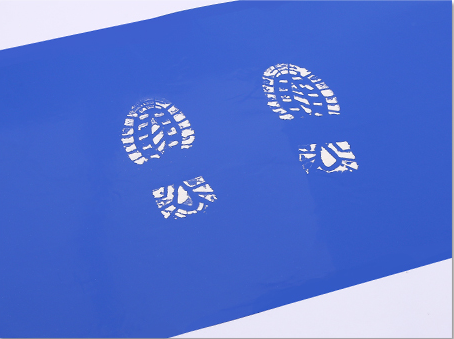
Sticky mats serve as the first line of defense against contamination. They are an example of an engineering control—a physical method used to reduce the transfer of unwanted particles into cleaner environments.
In many industries, airborne particulate, dust, and debris pose risks to product quality, equipment performance, and safety. Sticky mats provide a simple yet effective solution that captures contaminants right at the point of entry. By preventing contaminants from spreading, these mats help facilities maintain higher standards of cleanliness and reduce the workload on other cleaning protocols.
Hospitals and healthcare environments require exceptionally high levels of cleanliness to prevent the spread of infection. Sticky mats are commonly placed at entrances to operating rooms, isolation units, and sterile processing areas to trap contaminants from shoes and equipment wheels. In healthcare settings, every layer of prevention counts toward reducing risks associated with infection and contamination.
One of the most well-known applications for sticky mats is in cleanrooms—spaces where strict control of airborne particles is enforced for manufacturing or scientific research. Cleanrooms are used in industries such as semiconductors, biotechnology, pharmaceuticals, and aerospace manufacturing.
Sticky mats placed at the entrance to a cleanroom capture dust, fibers, and other contaminants, helping maintain the room’s stringent cleanliness levels. They are also used in gowning areas and exits to ensure contaminants aren’t reintroduced when personnel leave the clean zone.
Pharmaceutical facilities rely on strict environmental controls to ensure drug safety and quality. Sticky mats are strategically positioned at doors, transitions between zones, and even within lab hallways to remove particulate matter before it can affect sensitive processes or products.
Research labs and clinical testing environments use sticky mats to help protect sensitive experiments and samples from contamination. In these settings, airborne dust or debris can interfere with testing accuracy or damage delicate equipment. Sticky mats act as an important barrier against external contaminants.
In electronics production, even microscopic dust particles can cause defects in microchips and circuit boards. Sticky mats help remove debris from shoes and cart wheels before personnel enter manufacturing areas. This helps maintain product quality and reduces the risk of costly defects.
Food processing facilities must adhere to strict hygiene standards to ensure food safety. Sticky mats can be used at entrances to processing areas, kitchens, and storage rooms to keep dirt, dust, and other contaminants from being tracked into areas where food is handled or packaged.
Factories and production facilities often have areas with sensitive equipment or products that could be affected by contaminants. Sticky mats are placed at dock entrances, clean zones, and transitions between outdoor and indoor spaces to reduce the amount of debris entering production floors.
Sticky mats are valuable on construction and renovation projects, where dust and debris are virtually unavoidable. By placing sticky mats at the entrances to finished or clean areas, workers can reduce the spread of construction dust into spaces that need to remain clean or sterile.
Even in less technical environments, sticky mats can offer benefits. Office buildings, retail spaces, and commercial properties may place sticky mats at main entrances to trap dust and debris from outside, helping keep floors cleaner and reducing maintenance efforts.
Though less common commercially, sticky mats can be used in homes, particularly at high-traffic entrances, to reduce the amount of dirt and allergens tracked inside. This can help improve overall indoor air quality and reduce cleaning frequency.
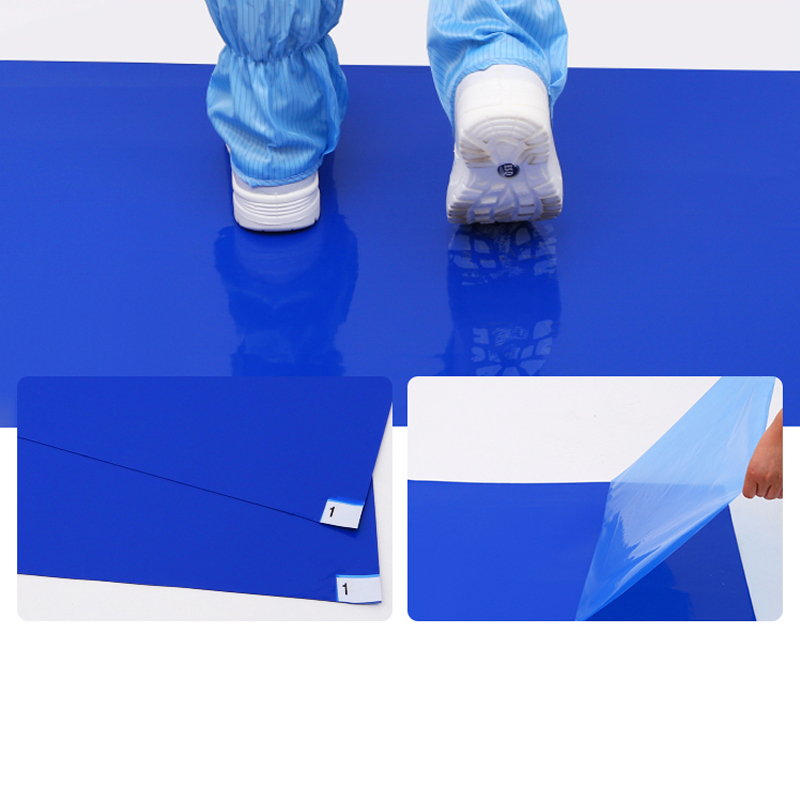
Sticky mats offer many advantages across industries and environments:
Sticky mats capture dust, dirt, and particles from shoes and equipment wheels before contaminants enter sensitive areas. This reduces the risk of product defects, infections, or compromised research outcomes.
By trapping debris early, sticky mats reduce the frequency and intensity of cleaning required deeper within controlled spaces. This can lower labor costs and extend the life of flooring and equipment.
Sticky mats are intuitive: when the surface becomes dirty, peel away the used layer or wash a permanent mat to regenerate its stickiness. This ease of maintenance makes them practical for facilities of all sizes.
Sticky mats come in a variety of sizes, thicknesses, and adhesive strengths, making them suitable for everything from large industrial entrances to smaller laboratory doors. Many providers offer customization options for specific operational needs.
Selecting the appropriate sticky mat depends on several factors:
Traffic Volume: Higher foot and equipment traffic require mats with stronger adhesion and more layers.
Environment Type: Cleanrooms and ESD-sensitive environments often require static-dissipative sticky mats.
Maintenance Needs: Decide whether disposable or washable mats will better suit your facility’s cleaning protocols.
Size and Placement: Ensure the mat covers the full entry width to maximize contamination control.
Sticky mats are most effective when paired with thoughtful placement and maintenance routines. Place mats at every entry and transition point to create a chain of defense that prevents contaminants from entering or leaving sensitive zones. Routine inspection and maintenance—peeling layers or washing the mat—will ensure optimal performance on an ongoing basis.
Sticky mats are more than just floor coverings—they are essential tools in contamination control strategies across a wide spectrum of industries and environments. Whether it’s a cutting-edge cleanroom, a busy hospital corridor, a food processing plant, or even a home entrance, sticky mat solutions help maintain cleaner, safer, and more controlled spaces.
At LEENOL, we specialize in providing high-quality sticky mats designed for reliability and performance. With years of experience in ESD and contamination control solutions, we offer a wide range of sticky mats tailored to your industry’s specific needs. Our products are engineered to provide stable adhesion, long-lasting durability, and customizable options to ensure optimal results in every application. Partner with LEENOL to protect your clean environments and elevate your contamination control strategy with trusted, professional-grade solutions.
1. What is a sticky mat used for?
A sticky mat is used to trap contaminants from shoes and equipment wheels before they enter controlled or clean areas, reducing the spread of dust and particulate matter.
2. Where should sticky mats be placed?
Sticky mats are typically placed at entrances and exits of cleanrooms, labs, hospitals, industrial facilities, and other areas where contamination control is critical.
3. Can sticky mats help reduce cleaning costs?
Yes, by capturing contaminants at entry points, sticky mats reduce the frequency of deep cleaning inside controlled environments, lowering maintenance costs.