English
Views: 358 Author: Site Editor Publish Time: 2026-01-08 Origin: Site


Electrostatic discharge (ESD) wrist straps are common tools used in electronics manufacturing, assembly, repair, and cleanroom environments. Their main purpose is to safely dissipate static electricity from a person to the ground, thereby preventing damage to sensitive electronic components.
But a common question among beginners and even some professionals is: Can ESD wrist straps protect you from high‑voltage electrical shocks — such as contact with mains electricity or other hazardous live circuits? In this article, we’ll explore how ESD wrist straps work, what they are designed to protect against, their limitations, and why they should never be relied upon for protection from high‑voltage hazards.
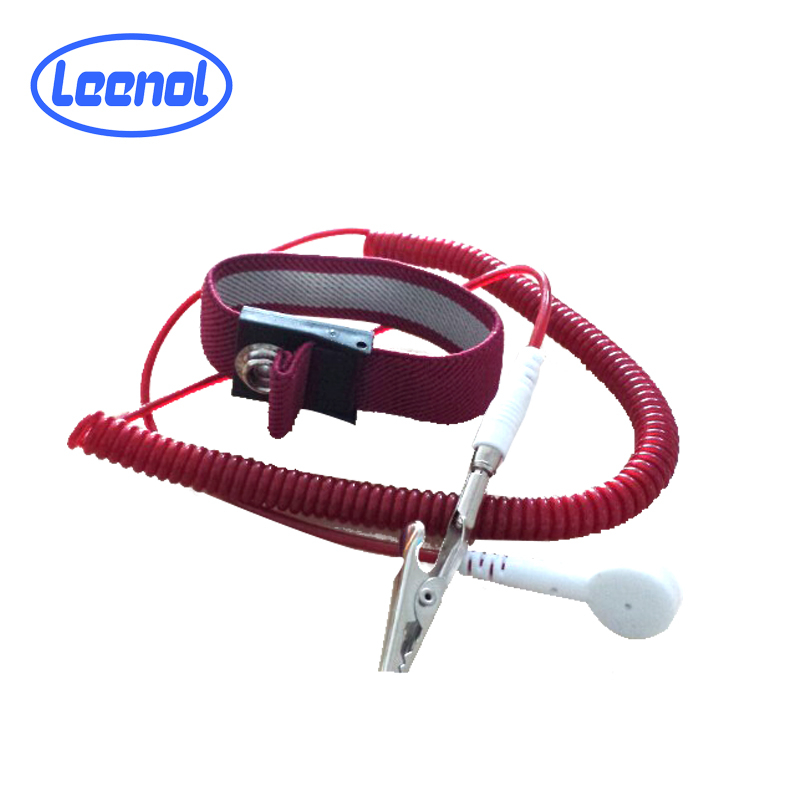
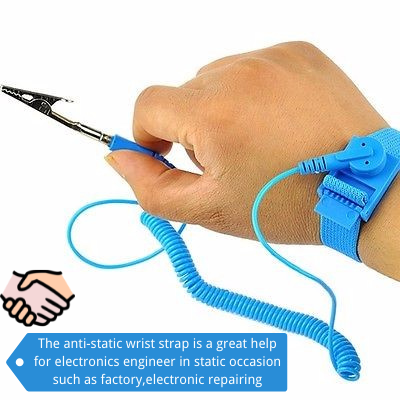
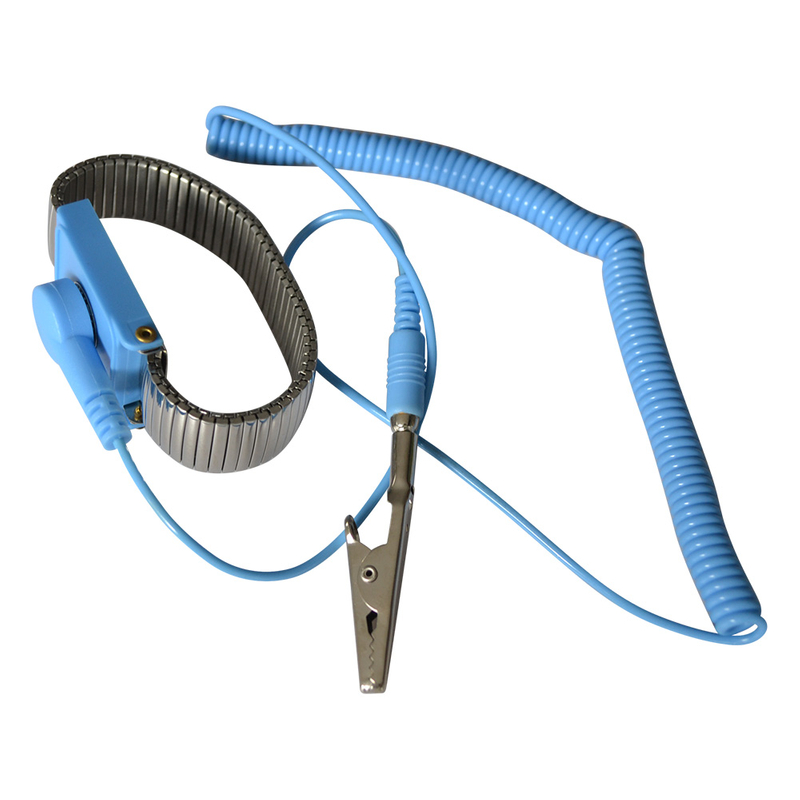
An ESD wrist strap (often called an anti‑static wrist strap) is a grounding device worn on the wrist to help prevent electrostatic discharge — the sudden flow of static electricity — from damaging electronic components.
The wrist strap typically consists of:
Elastic wristband with conductive fibers woven into it
Grounding cord that connects the strap to an external ground point
1 megaohm (1 MΩ) resistor built into the cord to limit current flow
This resistor slows the discharge of static electricity and helps prevent a sudden spike that could both harm components or create discomfort for the wearer.
ESD wrist straps work by giving static charge on a person’s body a controlled path to ground. Static electricity builds up when a person moves, touches insulating materials, or performs other actions that separate electrical charges. When that charge suddenly jumps to a sensitive electronic component, it can cause latent faults or immediate failure.
By connecting you to ground, the wrist strap ensures that the body and the work surface stay at a similar electrical potential, minimizing the chance of sudden discharge to electronic parts. This is the core purpose of ESD wrist straps.

It’s important to understand that static electricity and high‑voltage electrical systems are fundamentally different:
Static electricity typically involves high voltage but very low stored energy — enough to damage a semiconductor but not enough to cause serious harm to a human.
High‑voltage systems (like mains electricity at 110/220 V or industrial voltages) involve both high voltage and the potential for sustained current capable of causing serious injury or death.
ESD wrist straps are designed to deal with static discharge — they are not safety devices for high‑voltage electrical systems. They ensure controlled discharge of static charge, not protection from sustained current from live electrical sources.
ESD wrist straps are engineered specifically to manage electrostatic discharge, not ongoing electrical current from live power. Their purpose is to protect electronic devices — not to protect humans from electrocution or severe electrical shock.
Even though static events can involve voltages in thousands of volts, the total energy involved is extremely low compared to what’s found in mains power. This means that the wrist strap’s resistor and grounding path are adequate for static control but not for diverting dangerous currents found in live electrical systems.
The 1 MΩ resistor in ESD wrist straps limits current flow and helps prevent discomfort or minor shocks due to static discharge. However, this resistor is not a protective device against the large currents associated with high‑voltage circuits. In the event of contact with live electrical components, the wrist strap would not stop potentially fatal current from flowing through the body.
As one technical discussion confirms, the strap’s resistance is intended only to provide a controlled path for static, not to block or protect against mains voltage or other electrical hazards.
Another misconception is that because a wrist strap grounds you, it somehow protects you from all electrical hazards. This is untrue. Grounding in the context of ESD simply removes static charges from your body — it does not isolate you from dangerous electrical systems or prevent shock in electrical maintenance scenarios.
If you contact a live mains conductor while grounded, the current path through your body could still be dangerous because an ESD wrist strap doesn’t provide protective insulation or circuit interruption like proper personal protective equipment (PPE) does.
When working with high‑voltage electrical systems, don’t rely on ESD wrist straps for safety. Instead, use designated electrical safety equipment such as:
Insulated gloves and boots
Insulated tools
Ground‑fault circuit interrupters (GFCIs)
Voltage testers and circuit breakers
These devices and practices are designed specifically to protect against shock and electrocution hazards.
Proper training on electrical safety procedures is essential. Understand and follow safety standards and industry best practices when dealing with live circuits. In contrast, ESD wrist straps are tools for static control environments, not electrical safety aids for live voltage work.
ESD wrist straps are highly effective in environments where static buildup can damage components — such as when assembling printed circuit boards, repairing computer hardware, or working in semiconductor fabrication areas. They help maintain an Electrostatic Protected Area (EPA) by keeping personnel and devices at a similar electrical potential.
In these applications, the wrist strap’s grounding path helps protect sensitive electronics by reducing sudden static events.
In contrast, wearing an ESD wrist strap while performing electrical maintenance on live circuits or mains‑powered equipment offers no meaningful protection from high‑voltage shock or electrocution. Without proper equipment, you could still be exposed to life‑threatening hazards.
Industry safety guides explicitly warn against relying on static grounding devices for electrical safety. For example, best practices state that ESD devices should not be used as a substitute for PPE designed for electrical work.

One of the most persistent myths is that because ESD wrist straps ground static, they somehow shield the wearer from every type of electrical shock. This is inaccurate. Their design goal is static discharge control — not protection against mains or high‑voltage shocks.
Grounding via an ESD strap only equalizes electrostatic potential — it doesn’t protect against current flow from live circuits. For electrical safety, grounding must be part of a properly engineered system, combined with insulation and circuit protection.
In summary, ESD wrist straps are effective tools for preventing electrostatic discharge and protecting sensitive electronic components, but they are not effective against high‑voltage electrical shocks. Their design — including the 1 MΩ resistor — is intended to safely bleed static charge away from the body, not to act as personal protective equipment against live electrical hazards.
If you are working in environments where high‑voltage or mains electricity is present, always use the appropriate safety gear and follow established electrical safety standards. Proper PPE, training, and equipment are essential to prevent serious injury or worse.
At LEENOL, we understand the critical importance of both ESD control and workplace safety. We offer a comprehensive range of high‑quality ESD wrist straps and grounding solutions designed for electronics manufacturing, repair stations, and cleanrooms. Our products are engineered to meet international ESD standards and help protect your valuable components from static damage — while appropriate electrical safety practices ensure your team stays protected on the job. Contact LEENOL today to learn more about our ESD total solution offerings and how we can help improve both your static control and workplace safety.
1. Can an ESD wrist strap protect me from electrical shock?
No. ESD wrist straps are designed to protect electronic components from static discharge, not to protect humans from electrical shocks from live circuits.
2. Why do ESD wrist straps include a resistor?
The resistor controls the discharge of static electricity safely, limiting current flow so the wearer isn’t harmed by sudden static events.
3. Should I wear an ESD wrist strap when working on live electrical equipment?
No. ESD wrist straps have no meaningful protective effect against mains voltage or high‑current electrical hazards. Use proper electrical PPE for that purpose.
4. What protective gear should I use for high‑voltage work?
Use insulated gloves, insulated tools, GFCIs, voltage testers, and follow safety standards and procedures designed for electrical work.
5. How often should ESD wrist straps be tested?
Regular testing is recommended to ensure that the strap and its grounding connection remain effective in controlling static discharge.