English
Views: 269 Author: Site Editor Publish Time: 2026-08-19 Origin: Site


In a cleanroom, ESD clothing is expected to do more than look like standard workwear. It needs to provide appropriate coverage, support static-control requirements, and remain practical enough for employees to wear throughout a working shift.
That last point is easy to underestimate.
A garment can have suitable electrical characteristics and still be a poor choice if the sleeves are too short, the shoulders are restrictive, or the body is so loose that excess fabric gets in the way. When employees constantly pull at their sleeves, adjust the jacket, or leave a garment partially open because it feels uncomfortable, the problem is no longer simply about sizing. It becomes a matter of how consistently the garment is being used.
For facilities working with sensitive electronics, semiconductors, precision components, and other ESD-sensitive products, garment fit should therefore be considered alongside fabric, construction, electrical properties, cleanroom requirements, and the rest of the static-control program.
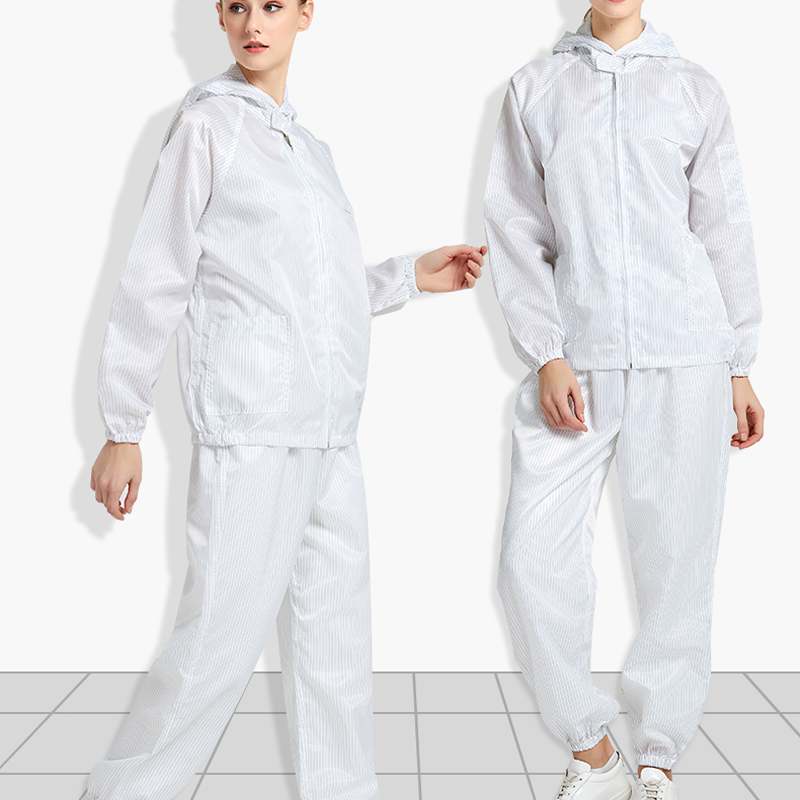 | 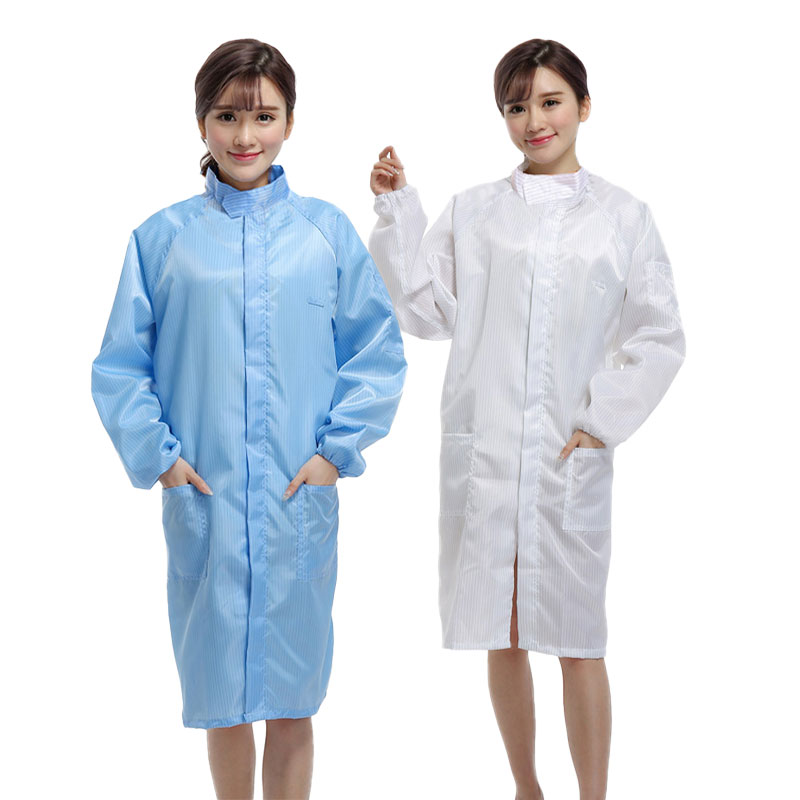 | 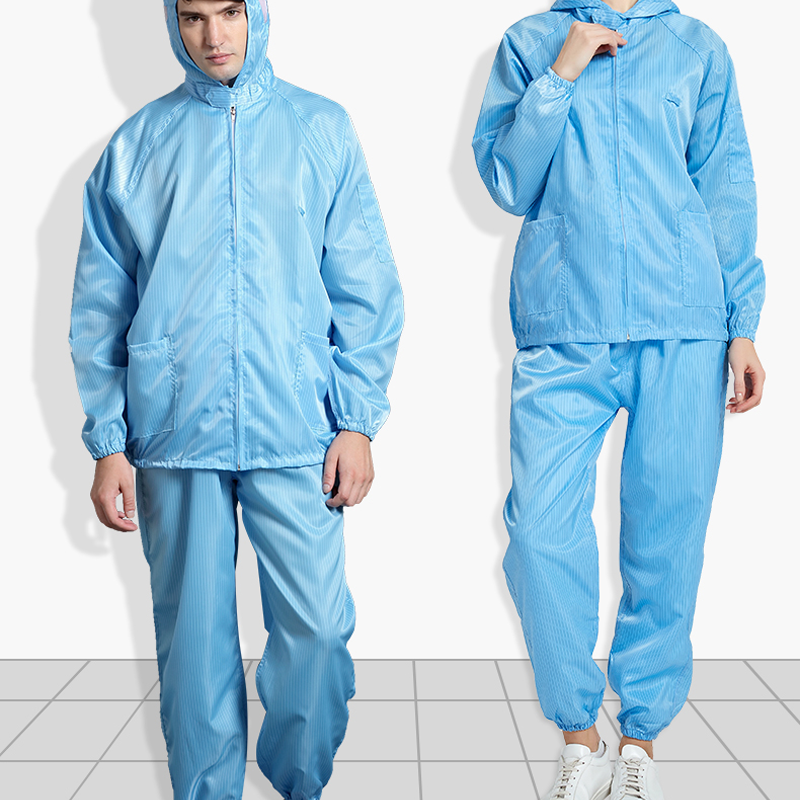 |
The basic purpose of ESD Clothes is to help control electrostatic charge as part of a properly designed ESD protection system. However, the garment can only perform its intended role if it is worn correctly.
Fit affects several practical aspects of use.
A garment that is too small can restrict movement and cause employees to adjust it repeatedly. A garment that is too large may leave excess material around the arms and body. Neither situation is ideal for precision work.
There is also a simple workplace reality: employees tend to wear equipment more consistently when it fits the way it should.
During a normal shift, employees rarely stand still.
They reach across benches, inspect components, sit at equipment, bend over workstations, move between production areas, and repeatedly use their hands. Every one of these movements changes the position of the clothing to some degree.
A well-fitted ESD garment should remain reasonably positioned while these movements take place. It should not constantly ride up, pull across the shoulders, or leave large gaps around the wrists and waist.
This does not mean the garment needs to be tight. The better goal is controlled coverage with enough room for normal movement.
Comfort is sometimes treated as a secondary consideration in cleanroom workwear. In practice, it can influence how consistently employees follow the required clothing procedure.
A technician who finds a jacket uncomfortable after several hours may start loosening closures or adjusting the garment repeatedly. Someone wearing a sleeve that is too short may pull at the cuff throughout the day.
These actions may seem minor, but repeated adjustments are a sign that the garment and the wearer are not working particularly well together.
A garment that is too small can create problems that are immediately noticeable.
The shoulders may feel restrictive. Sleeves may move upward when the wearer reaches forward. The front closure may pull when the employee bends or stretches. In coveralls, the problem can extend from the upper body into the legs and inseam.
For cleanroom personnel who work several hours at a time, these issues can become increasingly noticeable.
Sleeve fit deserves particular attention because much cleanroom work involves the hands and forearms.
When an operator reaches forward, a tight sleeve can move upward more than expected. The cuff may no longer sit comfortably around the wrist, and the wearer may compensate by pulling the garment back into position.
For electronics assembly, inspection, testing, and similar work, these movements can occur dozens or hundreds of times during a shift.
It is therefore better to evaluate sleeve fit while the wearer is actually moving rather than judging the garment only while standing upright.
A jacket can appear to fit correctly around the waist while still being too narrow across the shoulders.
Ask the wearer to extend both arms forward and then raise them. If the fabric pulls noticeably across the upper back or shoulders, the garment may be too small for the intended work.
This is one reason a simple fitting session can provide more useful information than choosing sizes based on height and chest measurements alone.
Yes.
Choosing a larger size does not automatically solve fit problems.
An oversized garment may provide plenty of coverage, but excessive fabric can interfere with equipment, work surfaces, and normal movement. Loose sleeves may extend beyond the wrist, while a wide jacket may catch on nearby objects.
In a controlled environment, unnecessary loose fabric can also create additional contact with surrounding surfaces.
The objective is not maximum looseness or maximum tightness. It is a practical fit that provides the required coverage without interfering with the operator's work.
Consider an employee working at a precision assembly station.
If the sleeves extend well beyond the wrists, they may interfere with the working area. If the body of the garment is significantly wider than necessary, it may make movement around benches or equipment less convenient.
These problems do not necessarily mean that the garment has failed its ESD function. They do, however, affect usability.
A garment that stays where the wearer expects it to stay is generally easier to work in.
The most reliable approach is to combine measurements with an actual movement test.
Standard clothing sizes are not universal. A "Large" from one manufacturer may have different sleeve, shoulder, or body dimensions from another manufacturer's Large.
For this reason, facilities should use the manufacturer's size chart instead of assuming that employees' normal clothing sizes will transfer directly.
Depending on the garment design, useful measurements can include:
Chest or bust circumference
Waist circumference
Shoulder width
Sleeve length
Garment length
Overall height
Inseam for trousers or coveralls
Expected undergarments or additional layers
The clothing worn underneath matters more than it might initially seem.
If employees wear additional cleanroom garments beneath the ESD outer layer, the selected size needs to accommodate that arrangement. A garment that fits perfectly over a T-shirt may feel considerably tighter over multiple layers.
A practical fitting session can include several ordinary movements.
Ask the wearer to:
Reach forward
Raise both arms
Bend down
Sit and stand
Turn from side to side
Walk normally
Work with the hands at bench height
Reach toward equipment positioned at different heights
The garment should remain reasonably positioned without excessive pulling or large amounts of loose material.
This type of test takes only a few minutes but can reveal issues that a measurement chart cannot.
Not by itself.
This distinction is important.
A correctly sized garment does not automatically make an ESD program compliant, just as a poorly fitted garment cannot be evaluated solely by appearance. Electrical properties, garment construction, grounding arrangements, other ESD equipment, and the facility's procedures all matter.
Fit is better understood as one part of the overall performance and usability of ESD workwear.
For example, LEENOL offers ESD garments using fabrics incorporating conductive fibers, including polyester-based and polyester/cotton constructions. Its product range includes ESD jackets, garments, coveralls, and other clothing configurations for cleanroom and electronics applications.
The specific garment should therefore be evaluated according to the requirements of the application rather than assuming that one style or fabric is suitable for every cleanroom.
Fit is influenced by more than the nominal garment size.
The cut, closure system, cuffs, collar, fabric construction, and overall design all contribute to how the garment feels during use.
For workers who spend most of their time at benches, shoulder and sleeve movement are particularly important.
The garment should allow the wearer to reach forward without excessive tension across the back. The front closure should remain secure during normal movement, and the cuffs should stay reasonably positioned around the wrists.
LEENOL's ESD clothing range includes different garment styles, including ESD jackets and garments, allowing facilities to consider the type of work when selecting clothing.
Coveralls are different because the garment needs to work as one piece.
A problem with the torso can affect sleeve movement, while insufficient length can create tension when the wearer bends or sits.
For coveralls, height and inseam deserve particular attention. The wearer should be able to bend, sit, walk, and reach without the garment becoming noticeably restrictive.
Fabric selection affects how a garment feels as well as its ESD characteristics.
A garment made from a different blend may have a different weight, flexibility, or drape. Two garments with similar measurements can therefore feel different during actual use.
LEENOL lists several ESD fabric constructions, including polyester with conductive fibers and ESD TC fabrics with conductive-fiber patterns. Its product information also indicates options such as different colors, sizes, and customized designs.
The practical lesson is straightforward: do not evaluate sizing separately from garment construction.
A size that works well in one fabric or garment design may not feel identical in another.
Getting the right size is only the beginning.
ESD garments are repeatedly worn, washed, handled, folded, and stored. Their condition can change over time.
The manufacturer's care instructions should therefore be followed rather than treating ESD clothing like ordinary casual workwear.
Facilities can establish simple checks for obvious signs of wear, including:
Damaged seams
Broken zippers or closures
Torn fabric
Worn cuffs
Missing buttons or fasteners
Significant staining
Visible changes after repeated washing
Alterations that were not part of the original design
If a garment becomes damaged enough that its fit or coverage changes, it should be assessed before being returned to normal use.
Cutting sleeves, adding patches, changing closures, or making other alterations may seem harmless.
However, ESD garments are designed as a system. Conductive elements and fabric construction can be distributed throughout the garment.
A modification could change how the garment functions or how much of the wearer it covers.
When a special size or design is needed, it is preferable to discuss the requirement with the manufacturer. LEENOL states that special sizes, designs, and colors can be customized for its ESD garments.
No.
This is probably the most important point to keep in mind.
Good fit improves usability and helps the garment remain correctly positioned, but ESD control depends on the complete protection system.
Depending on the facility, that system may include ESD footwear, wrist straps, grounding equipment, conductive flooring, ESD workstations, ionization, environmental controls, and regular verification.
LEENOL describes itself as an ESD total-solution supplier and offers products covering ESD clothing, fabrics, wrist straps, gloves, shoes, and other related equipment.
Therefore, ESD Clothes should be selected according to the facility's overall static-control strategy rather than treated as a standalone solution.
A company with ten employees may be able to manage garment selection informally. A large cleanroom with hundreds of workers needs a more consistent process.
Start by identifying the actual working conditions.
Consider the cleanroom classification, type of production, ESD sensitivity of the products, employee movements, clothing worn underneath, laundering method, and other protective equipment used in the area.
Then establish a practical fitting procedure.
If a company is ordering garments for a large workforce, it is not always necessary to test every employee before selecting the product.
Instead, representative workers with different body shapes and sizes can test the proposed garment.
This can reveal whether the sizing range is realistic before a larger order is placed.
The selected garment should work in the position employees actually use during production.
A garment that fits well while standing with the arms at the sides may perform poorly when the worker spends most of the shift leaning over a workstation.
Fit should therefore be judged against the real job, not just a size chart.
Several mistakes appear repeatedly when facilities purchase workwear.
One is ordering every garment according to standard retail clothing sizes.
Another is selecting a very loose garment because employees need freedom of movement. Excess material can create different problems.
A third is checking the garment only when the employee is standing still.
There is also a tendency to focus heavily on chest or waist measurements while overlooking sleeve length, shoulder width, garment length, and underlayers.
Finally, some companies focus on the garment's electrical specifications while paying too little attention to whether employees can actually wear it comfortably for an entire shift.
A better approach is to consider electrical performance, cleanroom suitability, construction, sizing, and daily usability together.
There is no single size or garment style that works for every facility.
A practical selection process can look like this:
Identify the cleanroom and ESD requirements.
Determine how the garments will be used during normal work.
Review the available fabric and garment constructions.
Check the manufacturer's electrical specifications.
Compare the manufacturer's size chart with actual employee measurements.
Test representative garments through normal work movements.
Check compatibility with other cleanroom clothing and PPE.
Establish appropriate washing and care procedures.
Inspect garments periodically.
Replace garments when their condition, fit, or performance is no longer suitable.
This takes more planning than simply ordering one size for everyone, but it can prevent a considerable amount of trouble later.
For cleanroom and electronics manufacturers, ESD Clothes should be treated as functional working equipment rather than ordinary uniforms. The right choice combines suitable static-control characteristics, appropriate cleanroom performance, practical garment construction, and a fit that allows employees to work normally throughout their shifts.
LEENOL provides ESD clothing and related static-control products for cleanrooms, laboratories, electronics manufacturing, and other controlled working environments. Its range includes ESD garments, conductive fabrics, ESD gloves, ESD shoes, wrist straps, and related products. LEENOL also offers options for different garment styles as well as customized sizes, colors, and designs. For companies developing a new personnel ESD program or improving an existing one, selecting garments according to the actual work environment, required ESD control, and employee fit can make the overall solution more practical and consistent.
Yes, but fit is only one part of the overall picture. A suitable fit helps keep the garment properly positioned and makes it easier for employees to wear it consistently. Electrical characteristics, fabric construction, grounding, and the rest of the ESD control program must also be considered.
No. ESD clothing should not be excessively tight. It needs to provide appropriate coverage while allowing the wearer to reach, bend, sit, walk, and perform normal work without unnecessary restriction. Excessively loose clothing can also be inconvenient because of the additional fabric.
Start with the manufacturer's size chart rather than an employee's usual retail clothing size. Check measurements such as chest, waist, shoulder width, sleeve length, height, and inseam where applicable. It is also useful to test the garment while performing normal work movements.
Yes. Depending on the manufacturer and product, customized sizes, colors, designs, and garment configurations may be available. LEENOL specifically states that special sizes, designs, and colors can be customized for its ESD clothing.
No. ESD clothing is one component of a broader static-control program. Depending on the application, additional measures may include ESD footwear, wrist straps, grounding systems, conductive flooring, ESD workstations, ionization, environmental controls, and regular testing. The clothing should be selected as part of the complete ESD control strategy.