English
Views: 669 Author: Site Editor Publish Time: 2026-01-27 Origin: Site


When you step into a work environment that involves sensitive electronic components or high‑tech manufacturing, one of the questions you’re likely to encounter is: Are my shoes ESD safe? It’s not just about having sturdy shoes that protect your feet physically — in many settings, you also need footwear that protects electronic equipment and components from electrostatic discharge (ESD). But how exactly do you figure out if the shoes you’re wearing — or planning to buy — are actually ESD safe?
In this article, We’ll cover what “ESD safe” means, the common labels and markings to look for, how the design and materials help prevent static buildup, and how testing works. I’ll also share some real‑world tips for checking shoes and deciding what’s best for your environment, and in the final section I’ll touch on why choosing the right ESD footwear matters — including how products from LEENOL can help meet your ESD needs.
First things first: what is electrostatic discharge? In the simplest terms, ESD happens when static electricity that has built up on one object suddenly jumps to another object. You’ve probably felt this when you walk across a carpet and then touch a doorknob — zap! But when static discharge occurs near sensitive electronic components, the result can be irreversible damage to the equipment.
This is why many cleanrooms and electronics manufacturing facilities have strict ESD control programs. These programs aim to prevent static buildup and dissipate it safely so that both products and personnel are protected.
So when we talk about shoes being “ESD safe,” we mean that the shoes are designed to control static electricity — specifically, to prevent static from building up on your body and then discharging into sensitive equipment.
It’s important to note that ESD safety is not the same as physical safety. Shoes that are ESD safe are not necessarily going to protect your toes from heavy objects, and shoes that protect against physical hazards aren’t automatically going to control static. The term “ESD safe” strictly relates to the shoe’s electrical properties — its ability to help manage electrostatic charges.
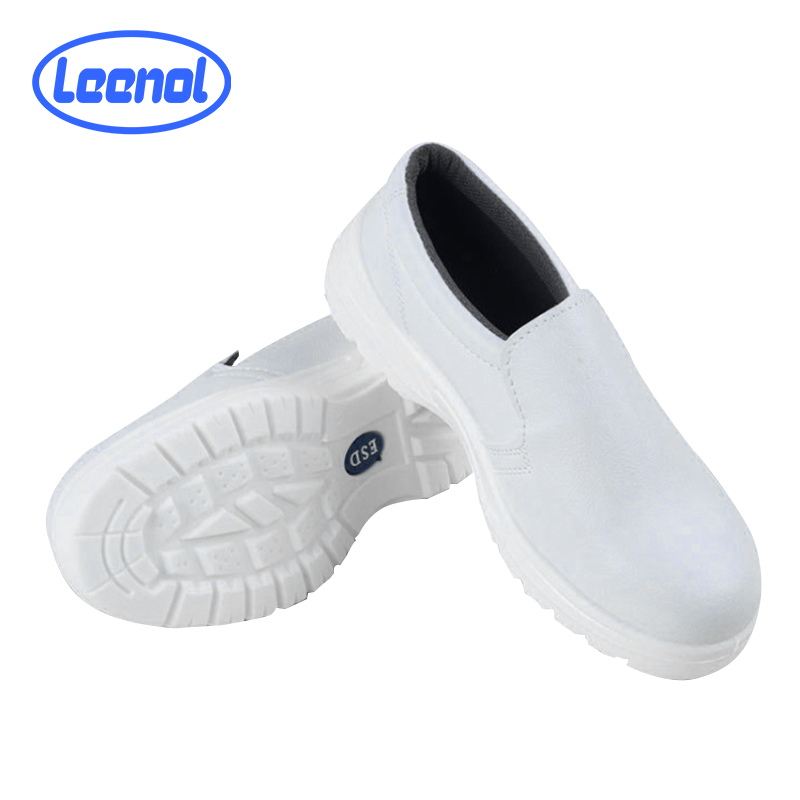
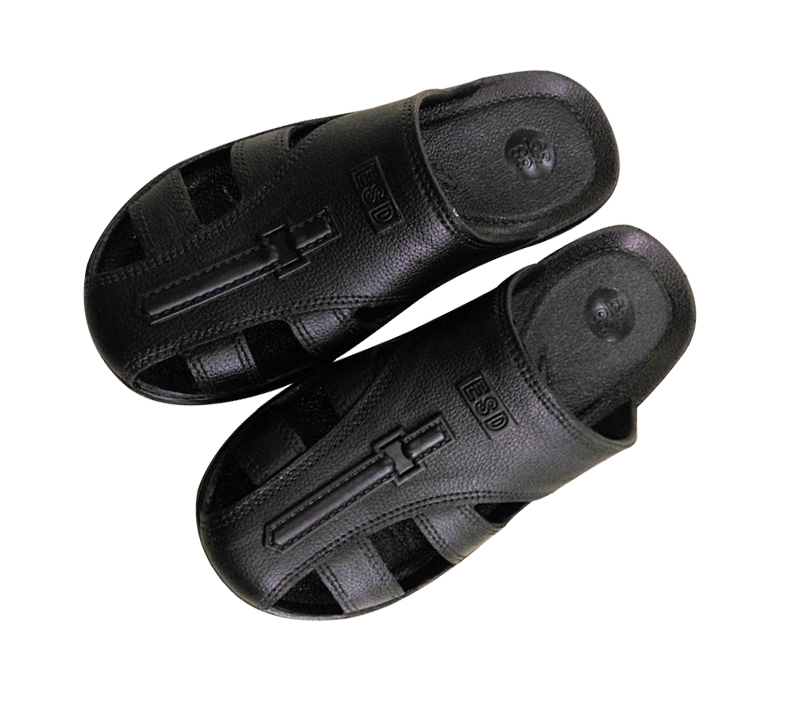
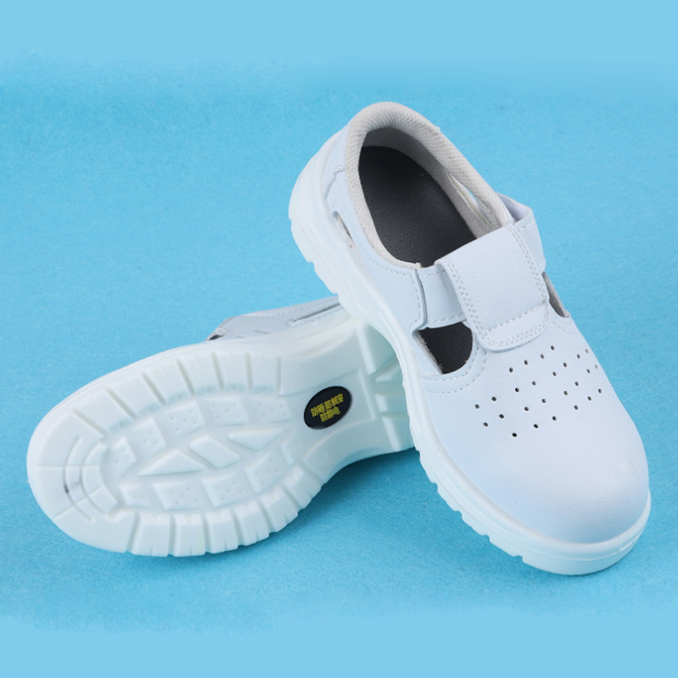
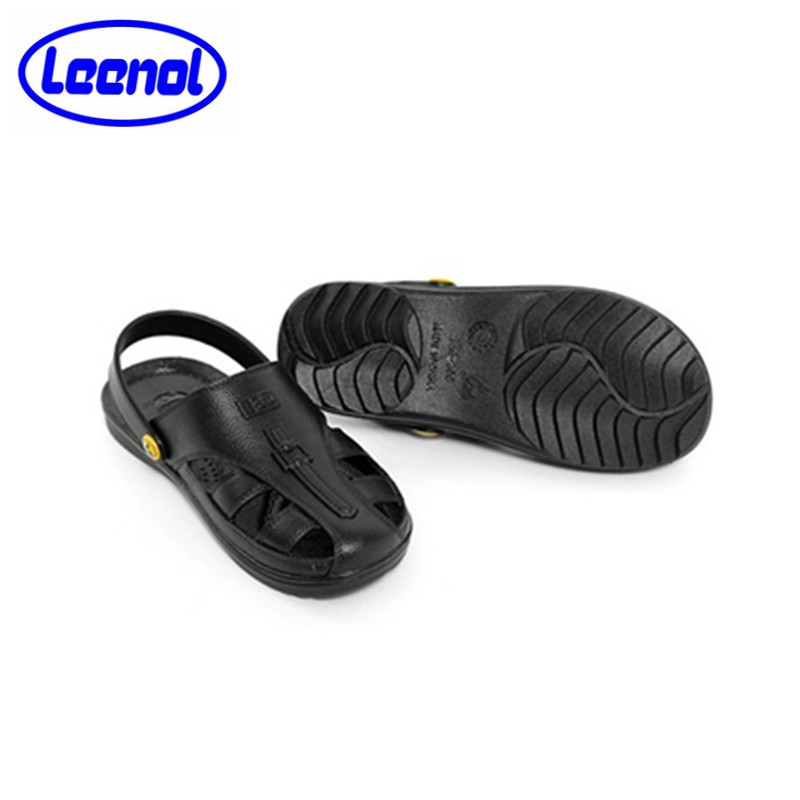
One of the first places to check when determining if shoes are ESD safe is the labeling.
Most reputable manufacturers will label their ESD‑safe shoes clearly. You might see:
A logo or icon indicating ESD protection
Markings such as “ESD,” “Electrical Hazard,” or specific codes that reference ESD compliance
ESD ratings printed on the tongue of the shoe or inside the insole
ESD notes on the shoebox or product tag
If you don’t see any of these markings, and there’s no documentation provided, that’s a red flag that the shoes may not be ESD safe.
Different regions and industries use slightly different standards. You might see references like:
ANSI/ESD — Common in the U.S., referring to standards developed by the American National Standards Institute in partnership with ESD associations
IEC standards — Used internationally and often referenced in product specifications
These codes can seem cryptic if you’re not familiar with them, but the key thing is that they indicate the shoes have been tested and meet specific electrical resistance or dissipation criteria. Always check the product documentation for these references.
One of the most reliable ways to confirm if shoes are ESD safe is to check the specification sheet provided by the manufacturer. This sheet will typically list things like:
The electrical resistance range the shoe meets
The standards it complies with
Any test reports or certifications
If you’re buying shoes for work — especially in a regulated environment — don’t hesitate to ask for this documentation. It’s your best assurance that the shoes truly perform as claimed.
So what makes a shoe ESD safe in the first place? It comes down to the materials and construction.
ESD shoes aren’t built like regular shoes. They incorporate materials that help static electricity move from your body into the ground, instead of building up on your body or discharging unpredictably.
There are a few categories of materials you might see:
Conductive materials: These provide a direct path for electrical charges to flow to ground. They have very low resistance and help quickly dissipate static.
Dissipative materials: These control the flow of electrical charges by slowing down how fast static energy moves. They’re often used because they provide a controlled path that avoids sudden discharges.
Insulative materials: These trap charges and are not suitable for ESD protection (so if a shoe has mostly insulative materials, it’s probably not ESD safe).
The goal in an ESD shoe is to make sure that static electricity doesn’t have an opportunity to build up on your body. Instead, it’s slowly and safely transferred through the shoe’s materials, through the sock, and into the ground.
Beyond just material selection, there are specific design features that enhance ESD performance:
Sole construction: Some ESD shoes have special soles that offer controlled resistance.
Heel and toe grounders: Certain designs include conductive elements near the heel and toe to improve contact with the ground.
Static‑dissipative insoles: Insoles made from dissipative materials help manage charge flow from the foot into the shoe body.
When you’re checking shoes, understanding whether these elements are present — and how they’re described — helps you gauge the ESD performance.
Even if a shoe is labeled ESD safe and the materials look appropriate, real confirmation often comes from testing.
ESD testing typically measures the electrical resistance of the shoe. The idea is to determine whether the shoe allows a static charge to safely and predictably move to ground.
A common type of test is a surface resistance test, which measures how easily electricity flows across or through the surface of the shoe. There are tools called ESD meters or resistance testers used by safety officers or quality control personnel to perform these measurements.
Different standards specify acceptable resistance ranges. For example:
Shoes with resistance that’s too low might be too conductive, meaning they could allow current to flow too freely.
Shoes with resistance that’s too high might not dissipate static effectively.
Each ESD standard will outline the target range that products should fall into. If you have access to a tester or if your site does periodic checks, you can use that data to confirm whether your shoes meet the specified criteria.
How often you test your ESD shoes can depend on your environment and workplace policies. In many industries, periodic testing is standard practice. Some facilities test at the start of a shift, others once a day, and some monthly. The key is consistency and making sure that the shoes haven’t degraded over time.
So what does all of this mean for you — the person who’s trying to figure out if your shoes are ESD safe without having to become an electrical engineer? Here’s a practical checklist.
Before you even think about testing, start with a visual inspection:
Look for ESD labels or markings on the shoe and packaging.
Check the product documentation — a tag or spec sheet is often included.
Inspect the materials: if the shoe looks like it has rubber or plastic soles that are just normal insulative materials, that might not be enough for ESD protection.
If you’re buying shoes for work, especially in environments like cleanrooms or electronics assembly, don’t hesitate to ask the supplier or manufacturer for the electrical resistance specifications and any test reports. A reliable company will provide this information readily.
Some workplaces have handheld ESD shoe testers. These devices are designed to give a quick readout of whether the shoe meets the resistance criteria for your environment. If your company has one available, using it is one of the easiest ways to confirm ESD safety on the spot.
It’s worth noting that your shoes are only one part of an ESD control system. The flooring and grounding conditions in your facility also play a big role in how well static is managed. ESD‑safe shoes on non‑ESD flooring may not perform as intended, and vice versa.
Alright, now I’ll share some advice that actually helped me when I first had to figure all this out on the job.
If your workplace has a safety officer, EHS team, or even a supervisor with experience, ask them what specific ESD requirements you need to meet. There’s no shame in asking — it’s literally their job to make sure you’re safe and compliant.
When you get a pair of ESD shoes that you’re told are compliant, keep the spec sheets and test reports somewhere accessible — a digital folder or notebook. That way, if someone asks you to verify compliance, you’ve got the proof right there.
Only buy shoes from companies that offer clear compliance with recognized ESD standards. It’s tempting to save a few bucks on cheaper footwear, but in environments where ESD protection matters, uncertified products can cause real problems.
Even though ESD safety is the priority, you’re going to wear these shoes for hours. If they’re uncomfortable, you’ll end up adjusting your gait or wearing them improperly, which can be unsafe. So find the right balance between performance and wearability.
Being able to tell if shoes are truly ESD safe isn’t just about spotting a logo — it’s about understanding the materials, checking the labels and documentation, and knowing how testing works. Whether you’re in a cleanroom, an electronics lab, or a production facility, taking the time to verify ESD safety can prevent damage to expensive components and help keep your work environment compliant and safe.
If you’re looking for reliable ESD footwear that simplifies this process, LEENOL offers a wide range of high‑quality ESD shoes designed for various industrial and cleanroom applications. LEENOL’s products are clearly labeled, tested to meet recognized ESD standards, and backed by detailed specifications so you can confidently verify compliance. From ESD high boots to unisex anti‑static work shoes with conductive materials, LEENOL has solutions that help protect both personnel and sensitive equipment — all while maintaining comfort and durability for long hours on your feet.
By combining careful inspection, proper testing, and trusted suppliers like LEENOL, you can ensure that your footwear not only meets ESD requirements but also supports your performance and safety in the workplace. Stay informed, stay compliant, and don’t underestimate the impact of the right shoes.