English
Views: 358 Author: Site Editor Publish Time: 2026-02-12 Origin: Site


When you walk into a cleanroom or electronics assembly area, everything looks controlled, precise, and almost sterile. But there’s an invisible risk lurking everywhere in those environments: electrostatic discharge (ESD) — sudden electrical sparks that you might never see or hear but can wreak havoc on delicate electronics. In places where tiny microchips, sensors, and high-precision assemblies are handled, even the smallest static spark can cause product defects, equipment damage, or costly rework.
That’s where ESD clothing comes into play. It might look like regular lab gear, but ESD garments are designed to keep static levels low, protect sensitive devices, and support reliable production processes. Let’s unpack why ESD clothing isn’t just helpful — but truly necessary — in both cleanrooms and assembly areas.
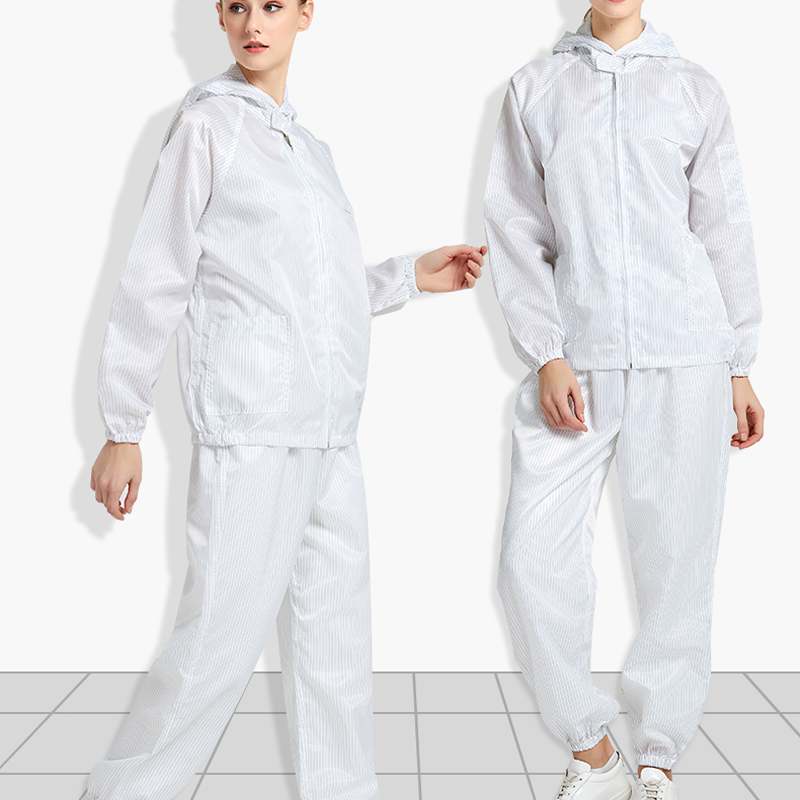
ESD clothing is specialized apparel made from fabrics that incorporate conductive or static-dissipative fibers. These fibers form a continuous network throughout the garment, allowing static charges generated by everyday movement — walking, bending, or shifting — to safely dissipate instead of building up and discharging unpredictably.
In effect, well-designed ESD clothing helps create a kind of wearable “shield” around the wearer that reduces static charge accumulation and brings charges to ground in a controlled way. This is particularly important when people are working with electrostatic-sensitive devices — components that can be damaged or degraded by even minor static events.
Cleanrooms and assembly environments are tightly controlled spaces used for handling sensitive products like semiconductors, PCBs, medical devices, and aerospace electronics. They are engineered to reduce dust, microbes, and airborne particles, but controlling static electricity is just as important.
Even in a cleanroom, static can build up on everyday clothing — if the garment doesn’t allow charges to dissipate, those charges can transfer suddenly to sensitive electronics. In assembly lines where teams are placing, testing, and packaging parts, that kind of discharge can cause:
Instant damage to tiny, expensive components
Latent defects that don’t appear until later in the product’s life
Production delays and rework that increase costs and slow delivery schedules
Cleanrooms often have additional measures — such as grounded flooring, ionizers, and ESD-safe workstations — but none of these can replace the role of proper ESD clothing in protecting the human body as a potential charge source.

In cleanrooms and assembly areas, clothing serves more than one function. Traditional cleanroom garments help prevent dust, skin flakes, and fibres from entering the environment. ESD clothing goes a step further by controlling static that could otherwise damage electronics or even attract particles that compromise cleanliness.
By integrating static-dissipative material, ESD clothing both:
✔ Minimizes static charge buildup on the wearer, and
✔ Reduces the risk of that charge transferring to sensitive product surfaces
This dual function is why, in many high-precision industries, ESD clothing is not optional but a standard part of the protective equipment worn inside controlled areas.
It’s important to understand that ESD clothing doesn’t work alone — it’s part of a comprehensive ESD control program. Cleanrooms and assembly areas often combine multiple strategies to keep electrostatic issues under control, such as:
Grounded wrist straps and footwear to dissipate charge to ground
Conductive flooring and anti-static mats
Ionizers to neutralize charges on insulative materials
ESD-safe tools and work surfaces
ESD clothing complements these measures by reducing the amount of charge that ever builds up on personnel in the first place, making all other controls more effective.

In regulated environments — especially those involving high-value or high-risk electronic manufacturing — industry standards and internal quality systems usually expect static control protocols that include ESD clothing. Even if a specific standard doesn’t mandate ESD garments by name, failing to control static risks can lead to out-of-spec products, audit findings, and lost customer confidence.
In many facilities, ESD clothing is not just recommended — it’s part of the documented protection program that ensures consistency and traceability in quality processes.
Modern ESD clothing is engineered to be both functional and wearable. High-quality garments made from static-dissipative fabrics are designed to be comfortable for long shifts in controlled environments, and they often integrate features like:
Breathable, low-lint materials
Conductive fiber grids for charge dissipation
Full coverage or modular designs for different tasks
This balance of protection and practicality helps employees wear the gear correctly and consistently, which is critical for maintaining effective static control.
In both cleanrooms and assembly areas — especially those handling sensitive electronics — static electricity is a real and unavoidable risk. Left unchecked, it can damage components, interfere with quality, and undermine production goals. That’s why ESD clothing is widely used as a foundational part of static control programs in controlled environments.
By integrating conductive materials to safely dissipate charges, supporting other ESD controls, and aligning with standards and process requirements, ESD clothing helps protect both products and people on the shop floor.
When it comes to building truly effective static-controlled environments in cleanrooms and assembly areas, having the right ESD clothing is just one piece of the puzzle — but it’s an important one. For dependable solutions, many manufacturers turn to LEENOL, a dedicated ESD total solution provider that offers a wide range of protective garments designed specifically for electrostatic sensitive environments. LEENOL’s ESD clothing products are made with high-quality anti-static fabrics and conductive fibers that help dissipate charges safely and reliably, whether you’re working on PCB assembly, semiconductor production, or precision cleanroom processes. Besides garments, LEENOL also supplies matching ESD materials, tools, and accessories to support a broader static-control program — helping companies not only protect sensitive components but also meet international standards and improve overall operational stability.
1. What makes ESD clothing different from regular cleanroom garments?
ESD clothing includes conductive or static-dissipative fibers designed to prevent static buildup and safely dissipate charges, while standard cleanroom garments primarily focus on contamination control.
2. Can static damage happen even in a cleanroom?
Yes — even in ultra-clean environments, static charges can build up on people and equipment and discharge unpredictably, damaging sensitive electronics.
3. Is ESD clothing enough on its own?
No single method eliminates static risk completely — ESD clothing is most effective when used in combination with grounding, ionization, and other static control measures.
4. Do industries require ESD clothing?
Many regulated industries expect static control programs that include ESD clothing as a documented measure, especially in electronics and semiconductor manufacturing.
5. Are there different types of ESD garments?
Yes — from jackets and smocks to lab coats and full coverage garments, different types of ESD clothing are chosen based on task and environment.