English
Views: 286 Author: Site Editor Publish Time: 2026-07-17 Origin: Site


ESD fabric is designed to do more than provide a clean, professional appearance. In electronics manufacturing, semiconductor production, laboratories, cleanrooms, and other electrostatic protected areas, it helps control static charge around the wearer and reduces the risk of electrostatic discharge reaching sensitive components.
However, ESD fabric is still a textile. It collects dust, body oils, process residues, and other contaminants during daily use, so regular cleaning is unavoidable. This creates a practical question for production managers and ESD coordinators: what happens to the fabric’s conductivity after repeated washing?
The answer is not simply that washing is good or bad. Correct washing can remove contamination and help the fabric perform consistently. Incorrect washing, on the other hand, can damage conductive fibers, leave insulating residues, weaken seams, and shorten the garment’s usable life.
Understanding the difference is important. An ESD garment may still look perfectly acceptable after dozens of wash cycles while no longer providing the electrical performance expected in an ESD control program.
 |  | 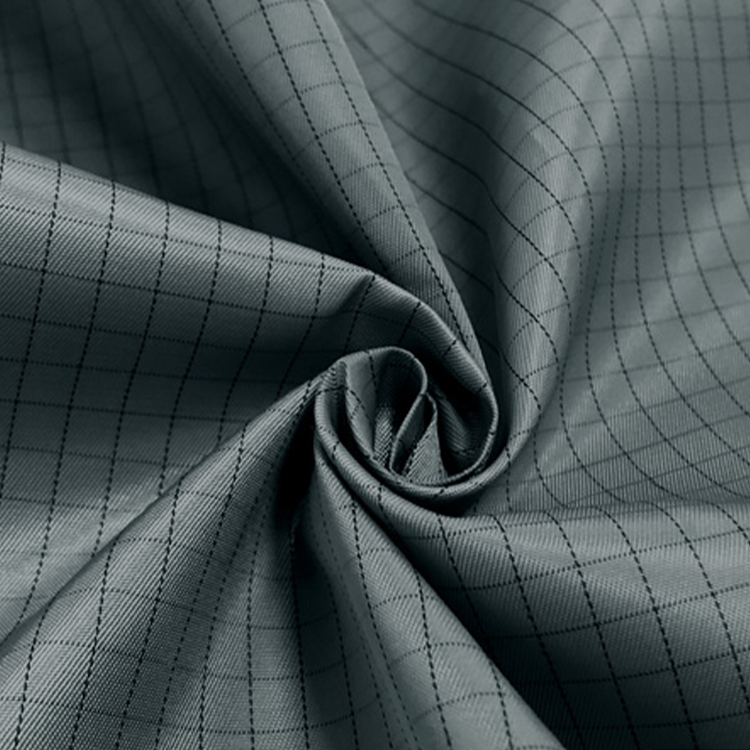 |
Most ESD fabric combines conventional textile fibers with conductive fibers or yarns. Polyester and cotton-polyester blends are commonly used as the base material, while carbon-containing fibers are woven into the textile in a grid, stripe, or other repeating pattern.
LEENOL’s ESD fabric range, for example, includes polyester and cotton-based materials incorporating carbon-fiber grids for static-control clothing and cleanroom applications. The conductive pattern helps distribute and dissipate electrostatic charge rather than allowing it to remain concentrated in one area of the garment.
The conductive fibers form an electrical network across the fabric. In a finished garment, that network should continue across individual panels, sleeves, cuffs, and seams.
This is why the performance of an ESD garment cannot always be judged by testing a small piece of fabric alone. A fabric sample may still show acceptable resistance while the finished garment has poor electrical continuity because a seam, cuff, snap, or grounding point has deteriorated.
IEC 61340-4-9 includes methods for testing resistance between garment sleeves, panels, interconnected components, and designated groundable points. It also recognizes that garment resistance is only one part of a complete performance evaluation.
There is a substantial difference between conductivity created by permanently integrated conductive fibers and conductivity created mainly by a surface treatment.
When carbon or conductive filaments are woven directly into the textile, the conductive structure is generally more resistant to routine washing. When conductivity depends heavily on a coating or chemical finish, repeated washing may gradually remove or crack that surface layer.
This does not mean every carbon-grid fabric will survive the same number of washes. Fiber quality, conductive-yarn percentage, weave construction, garment design, detergent selection, water temperature, drying method, and mechanical handling all affect actual service life.
A washing cycle exposes an ESD garment to several stresses at the same time. Water is only one of them. Detergent chemistry, rotation, bending, abrasion, rinsing, extraction, and drying can all influence the conductive system.
A single incorrect wash may not produce an obvious failure. More commonly, the damage is cumulative. Resistance may change gradually until the garment eventually falls outside the facility’s acceptance criteria.
Inside a washing machine, garments rub against the drum and against one another. The fabric is repeatedly folded, stretched, compressed, and twisted.
Ordinary clothing is designed to tolerate this treatment mainly without losing appearance or strength. ESD fabric has another concern: its conductive fibers must remain electrically connected.
Aggressive washing can cause:
Breakage of fine conductive filaments
Wear at folds and high-friction areas
Damage around elbows, cuffs, pockets, and closures
Separation of conductive yarns from surrounding fibers
Loss of electrical continuity across seams
Increased resistance between different garment panels
Research on conductive textiles consistently shows that repeated washing and abrasion can raise electrical resistance, although the amount of change depends strongly on the conductive material and how it is integrated into the textile.
A gentle wash cycle is therefore not just a way to protect the garment’s appearance. It reduces physical stress on the conductive network.
Detergent selection deserves more attention than it usually receives.
Some detergents leave fragrances, brighteners, softening agents, or other residues on the textile. These residues may form a film around fibers, alter moisture behavior, attract contamination, or interfere with consistent resistance measurements.
Powdered detergents can also be difficult to dissolve completely, especially in cool water. Undissolved particles may remain in the fabric or collect around seams and cuffs.
For most ESD garments, a mild liquid detergent is the safer choice. The detergent should be free from bleach and conventional fabric softener unless the garment manufacturer has specifically approved those ingredients.
It is also important to use the correct amount. More detergent does not necessarily produce a cleaner garment. Excess detergent may simply create more residue, particularly when the rinse cycle is short.
Bleach is a common laundry product, but it is generally unsuitable for ESD garments.
Chlorine bleach is chemically aggressive. It may degrade textile fibers, affect conductive components, weaken stitching, or alter surface treatments. The visible fabric may remain intact even while electrical properties begin to change.
Industry care instructions for static-control smocks commonly specify cool or warm washing, low-temperature drying, and no bleach. Some manufacturers also recommend non-ionic detergents because they are less likely to contaminate conductive fibers.
Unless the ESD fabric supplier has confirmed compatibility with a specific bleaching process, bleach should be excluded from the wash procedure.
Fabric softener creates a lubricating layer that makes conventional clothing feel smoother. That same layer can be problematic on ESD fabric.
A softener film may coat conductive yarns and change the electrical path across the textile. It may also attract or retain unwanted residues. In some cases, a garment treated with softener will look and feel better while producing less reliable resistance results.
This is one of the most common maintenance errors because workers naturally assume that anything safe for ordinary uniforms is also safe for ESD clothing. It is not.
ESD garments should be washed as technical protective equipment, not as general workwear.
Heat affects both the textile and the conductive system.
Hot washing can increase fiber stress, promote shrinkage, weaken coatings, and contribute to dimensional changes. High-temperature tumble drying can be even more damaging because the garment experiences heat and mechanical action simultaneously.
Conductive monofilaments and heat-sensitive textile components may lose flexibility or deteriorate when repeatedly exposed to excessive temperatures. Desco’s maintenance guidance, for example, warns against laundering temperatures above 120°F for its carbon-suffused monofilament garments and recommends low-heat tumble drying or hang drying.
The correct temperature should always come from the specific garment or fabric care instructions. As a general rule, cool or moderately warm water and low-temperature drying are preferable.
In some situations, yes.
An ESD garment used in a factory may collect oils, dust, flux residues, adhesives, skin products, and other contaminants. These materials can interfere with the surface of the fabric or produce inconsistent measurements.
A controlled wash may remove those contaminants and restore more stable performance. This is one reason ESD clothing should not simply be worn until it looks dirty. A garment may require cleaning before visible staining becomes obvious.
The important distinction is between controlled cleaning and uncontrolled laundering.
Controlled cleaning uses an approved detergent, defined temperature, appropriate cycle, complete rinsing, suitable drying, and post-wash inspection. Uncontrolled laundering means the garment is mixed with ordinary clothing and washed using whatever products and settings happen to be available.
The first approach supports an ESD control program. The second introduces unnecessary variation.
The service life of ESD fabric should not be defined by appearance alone.
A garment can remain comfortable, retain its color, and show no major tears while its resistance has moved outside the acceptable range. Conversely, minor cosmetic wear does not always mean the garment has lost its static-control function.
For that reason, there is no universal statement such as “all ESD fabric lasts 50 washes” or “all ESD garments must be replaced after 100 washes.”
Some manufacturers validate specific garments for a stated number of laundering cycles under defined conditions. Those claims apply only when the recommended procedure is followed. They should not be treated as a guarantee under different detergents, temperatures, machines, or drying methods.
ISO 6330 provides standardized domestic washing and drying procedures for textile testing, including specified detergents and washing conditions. These controlled procedures help manufacturers compare textile performance, but actual factory laundering may still differ from laboratory testing.
During the first few washes, the fabric may experience relatively small changes. Loose processing residues can be removed, and the garment may become slightly softer.
If the conductive fibers are well integrated, electrical performance may remain stable. However, problems can appear early when conductivity relies on a weak coating or when the garment is exposed to bleach, strong alkalis, high heat, or aggressive extraction.
After repeated use and laundering, wear tends to become concentrated in specific areas.
Cuffs, elbows, front closures, pockets, seat areas, and frequently folded sections often receive the greatest mechanical stress. Seams may also become important failure points because electrical continuity must pass from one fabric panel to another.
At this stage, average fabric resistance may still look acceptable, but panel-to-panel measurements can reveal uneven performance.
Toward the end of an ESD garment’s working life, the changes are not always dramatic. In many cases, there is no single wash cycle after which the garment suddenly stops working. The decline is usually gradual.
One conductive yarn may break at the elbow. A seam may lose continuity after repeated stretching. The area around a front closure may become worn from daily opening and closing. None of these problems necessarily makes the garment look unusable, but together they can affect how charge moves across the fabric.
This is where appearance can be misleading. A coat may still be clean, comfortable, and free from obvious holes while its electrical resistance has become unstable. Another garment may look faded but still pass the required electrical checks. For this reason, retirement decisions should not be based only on color, softness, or visible age.
Common signs that a garment may be approaching the end of its usable life include damaged cuffs, worn elbows, loose seams, broken snaps, thinning fabric, cracked conductive coatings, and visible disruption of the conductive grid. Permanent oil or chemical contamination is another concern, especially when normal laundering can no longer remove it.
The most important warning sign, however, is an electrical test result that falls outside the company’s approved range. Once a garment can no longer provide reliable continuity between its panels, sleeves, or grounding points, it should be removed from ESD-controlled work.
There is no single laundry procedure that suits every ESD textile. Different fabrics use different fibers, conductive yarns, coatings, and garment constructions. The care label and technical instructions supplied with the material should therefore come first.
That said, most washable ESD garments benefit from a fairly conservative laundry process.
Before sending a new ESD garment into a normal laundry cycle, check what the supplier actually allows. The technical sheet should ideally state the permitted washing temperature, detergent restrictions, drying conditions, and whether the garment is suitable for household or industrial laundering.
This step is easy to overlook when a company purchases ESD clothing in bulk. The garments may be treated like regular uniforms from the first day they arrive. By the time resistance readings begin to change, nobody is quite sure how they have been washed.
A better approach is to establish the laundry method before the garments are issued.
ESD clothing should not normally be washed together with towels, heavily soiled workwear, or garments treated with fabric softener.
Towels release lint. Maintenance uniforms may carry grease, metal particles, or chemical residues. Ordinary clothing can introduce fragrance additives, softener films, and dyes. These materials may not completely disappear during rinsing.
Separate washing also makes the process easier to control. When every load contains similar garments, it is simpler to keep detergent dosage, water temperature, and drying conditions consistent.
Zippers and closures should be secured where appropriate, and pockets should be checked before washing. Garments with exposed metal hooks or rough fasteners should not be mixed into the same load because they can catch on the fabric and damage conductive yarns.
For routine cleaning, a mild liquid detergent is usually preferable to a heavily perfumed powder or an aggressive industrial cleaner.
Liquid detergent tends to dissolve more evenly, particularly at lower washing temperatures. It is also less likely to leave undissolved particles in seams, cuffs, or folds.
The detergent should not contain chlorine bleach or conventional fabric softener unless the fabric supplier has specifically approved them. Strong alkaline products and stain removers should also be treated with caution.
Using extra detergent is not a good substitute for a proper wash cycle. An overloaded dose may leave more residue in the fabric, especially when the machine uses limited rinse water. In practice, correct measurement and thorough rinsing usually matter more than using a stronger concentration.
High temperatures may help remove some forms of contamination, but they also place more stress on the textile.
Repeated exposure to hot water can affect shrinkage, coatings, seams, and the flexibility of conductive fibers. High-temperature tumble drying adds another layer of mechanical stress because the garment is heated while being continuously folded and dropped inside the drum.
For ordinary perspiration, dust, and light production contamination, cool or moderately warm water is often sufficient. When a higher-temperature sanitation process is required, the garment supplier should confirm that the fabric can tolerate it.
Low-heat drying or air drying is generally the safer choice. Garments should not be left in a hot dryer longer than necessary simply because the machine has not been checked.
Rinsing is one of the least discussed parts of ESD garment care, yet it can have a noticeable effect on the final result.
Detergent residue may change the feel of the fabric and lead to inconsistent resistance readings. It can also attract further contamination during use.
When garments feel unusually stiff, slippery, or heavily scented after washing, the rinse process should be reviewed. An additional rinse may help, but the result should be checked rather than assumed.
The aim is not to make the garment smell strongly “clean.” It is to remove dirt and processing residue without leaving a new layer of chemicals behind.
Wash records are useful, but they do not show whether a garment still performs correctly. A coat that has been washed 40 times may still be suitable for use, while another may fail much earlier because it was exposed to the wrong detergent or excessive heat.
Testing provides the missing information.
Testing one convenient spot in the middle of a garment may provide a quick reading, but it does not tell the whole story.
An ESD garment is made from several fabric panels joined by seams, cuffs, closures, and sometimes grounding components. Charge needs to move through this complete structure. A good reading from the back or chest area does not automatically mean that the sleeves, cuffs, or connecting seams are still performing properly.
Wear is rarely distributed evenly. Elbows bend throughout the working day, cuffs rub against benches, and front panels are pulled whenever the garment is opened or closed. These areas often begin to deteriorate before the larger, flatter sections of fabric.
For this reason, testing should cover the points that are most relevant to the garment design. This may include measurements across the fabric surface, from one sleeve to the other, between separate stitched panels, or from the garment body to a grounding snap. For grounded garments, a worn-system measurement may also be appropriate.
The purpose is not to collect as many readings as possible. It is to confirm that the electrical path still exists where it is actually needed.
The company’s ESD control plan should state which locations are tested and what results are acceptable. Using a resistance limit taken from a different garment or supplier can be misleading because the materials and construction may not be comparable.
Resistance readings are sensitive to the conditions under which they are taken.
Relative humidity is one of the most obvious influences, but it is not the only one. The length of time the garment has been conditioned, the pressure and position of the electrodes, the selected test voltage, and the cleanliness of the test area can all affect the result.
For example, a garment measured shortly after coming out of a humid production area may not give the same reading after it has been stored overnight in a dry room. That difference does not always mean the garment has changed. The environment may have changed instead.
Comparing results only makes sense when the test conditions are reasonably consistent. Facilities should use the same meter, follow the same measurement procedure, and test the same garment locations whenever possible. Electrode placement should also be recorded clearly enough that another operator can repeat the test.
It is better to retain the measured resistance value rather than recording only “pass” or “fail.” A pass/fail result shows the current status, but it does not show how the garment is aging.
If several readings gradually move in the same direction over time, the trend may indicate developing wear even though the garment has not yet reached the rejection point.
A garment-tracking system does not need to become a large administrative project. In most cases, a simple process is more useful because employees are more likely to maintain it correctly.
Each garment, or at least each production batch, can be given an identification number. The record can include when it was issued, how many times it has been washed, when it was inspected, and what resistance readings were obtained.
A small company may manage this information in a spreadsheet. A larger factory or commercial laundry may prefer barcodes or a dedicated garment-management system. The format matters less than the consistency of the records.
Tracking becomes especially useful when failures start to repeat.
Suppose several garments from the same batch begin producing unstable readings after roughly the same number of washes. That pattern may point to a material issue, a seam-construction problem, or a weakness in the laundering process.
If the records show that the failures started shortly after a detergent or laundry provider was changed, the cause may be easier to narrow down.
Without this history, each failed garment is likely to be treated as an unrelated case, and the underlying problem may continue.
ESD garments rarely fail because of one dramatic laundry mistake. In most cases, the damage builds slowly. A slightly hotter wash, a detergent that does not rinse out completely, or repeated tumble drying may not cause an immediate problem, but over time these conditions can affect the conductive yarns and the way the garment performs.
At first glance, an ESD coat may look much like any other factory uniform. That similarity can be misleading.
A normal work jacket only needs to remain clean, comfortable, and presentable. An ESD garment has another job: it must continue to provide a reliable conductive path through the fabric, seams, cuffs, and grounding points. This function is easy to overlook during routine laundering because it cannot be checked by appearance alone.
Laundry staff may use the same methods they use for ordinary workwear, such as adding softener, treating stains with bleach, or increasing the dryer temperature to shorten the cycle. These choices are understandable from a general laundry perspective, but they may not be suitable for conductive textiles.
For this reason, ESD clothing should have its own laundering instructions. The guidance does not need to be complicated, but it should clearly state the approved detergent, the additives that must not be used, the permitted washing temperature, and the correct drying method.
This becomes even more important when garments are sent to an external laundry service. The contractor should be told that these garments are part of the company’s ESD control system. They are not simply uniforms that need to be returned clean and neatly folded.
Companies often switch detergent because of cost, availability, or a change in laundry contractor. The new product may clean well but leave a different residue or use stronger chemicals.
A detergent change should be treated as a process change. A small group of garments can be washed and tested before the product is introduced across the full program.
The same applies when changing from in-house washing to an external laundry service.
High dryer settings are convenient. Garments dry faster, and more loads can be processed in one shift.
The problem is that the time saved in laundry may shorten the replacement cycle. Repeated heat exposure can gradually affect the conductive yarns, seams, closures, and dimensional stability of the garment.
A slightly longer low-temperature drying process is often a better trade-off.
By the time a conductive grid is obviously broken or a seam has opened, the garment may already have been performing poorly for some time.
Routine visual inspection is still important, but it should be combined with electrical testing. The two methods answer different questions.
Visual inspection asks whether the garment is physically intact and clean enough to use. Electrical testing asks whether it still performs its intended static-control function.
The most effective way to extend service life is not to wash the garment as little as possible. It is to wash it correctly and consistently.
Allowing oils, sweat, dust, and process residue to remain in the textile can create its own problems. The better strategy is to set a suitable cleaning frequency based on the working environment and then keep the process under control.
Several practical measures can make a noticeable difference.
First, avoid mixing ESD garments with heavily contaminated clothing. Second, use an approved detergent in a measured dose. Third, keep washing and drying temperatures within the supplier’s limits. Fourth, inspect high-wear areas such as cuffs, elbows, seams, and front closures. Finally, test garments at planned intervals rather than waiting for a problem.
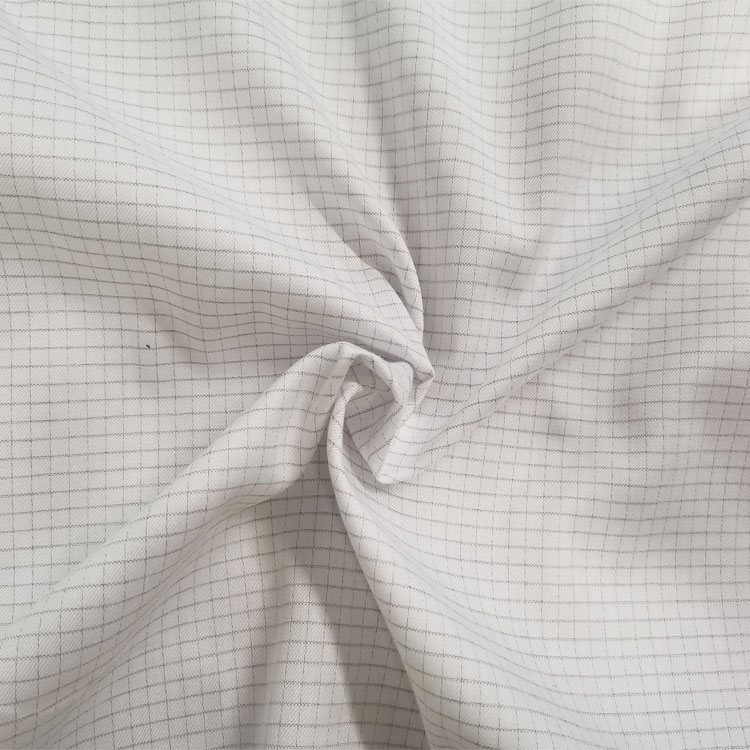
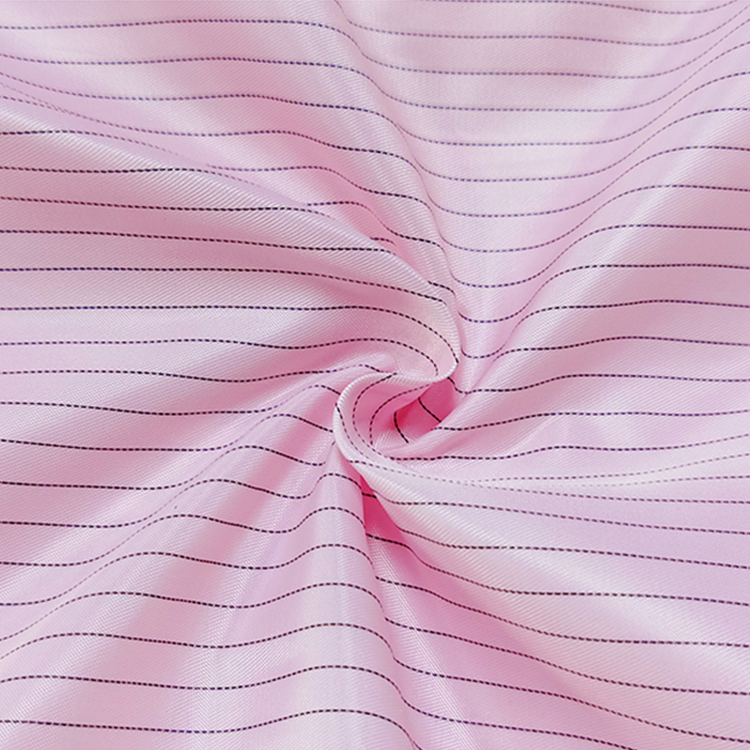
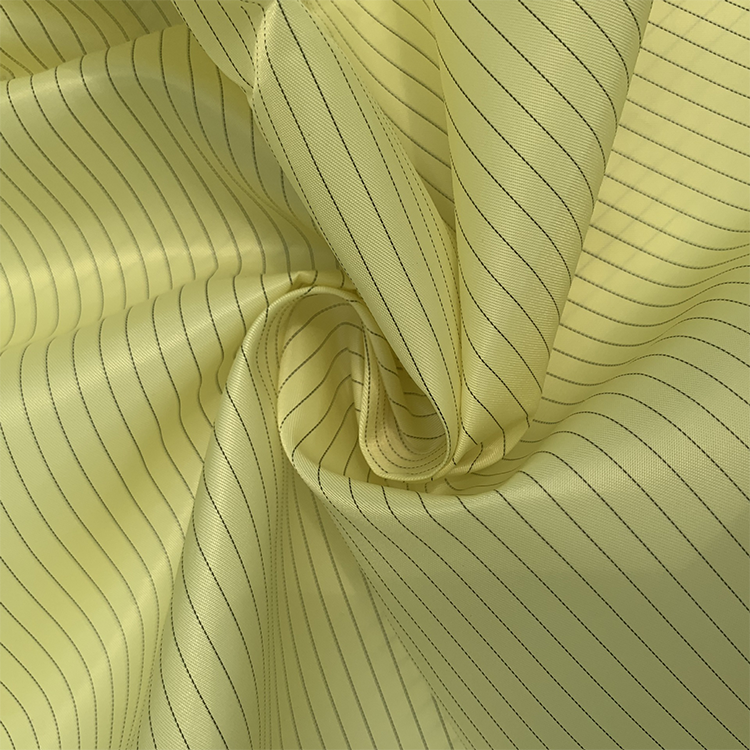
Garment selection also matters. Two fabrics may look almost identical while using very different conductive structures. A fabric with well-integrated conductive yarns and stable grid construction will generally provide more predictable performance than a textile that depends mainly on a surface treatment.
For purchasing teams, the lowest initial price is therefore not always the lowest total cost. Replacement frequency, laundry durability, comfort, electrical stability, and testing requirements should all be considered.
A fabric that remains stable through repeated use may reduce purchasing interruptions, garment failures, and ESD compliance risks over the long term.
 |  |  |
A garment should be removed from service when it no longer meets the facility’s electrical acceptance criteria or when physical damage makes reliable performance uncertain.
Replacement may also be necessary when:
Conductive yarns are visibly broken
Seams between conductive panels have opened
Grounding snaps or connectors are damaged
The fabric has become permanently contaminated
Cuffs or sleeves are badly worn
The garment has shrunk and no longer provides proper coverage
Resistance results vary significantly between test points
Repeated cleaning no longer restores acceptable results
It is usually better to remove a questionable garment early than to continue using it in a critical production area without confidence in its performance.
Retired ESD garments should also be clearly separated from approved garments. Otherwise, they may return to the production floor after another wash.
Washing is not the enemy of ESD fabric. Poorly controlled washing is.
A suitable cleaning process removes contamination while placing as little stress as possible on the conductive network. A poor process may introduce chemical residue, break conductive fibers, weaken seams, and expose the garment to unnecessary heat.
The useful life of ESD fabric depends on the material itself, but also on what happens after the garment enters daily service. Purchasing quality fabric is only the first step. Laundry control, regular inspection, electrical testing, and reliable records are what keep the garment working as intended.
LEENOL provides ESD fabric, ESD garments, cleanroom clothing, grounding products, ESD workbenches, storage systems, packaging materials, and other static-control products for electronics factories, laboratories, cleanrooms, and industrial production areas. For customers developing new ESD clothing or reviewing an existing garment program, LEENOL can support the selection of fabric composition, conductive-grid style, color, weight, and application-specific specifications. This makes it easier to match the material not only to the working environment, but also to the expected cleaning and maintenance conditions.
No. A correctly controlled wash may remove oils, dust, and process residue that interfere with the fabric’s performance. Problems are more likely to occur when the garment is exposed to bleach, fabric softener, strong chemicals, excessive heat, or heavy mechanical abrasion. The effect should be confirmed through testing rather than assumed from the number of washes.
Some ESD garments can be washed in a standard machine, provided the care instructions allow it. They should normally be washed separately, using a mild detergent, an appropriate temperature, and a gentle cycle. Industrial laundering may also be suitable, but the laundry provider must follow the garment supplier’s requirements.
There is no universal number. Wash life varies according to the conductive-yarn structure, fabric composition, garment construction, detergent, temperature, drying method, and frequency of use. A stated wash-cycle figure is meaningful only when the same laundering conditions are followed.
Fabric softener leaves a coating on textile fibers. On an ESD garment, that coating may interfere with the conductive surface or make resistance readings less consistent. It may also attract additional contamination. Unless the supplier has specifically approved a softener, it is safer not to use one.
No. Visual inspection can identify holes, worn cuffs, damaged seams, stains, and broken closures, but it cannot confirm electrical continuity. A garment may still look acceptable while failing resistance requirements. Visual inspection and electrical testing should be used together.