English
Views: 169 Author: Site Editor Publish Time: 2026-03-25 Origin: Site


In most precision industries, people tend to focus on machines, materials, and process control. But there’s a quieter factor that often gets overlooked—cleaning.
Not just any cleaning, but controlled, contamination-aware cleaning.
A single particle—barely visible to the human eye—can disrupt a semiconductor circuit, compromise a pharmaceutical batch, or ruin a high-end optical surface. That’s why cleanrooms exist in the first place: to control airborne particles, fibers, and residues at extremely low levels.
And within that environment, cleanroom wipers play a surprisingly critical role.
They are not just consumables. In many cases, they act as the final barrier between contamination and product failure.
This guide isn’t just about explaining what cleanroom wipers are. It’s about helping you understand how to choose them correctly, use them properly, and ultimately make better decisions that affect quality, cost, and operational efficiency.
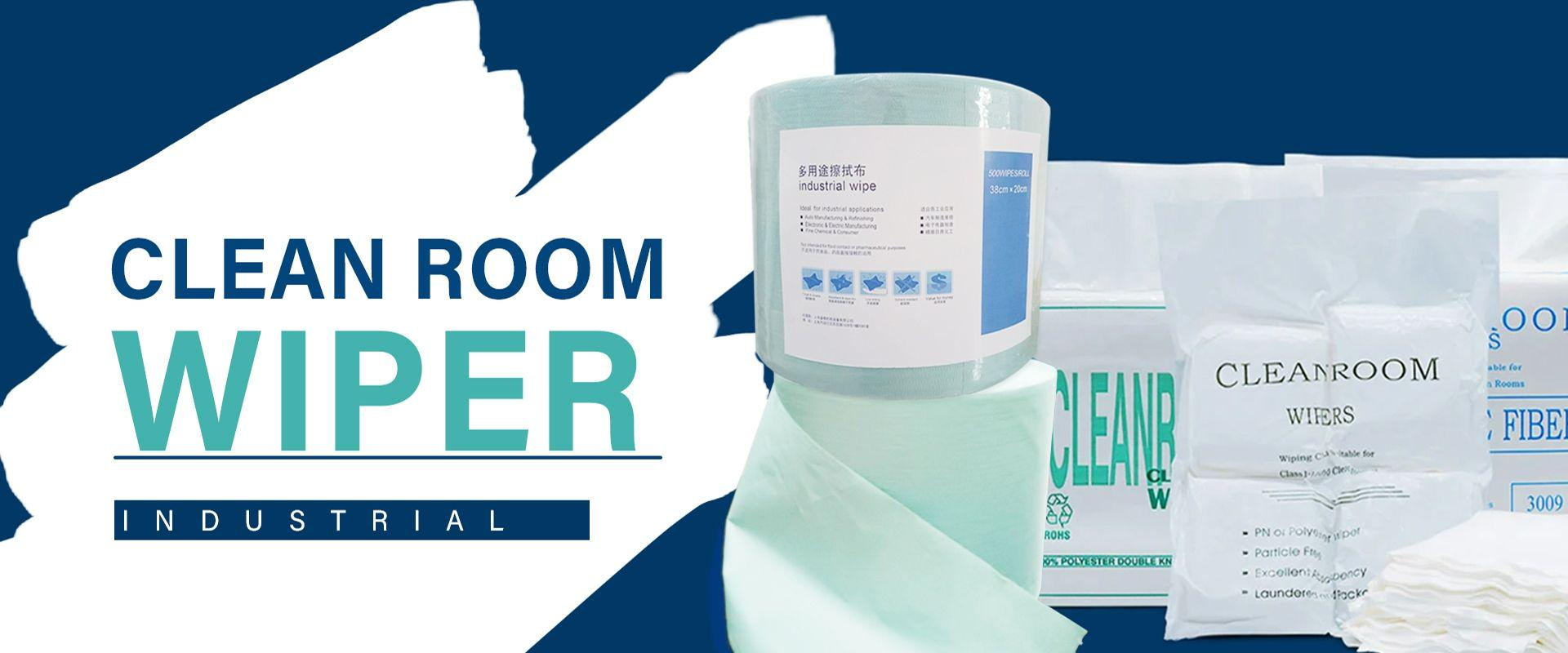
At a basic level, cleanroom wipers are wiping materials designed for controlled environments. But that definition barely scratches the surface.
What truly defines a cleanroom wiper is not what it cleans—but what it does NOT introduce.
Ordinary wipes may look similar, but they can shed fibers, release particles, or leave chemical residues that compromise sensitive processes.
Cleanroom wipers, on the other hand, are engineered to minimize all of that.
Most high-quality cleanroom wipers are produced using advanced processes such as:
Hydroentanglement (nonwoven bonding without chemicals)
Knitting (for polyester wipes)
Cleanroom laundering and packaging
These processes ensure:
Low particle generation
Minimal extractables
Consistent performance
Some wipes even go through multiple ultra-pure water wash cycles to remove microscopic contaminants before packaging.
A true cleanroom wiper typically delivers:
Low lint and particle release
Controlled absorbency
Chemical compatibility (IPA, solvents, etc.)
Non-abrasive surface contact
This combination is what allows them to clean without contaminating—a subtle but essential difference.
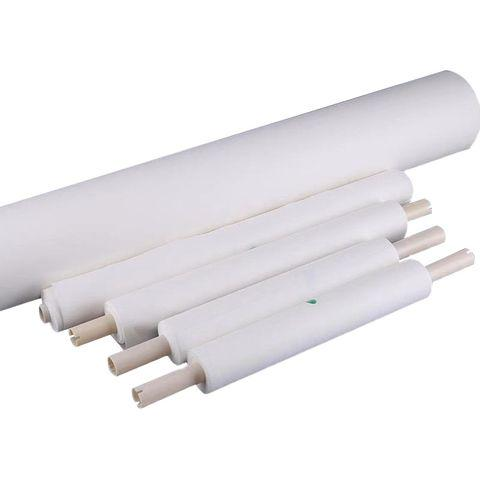
It’s easy to think of wipers as consumables you use and discard. But in controlled environments, they function more like process control tools.
In a cleanroom, cleaning is not just about removing visible dirt. It’s about controlling:
Particle redistribution
Residue formation
Static-related contamination
Cross-contamination between surfaces
A poorly chosen wipe can actually spread contamination instead of removing it.
Many contamination-related issues—like streaking, haze, or unexplained defects—often trace back to wiping practices.
From real-world observations:
Over-wetting can leave residues
Reusing a wipe surface can re-deposit particles
Wrong material choice can scratch sensitive surfaces
So the wipe itself—and how it’s used—directly affects process consistency.
Here’s something that surprises many buyers:
Cheap wipes often increase total cost.
Why?
Because they lead to:
Higher defect rates
More rework
Increased downtime
Quality inconsistencies
That’s why experienced engineers rarely evaluate wipes based on unit price alone.
One of the most important—but often misunderstood—concepts is matching wipers to cleanroom class.
Cleanrooms are classified by the number of particles allowed per cubic meter of air.
And that classification directly determines what kind of wiper you should use.
These environments are extremely sensitive.
Typical requirements:
Ultra-low particle release
Minimal extractables
High consistency
Recommended wipes:
Knitted polyester
Laser- or ultrasonic-sealed edges
These materials are preferred because they generate the least contamination.
These environments still require control, but allow more flexibility.
Common choices:
Polyester-cellulose blends
Nonwoven materials
They offer a balance between performance and cost.
Here, absorbency and cost become more important.
Options may include:
Cellulose-based wipes
Cotton (in limited cases)
However, cotton tends to shed fibers and is generally used only where contamination risk is lower.

Choosing the right wiper starts with understanding materials—not just names, but how they behave in real applications.
Polyester wipes are widely used in critical environments because of their low particle release and chemical stability.
They are:
Highly consistent
Compatible with solvents like IPA
Suitable for high-grade cleanrooms
However, they are not always the best at absorbing large liquid volumes.
These wipes combine:
Polyester → strength & cleanliness
Cellulose → absorbency
They are widely used because they strike a practical balance between cost and performance.
But there’s a trade-off:
Slightly higher particle release compared to pure polyester
Microfiber wipes have extremely fine fibers that trap tiny particles effectively.
They are especially useful for:
Optical surfaces
Precision instruments
High-sensitivity applications
They also offer strong absorbency and cleaning efficiency.
While cotton is absorbent, it sheds fibers easily.
This makes it unsuitable for critical environments, and it is generally used only when:
Cleanroom class allows it
Residual fibers are acceptable
When selecting cleanroom wipers, it’s easy to get overwhelmed by specs. But in practice, a few core factors matter most.
This is the most critical metric.
A wipe should:
Capture particles
Not release new ones
Even small differences in fiber structure or edge sealing can affect performance significantly.
Different tasks require different absorbency levels:
Spill cleanup → high absorbency
Surface wiping → moderate
Optical cleaning → controlled/low
Choosing the wrong absorbency can lead to streaking or inefficient cleaning.
Cleanroom wipes must work safely with:
IPA
Ethanol
DI water
Specialized cleaning agents
Incorrect compatibility can cause:
Material breakdown
Residue formation
In precision industries, scratches are unacceptable.
Wipers must be:
Soft
Non-abrasive
Stable during use
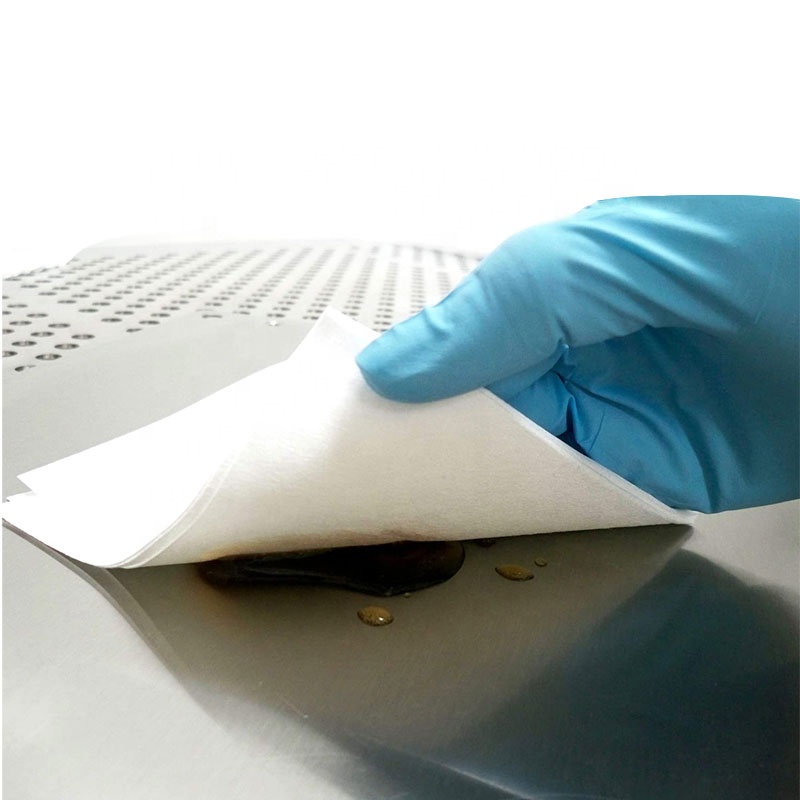
Let’s make this practical.
If you’re selecting wipes for your facility, don’t overcomplicate it—just follow a structured approach.
Start with:
Cleanroom classification
Industry requirements
Compliance standards
Be specific:
Removing particles?
Cleaning oil or solvents?
Preparing surfaces?
Each task requires different properties.
Examples:
Sensitive surfaces → microfiber
Critical environments → polyester
General cleaning → blends
Always validate:
Particle levels
Cleaning performance
Operator usability
Even the best wiper can fail if used incorrectly.
Wipe in one direction (avoid circular spreading)
Fold wipes to use clean surfaces
Do not reuse contaminated areas
Too much liquid leads to:
Streaking
Residue
Pre-saturated wipes often help standardize results.
Using random wipes from storage
Mixing wipe types across zones
Poor storage practices
Consistency matters more than people think.
Cleanroom wipers are used wherever contamination matters.
Removing particles from PCBs
Preventing electrostatic contamination
Maintaining process yield
Sterile cleaning
Surface disinfection
Regulatory compliance
Surface preparation
Oil removal before painting
Defect reduction
Lens cleaning
Scratch-free surface handling
Precision assembly
Here’s the reality most procurement teams learn the hard way:
Wipers are not a cost center—they are a risk control tool.
Low-quality wipes may:
Increase defects
Cause contamination events
Lead to rework or scrap
And those costs quickly outweigh any savings on unit price.
As cleanroom standards become stricter and manufacturing tolerances shrink, companies are moving away from generic solutions toward integrated contamination control systems.
LEENOL is positioned exactly in that space.
As an ESD Total Solution provider, LEENOL offers a complete range of cleanroom consumables, including high-performance cleanroom wipers designed for different industries and cleanliness levels.
What makes LEENOL stand out is not just product variety, but system reliability:
Products manufactured under IEC 61340-5-1 and ANSI/ESD-20.20 standards
Full compliance with ISO 9001, SGS, and RoHS requirements
Stable global supply and OEM customization capability
Integrated solutions covering storage, protection, cleaning, and testing
For companies looking to reduce contamination risk while improving operational efficiency, working with a solution-oriented supplier like LEENOL can make a measurable difference.
Lint-free wipes reduce fibers, but cleanroom wipers are engineered and tested to meet strict contamination standards, including particle, residue, and chemical control.
This depends on your industry and product sensitivity. Semiconductor and pharmaceutical industries typically require ISO 3–5 environments.
Some polyester wipes can be reused after controlled laundering, but many applications prefer single-use to avoid contamination risks.
Common causes include over-wetting, wrong material selection, or reusing contaminated wipe surfaces.
Not necessarily—but higher-quality wipes usually deliver better contamination control, which reduces total operational costs.