English
Views: 268 Author: Site Editor Publish Time: 2026-08-21 Origin: Site


Cleanroom wipers are often treated as a routine consumable. A box arrives, the products are put away, and someone takes them out when a cleaning task comes up. In a controlled manufacturing environment, however, that simple process deserves a little more attention.
A wiper may be manufactured for low-particle cleaning, precision surface preparation, static-sensitive applications, or other controlled processes. Its performance depends not only on how it was made, but also on how it is handled after delivery.
That does not mean a cleanroom needs an elaborate warehouse operation just for wipers. In most cases, sensible storage comes down to a few practical habits: keep unused products protected, choose an appropriate storage location, avoid unnecessary handling, and make product identification straightforward.
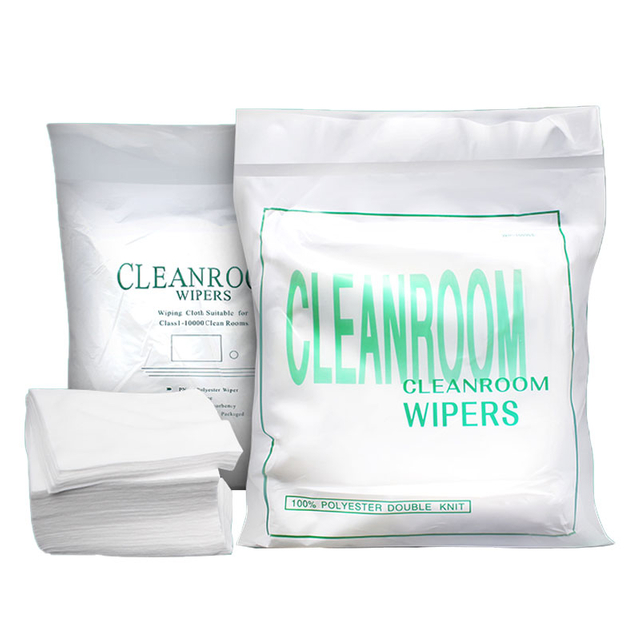
These details become especially important when a facility uses several types of Cleanroom Wipers or has strict contamination-control requirements.
 |  |  |
A cleanroom wiper is selected because its material and construction suit a particular cleaning task. Once the product arrives at the customer's facility, the storage period becomes part of its overall handling history.
Imagine two cartons from the same shipment. One stays sealed on a clean shelf and is moved only when needed. The other is repeatedly carried between storage areas, left beside a production bench, and opened several times before the remaining wipes are put away again.
The products may have started in identical condition, but they have not been handled in the same way.
This does not mean every storage mistake will immediately make a wiper unusable. The more realistic concern is that unnecessary exposure and poor handling make the condition of the product harder to control.
For facilities working with sensitive components, predictable handling is usually preferable to relying on assumptions.
The original packaging is there to separate the wipers from the surrounding environment before they are needed.
For that reason, unopened packs should normally remain sealed until the cleaning process requires them.
Opening several bags at once may save a few seconds during preparation, but it also leaves more material exposed than necessary. If one package is enough for the current task, opening additional packages usually serves little purpose.
Keeping unused products sealed also makes stock easier to recognize. Staff can immediately see which packs have not yet been opened and which ones are already in use.
The appropriate location depends on the facility's processes, cleanroom classification, and internal material-handling procedures.
A dedicated stockroom, clean storage cabinet, or controlled staging area may all be appropriate. What matters is that the location provides reasonable protection from moisture, dust, chemicals, direct sunlight, and unnecessary physical disturbance.
Moisture should be one of the first things considered.
Cartons should not sit directly on a floor where spilled water or cleaning liquids could reach them. Areas immediately beside sinks, leaking pipes, wash stations, or other moisture sources are also poor choices for long-term storage.
Dust is another consideration. The storage area does not necessarily need to have the same classification as the cleanroom, but it should be maintained at a cleanliness level suitable for the products stored there.
A stable indoor storage location is generally preferable to using an empty corner simply because it happens to be available.
Manufacturing areas may contain alcohol, solvents, detergents, lubricants, and other chemicals.
A wiper that is suitable for use with a particular solvent does not mean its unopened package should be stored directly beside an open chemical container.
Separating consumables from chemicals also makes the stockroom easier to manage. Employees can identify cleaning products without having to work around containers or materials belonging to another process.
If the manufacturer specifies temperature, humidity, or shelf-life conditions, those instructions should take precedence over general storage advice.
Even when no special requirements are stated, storing cartons directly beside heating equipment or in strong sunlight is usually unnecessary.
A stable indoor environment reduces avoidable changes in storage conditions and makes the handling process easier to control.
Not necessarily.
Many facilities keep their main supply outside the cleanroom and transfer smaller quantities into the controlled area when required.
This can be particularly useful when wipers are purchased in large quantities. Bringing every carton into the cleanroom takes up space and may introduce unnecessary packaging into an area where material movement is already controlled.
A clean stockroom or controlled staging area can be used for the main inventory.
When a production department needs additional material, staff can transfer the required quantity according to the site's established procedure.
This also helps keep inventory in one place. Instead of having half-used cartons scattered across several production areas, most of the stock remains identifiable and easier to count.
The actual arrangement will vary between facilities. Electronics manufacturing, pharmaceutical production, medical device manufacturing, and other controlled industries may have different requirements.
The package may need to be wiped down, outer packaging may need to be removed, or the product may need to pass through a designated transfer area before entering the cleanroom.
Some facilities use double-bagged consumables. Others have specific procedures for material transfer through airlocks or pass-through chambers.
There is no universal method that applies to every facility. The important point is that storage should not be considered separately from material transfer.
 |  |  |
A storage area works better when the products people use most often are also the easiest to reach.
If a certain type of wiper is consumed every day, placing it behind several rarely used cartons creates unnecessary work. A more convenient shelf or cabinet position allows employees to take what they need without repeatedly moving other stock.
This also makes stock levels easier to notice.
When commonly used products have a defined location, employees can see when that space is becoming empty. Purchasing staff then have more time to arrange replenishment before the shortage affects production.
The storage area does not need a complicated layout.
A shelf, cabinet section, or clearly marked position may be enough. The main requirement is consistency.
For example, if polyester wipers are frequently used on an electronics production line, keeping them in a clearly identified section is more practical than placing them randomly among several types of cleaning materials.
The same principle applies to ESD Cleanroom Wipers and other specialized products. If the product has a specific function, its storage position should make that distinction obvious.
An opened package needs more attention than an unopened one.
Once the original barrier has been broken, the remaining wipers are no longer protected in exactly the same way as sealed stock. Handling should therefore be kept to what is actually necessary.
A simple rule is to avoid opening more product than the current task requires.
If a technician needs a certain number of wipes, remove that quantity and leave the remainder protected.
There is usually little benefit in opening several packages at the beginning of a shift simply because they might be needed later.
Keeping unused packs closed also makes it easier to determine how much stock is genuinely available.
If the original packaging can be securely closed, close it after removing the required quantity.
If the package does not provide an effective resealing method, the facility should use an appropriate clean container or dispensing arrangement consistent with its own procedures.
An opened package should not simply be left sitting on a busy workbench for an entire shift if it can be stored in a more suitable location nearby.
Every additional movement creates another opportunity for a package to be dropped, torn, misplaced, or exposed to an unsuitable environment.
For that reason, storage locations should be convenient enough that employees do not feel they need to move several cartons around just to reach one package.
Good organization is partly about reducing unnecessary handling.
A facility may use several wiper materials for different cleaning operations. Similar-looking packaging can make product selection surprisingly easy to get wrong.
The storage arrangement should therefore help employees tell products apart before they open a package.
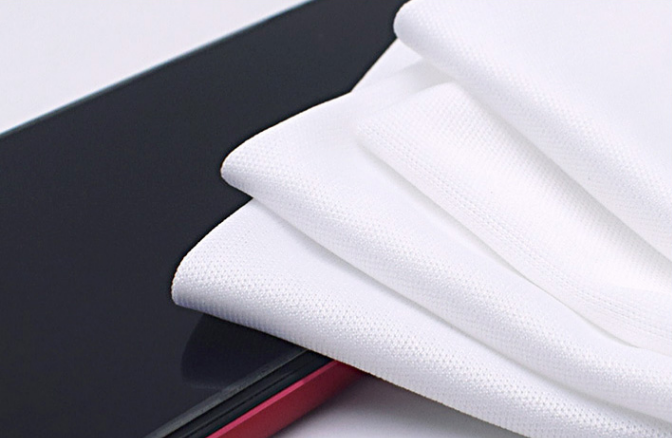
Polyester Cleanroom Wipers are commonly selected for applications where low particle and lint characteristics are important.
In electronics manufacturing, ESD Cleanroom Wipers may be appropriate when static control is also part of the process.
Nonwoven Cleanroom Wipers may be used for applications where absorbency and general cleaning performance are important.
These products should not simply be placed together because their packages happen to be similar in size.
Separate shelves, cabinet sections, storage bins, or clear labels can make product identification much easier.
Useful information may include:
Product model
Material
Dimensions
Packaging quantity
Batch or lot information, where applicable
Receiving date
Intended application, where relevant
The goal is not to create unnecessary paperwork. It is to allow an operator to identify the correct product without opening several bags first.
This is particularly helpful when a facility uses several wipers that have similar packaging but different performance characteristics.
The package is the physical barrier between the wiper and its surroundings. If that barrier is damaged, it is worth taking a closer look before the product is put into regular storage.
A quick inspection during receiving or before a package enters a controlled area can help identify obvious problems.
Staff can check for:
Torn or punctured bags
Broken or open seals
Crushed cartons
Water marks
Heavy dust
Unusual staining
Missing or unclear product information
A small dent on an outer carton does not necessarily mean that the wipers inside have been affected. Shipping cartons can pick up minor marks during transportation without causing a problem with the sealed product.
What matters more is the condition of the packaging directly around the wipers. If there is visible damage, the product should be handled according to the facility's normal quality procedure rather than simply being mixed with undamaged stock.
After the incoming material has been checked, the next step is to make sure different products are easy to identify and put away in a consistent manner.
The storage area does not need to look like a complicated warehouse system.
What matters is whether an operator can walk in, find the required product, understand what it is, and take it out without moving half the stock around.
A practical arrangement usually starts with product grouping. Wipers used for similar processes can stay together, while products with different materials or purposes can have their own positions.
The same idea can be applied to packaging sizes. Large cartons do not need to occupy the easiest-to-reach shelves if they are rarely opened, while frequently used smaller packs should remain accessible.
Vertical storage can be useful when floor space is limited, provided the shelves or cabinets are suitable for the weight of the products and the facility's handling practices.
At the same time, storage should not become so high or crowded that employees have difficulty removing cartons safely.
There is a balance between using available space and keeping everyday handling convenient.
A new employee should be able to understand the basic arrangement without having to ask where every product is located.
Clear labels can help, but the physical layout matters too.
For example, placing polyester products in one section, ESD-related products in another, and general nonwoven products in a separate area creates a visual distinction that is easier to remember than a shelf containing unrelated products in no particular order.
Most storage problems are fairly ordinary.
Someone opens a package earlier than necessary because it seems convenient. A carton is left beside a production machine instead of being returned to storage. A new shipment is put wherever there is space, and several months later nobody remembers which carton arrived first.
None of these actions necessarily causes an immediate problem. The difficulty comes from repeating them.
When several packs are open at once, more material is exposed and it becomes harder to know how much product is actually available.
Using one package at a time where practical keeps the storage situation easier to understand.
A workbench or production table is designed for work. It is not necessarily the best place for long-term storage of consumables.
If an opened pack needs to remain close to the operator, a designated clean location near the work area can be a better option.
A similar-looking package does not necessarily contain the same type of wiper.
If several products are mixed together, operators have to spend more time checking labels and may be more likely to choose the wrong one.
Clear product separation is a simple way to avoid this.
A disorganized shelf rarely becomes a major problem overnight.
It usually happens one carton at a time.
That is why maintaining a basic storage routine is easier than waiting until the entire stock area needs to be reorganized.
The general storage principles remain similar, but different materials may be selected for very different manufacturing requirements.
Polyester is widely used in controlled environments where particle and lint performance are important.
LEENOL offers 100% polyester cleanroom wipers for applications including SMT production lines. These products still require sensible storage after delivery. The suitability of the material for a clean manufacturing process does not remove the need to protect it before use.
Some electronics manufacturing processes have additional electrostatic-control requirements.
In these situations, ESD Cleanroom Wipers may be selected as part of the cleaning process.
They should be clearly identified and stored according to the facility's material-control procedures. If several wiper types are stored together, clear product separation is particularly useful.
Nonwoven wipers can be useful for applications where absorbency and general cleaning performance are important.
Their storage requirements should still be treated seriously. Keep them protected, clearly identified, and separated from products intended for different applications.
The right wiper ultimately depends on the surface, contamination type, cleaning method, and process requirements.
The most useful storage system is usually not the most complicated one.
Keep unopened products sealed. Give them a clean, dry, stable storage location. Make different products easy to distinguish. Check packaging before questionable material enters normal inventory.
For opened packages, remove only what is needed and protect the remainder. Keep commonly used products within reasonable reach. Make sure employees know where each product belongs.
The routine should also be realistic for the people who use it. A storage procedure that is too complicated will be difficult to maintain during a busy production shift.
Simple rules that employees can follow consistently are generally more useful than an elaborate system that exists only on paper.
By combining suitable Cleanroom Wipers with sensible storage, identification, and handling practices, facilities can keep their cleaning consumables under better control from receiving through final use.
For manufacturers looking for cleanroom consumables and equipment, LEENOL provides cleanroom wipers and related products for controlled manufacturing environments. Its range includes polyester cleanroom wipers and solutions used in applications such as SMT production. By selecting the appropriate wiper for each process and paying attention to storage and handling after delivery, manufacturers can establish a more consistent approach to routine cleaning. More information about LEENOL and its cleanroom product range is available at LEENOL.
Keep the wipers in their original packaging until they are needed. Store them in a clean, dry and protected area away from moisture, chemicals, excessive dust and unnecessary handling. Any storage conditions specified by the manufacturer should also be followed.
They can be, depending on the facility's procedures. However, many facilities keep bulk quantities in a suitable support or staging area and transfer smaller amounts into the cleanroom when required. This can reduce unnecessary packaging and save controlled-area space.
First determine whether the damage affects only the outer carton or the protective package containing the wipers. A minor dent in an outer carton does not necessarily mean the product has been compromised. If the inner package is torn, punctured, opened or exposed to moisture, separate the material and follow the facility's quality and contamination-control procedures.
Only remove the quantity needed for the current task whenever practical. Protect the remaining wipers after opening. If the original package can be securely closed, reseal it. Otherwise, use an appropriate clean storage container or dispensing method that complies with the site's procedures.
Separate them according to material, model, size and intended application. For example, Polyester Cleanroom Wipers, ESD Cleanroom Wipers and Nonwoven Cleanroom Wipers may be intended for different cleaning requirements. Clear labels and designated storage locations help operators identify the correct product without repeatedly opening packages.