English
Views: 240 Author: Site Editor Publish Time: 2026-06-26 Origin: Site


Ask any process engineer who has spent time chasing a random defect, and the answer is often not very dramatic. It may not be the machine. It may not be the operator. Sometimes it is just a fiber left on a tray, a dust particle sitting on a PCB, or a small wipe mark that only becomes visible after coating, bonding, printing, or final inspection.
That is the annoying part of contamination-sensitive manufacturing. The problem can start quietly, then show up much later when the product has already passed several process steps. By then, finding the source takes time, and the cost is no longer just one dirty surface.
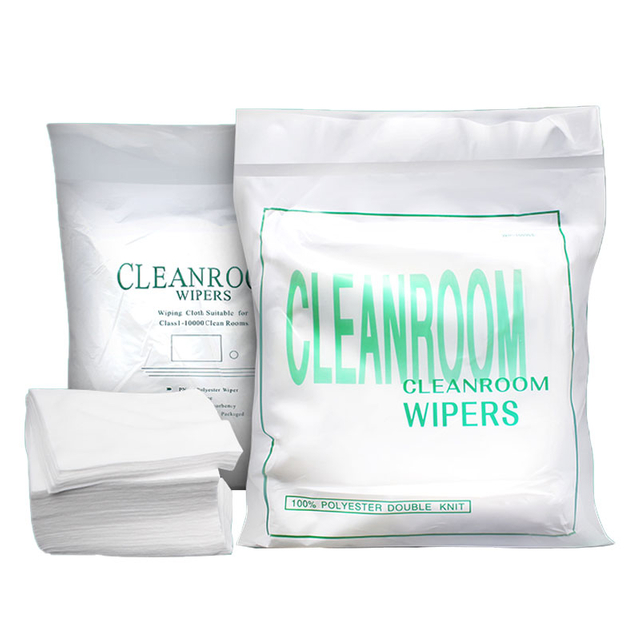
This is why Cleanroom Wipers are used so heavily in electronics manufacturing, semiconductor packaging, optical production, laboratories, medical device manufacturing, and precision assembly. They are not there to make the workstation “look clean.” They are used because every surface that gets wiped may later touch a product, tool, carrier, fixture, or inspection area.
A normal tissue or shop cloth may be fine for general cleaning, but it is not suitable for a controlled environment. It can drop lint, carry unknown residue, or react badly with IPA and other cleaning solvents. Cleanroom Wipers are made for cleaner wiping, lower particle release, and more predictable surface cleaning. In this type of manufacturing, that difference matters.

Most factories pay attention to major contamination sources: air filtration, gowning procedures, equipment layout, material flow, and operator training. These are necessary. However, many contamination problems still come from ordinary hand operations.
An operator wipes a workbench before production. A technician cleans a fixture after maintenance. A worker removes IPA residue from a tray. Someone wipes gloves, tools, product carriers, or inspection surfaces during a shift. Each action looks simple, but every contact can either reduce contamination or introduce it.
The problem is that contamination is often quiet. Dust may not be visible under normal light. A tiny fiber may stay on the product until coating, bonding, printing, or inspection makes the defect obvious. In electronics manufacturing, particles can affect soldering, coating, or assembly reliability. In optical production, dust or streaks can ruin the appearance of a surface. In medical device manufacturing, cleanliness can affect process compliance and product safety.
Cleanroom Wipers help control these risks at the point of contact. They are not a complete contamination control system by themselves, but they are used so often that their quality affects the whole environment.
The difference between cleanroom wipes and ordinary wipes is not only packaging. The real difference is controlled cleanliness.
Cleanroom Wipers are usually designed to release fewer particles and fibers during use. Depending on the application, they may be made from polyester, microfiber, cellulose-polyester blends, or nonwoven materials. Some are laundered and packed in controlled conditions. Some are sterilized for cleanroom or medical-related areas. Some focus on absorbency, while others focus on extremely low particle release.
A normal paper towel may absorb liquid, but it can leave fibers. A regular cloth may feel soft, but it may carry unknown residues. A cheap industrial wipe may work for general maintenance, but it can become a contamination source in a controlled production area.
For this reason, Cleanroom Wipers should not be selected only by size or price. Material, lint level, particle release, absorbency, chemical compatibility, edge treatment, and packaging all matter.
A good cleanroom wiping cloth should wipe the surface without leaving fibers behind. This sounds simple, but in real production, it is one of the most important requirements.
If a wipe removes oil but leaves lint, the cleaning result is still not acceptable. The fiber may stay on a product carrier, worktable, glass sheet, PCB surface, stainless steel tool, or inspection bench. Later, it may move to the product itself. When the final defect appears, the source can be difficult to trace.
That is why lint-free wipers are commonly used in contamination-sensitive areas. Low-lint performance helps reduce random fiber contamination during routine cleaning and surface preparation.
Absorbency is also important, but more absorption is not always better. The wiper should match the task.
For spill cleaning, solvent wiping, or removing process liquid, the wipe needs to absorb enough liquid without breaking down. For precision surface cleaning, the wipe should hold liquid evenly and leave fewer streaks. For small parts or delicate surfaces, excessive liquid release may create new problems.
A good contamination control wipe should absorb evenly and hold the liquid properly. If the wiper becomes too wet, too weak, or leaves streaks, cleaning becomes inconsistent. In production, inconsistent cleaning usually leads to inconsistent quality.
A single factory may need more than one type of wiper. The wiping material used for a general workbench may not be suitable for a critical product-contact surface. The wipe used in a support area may not be clean enough for final inspection or packaging. This is normal.
In electronics manufacturing, Cleanroom Wipers are often used around PCB handling areas, assembly benches, tools, fixtures, trays, and inspection stations. Here, the wiper should be low-lint, solvent-compatible, and safe for sensitive components. It should remove dust, flux residue, fingerprints, and light contamination without creating fibers or scratches.
In semiconductor and microelectronics work, the cleanliness requirement is usually stricter. Particle release, extractable residue, and ion contamination may need closer control. In these areas, the wrong wipe can create a problem that is far more expensive than the wipe itself.
In optical, lens, and display manufacturing, the wiping surface is often delicate and highly visible. The cleanroom wiping cloth should remove particles without scratching, streaking, or leaving marks. Softness, edge quality, and surface cleanliness become very important.
In medical device, pharmaceutical, or biotechnology-related production, sterile cleanroom wipes may be required in specific controlled zones. The focus is not only particle control, but also sterility, packaging integrity, and process documentation.
This is why buyers should start with the actual application instead of asking for “the best wipe” in a general way. The best choice depends on where it is used, what it touches, what liquid is applied, and how clean the process needs to be.
Different cleanroom wiping materials behave differently. Choosing the right one can make daily cleaning easier and more reliable.
Nonwoven cleanroom wipers are often used for general cleaning, spill control, and routine surface wiping. They are practical for many production areas and can offer a good balance between cost, absorption, and cleanliness.
Polyester cleanroom wipes are usually chosen for stricter cleanroom areas. They often have lower particle release and better cleanliness, especially when the wipe is laundered and packed under controlled conditions.
Microfiber wipers are useful for precision cleaning because they can pick up fine particles well. They are often used for optical parts, display surfaces, delicate equipment, and other surfaces where visible cleanliness matters.
Cellulose-polyester blend wipes are commonly used where absorption is important but cleanliness still needs to be controlled. They can be suitable for many medium-control areas, depending on the actual process requirement.
There is no single material that fits every factory. A well-managed production site usually selects wipers by area, surface, liquid, and cleanliness grade.
One common mistake is using ordinary paper towels in clean areas. They may seem convenient, but they usually release too many fibers and particles. In a controlled environment, that convenience can create more cleaning work later.
Another mistake is judging only by softness or thickness. A thick wipe may absorb well but leave residue. A soft wipe may still shed lint. Product feel is useful, but it cannot replace actual testing.
Some buyers also focus too much on unit price. A cheaper wipe may look attractive on the purchasing sheet, but if it causes scratches, streaks, fiber residue, or extra rework, the real cost becomes higher.
Packaging is another overlooked point. Cleanroom Wipers should stay clean before use. If the package is opened carelessly, stored in the wrong area, or exposed to dust, the original cleanliness advantage is reduced. In strict environments, how the wiper is packed, stored, and taken out matters almost as much as the material itself.
A practical evaluation should begin with the real production process.
First, check the surface to be wiped. Is it PCB, stainless steel, glass, plastic, optical material, tool surface, equipment panel, or product contact area? Different surfaces require different softness, absorbency, and cleanliness levels.
Second, check the liquid used with the wipe. Some cleanroom wipes perform well with IPA. Some are better for water-based cleaning. Some need stronger solvent compatibility. The wiper should not tear, swell, release fibers, or leave residue after contact with the cleaning liquid.
Third, test the wiping result. After wiping, the surface should not show obvious lint, streaks, particles, or remaining liquid marks. Operators should also check whether the wipe feels stable during use. If it breaks easily or becomes too wet too fast, it may not be suitable for the process.
Fourth, review area requirements. A general preparation area, assembly line, inspection station, cleanroom zone, and sterile area may need different wiper grades. Using the same product everywhere may be simple, but it is not always correct.
 |  |  |
Cleanroom Wipers support stability because they reduce random contamination during repeated daily operations. This is their real value.
Manufacturing quality does not only depend on machines and inspection equipment. It also depends on the surfaces operators touch every day. Worktables, tools, trays, gloves, carts, product carriers, and fixtures all need routine cleaning. If the wiping material is unstable, every cleaning action can become a new contamination risk.
Good Cleanroom Wipers help make cleaning more predictable. They reduce fiber release, absorb liquid properly, work with the required solvent, and support cleaner contact surfaces. Over time, this can help reduce random defects, improve workstation discipline, and make process control easier.
The benefit may not feel dramatic in one shift. But in contamination-sensitive manufacturing, fewer random problems are already a valuable result.
Cleanroom Wipers are small consumables, but they are used at many points across the production floor. Every wipe touches the manufacturing environment. Some wipes touch tools. Some touch work surfaces. Some touch parts, trays, or inspection areas. If the wiper is clean and suitable, it helps protect the process. If it is not, it can quietly bring contamination into the process.
For manufacturers working with electronics, semiconductors, optical products, medical devices, laboratories, or other cleanroom environments, selecting the right Cleanroom Wipers is a practical quality decision. It helps protect yield, reduce contamination risk, and keep daily operations more stable.
LEENOL provides cleanroom and ESD-related production solutions for electronics manufacturing, laboratories, cleanrooms, and industrial workstations. With Cleanroom Wipers, cleanroom wipes, lint-free wipers, contamination control wipes, sterile cleanroom wipes, nonwoven cleanroom wipers, ESD products, and workstation support solutions, LEENOL helps manufacturers build cleaner, safer, and more controlled production environments.