English
Views: 240 Author: Site Editor Publish Time: 2026-04-27 Origin: Site


In environments where dust control is not just a preference but a daily operational requirement, the role of a sticky mat becomes much more important than many people first assume. At a glance, it may look simple: just a tacky surface placed near an entry point. But in practice, it serves as one of the first and most practical barriers against contamination. Whether you are managing a cleanroom, operating a laboratory, organizing a hospital workspace, or maintaining a workshop with strict cleanliness standards, a well-chosen sticky mat can make a real difference.
The reason is straightforward. People and equipment move constantly. Shoes, trolley wheels, and cart casters pick up dust, debris, and fine particles from one area and carry them into another. Once that contamination enters a controlled environment, it becomes harder and more expensive to manage. This is exactly where the sticky mat for dust control proves its value. Instead of allowing particles to travel deeper into a workspace, the mat captures them at the entrance before they become a bigger problem.
Today, sticky mats are widely used across cleanrooms, laboratories, hospitals, workshops, and other sensitive spaces where cleanliness matters. Some users prefer a disposable sticky mat for easy replacement and fast upkeep, while others choose washable options for repeated use and longer service life. In both cases, the goal is the same: reduce contamination, improve cleanliness, and support a more controlled environment.
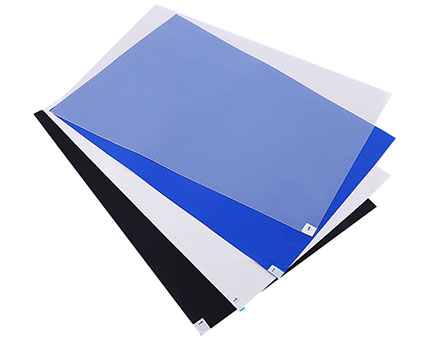
This article takes a closer look at what sticky mats are, how they work, where they are used, and why so many facilities rely on them as a simple but effective part of their contamination control process.
A sticky mat is a dust-removal mat designed to capture dirt, dust, and small particles from the soles of shoes or the wheels of carts and equipment before they enter a sensitive area. It is usually placed at entrances, transition zones, and doorways where contamination is most likely to be introduced from one space into another.
The idea behind it is practical and easy to understand. Whenever foot traffic or rolling equipment passes over the mat, the tacky surface traps unwanted particles. Instead of carrying dust into a controlled room, those particles stay on the mat’s surface. This helps reduce the amount of airborne and surface-level contamination inside the workspace.
In many facilities, a cleanroom sticky mat is treated as one part of a broader cleanliness strategy. It does not replace air filtration, protective clothing, or cleaning procedures, but it does support them in a very direct way. In fact, one of the reasons sticky mats remain so popular is that they address contamination at the source: the entrance point.
There are different types of sticky mats depending on material, structure, and maintenance preference. Some are designed as multi-layer peel-off mats, often considered the classic disposable sticky mat style. Others are made from washable materials such as PU and can be cleaned and reused multiple times. Each option has its place depending on the environment, traffic volume, maintenance habits, and budget priorities.
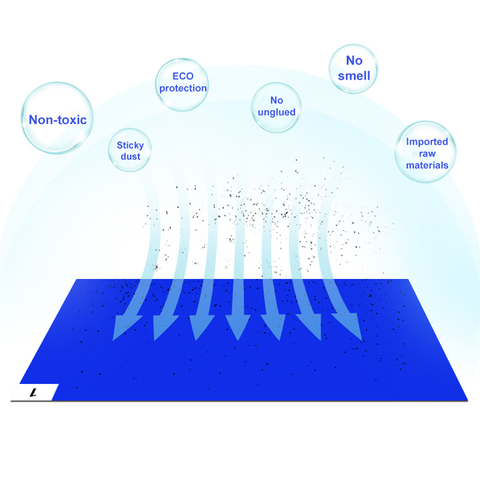
The working principle of a sticky mat is refreshingly simple, and that is part of its appeal. The surface of the mat uses a pressure-sensitive adhesive or a tacky finish that is strong enough to catch dust and dirt, but practical enough for routine foot traffic and equipment movement. When shoes or wheels touch the mat, particles are pulled away from those surfaces and held on the mat.
What makes this so useful is not complexity, but consistency. A sticky mat works every single time someone enters the area, without requiring power, special training, or complicated handling. As long as it is properly placed and changed or cleaned when needed, it continues doing its job quietly in the background.
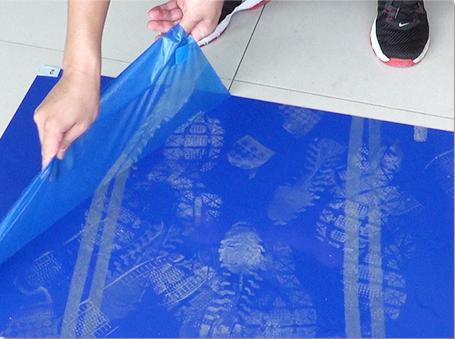
When a person steps onto the mat, the adhesive surface makes contact with the shoe sole. Dust, loose particles, and debris that would otherwise move indoors are retained on the mat. The same thing happens with trolley wheels, equipment casters, and similar rolling traffic. Over time, the top layer becomes visibly dirty, which is actually helpful because it shows that the mat is intercepting contamination before it moves further inside.
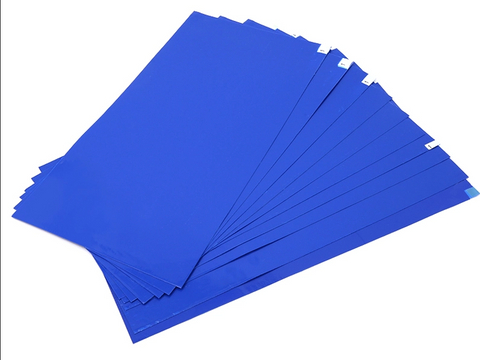
For facilities that use a layered disposable sticky mat, the maintenance process is easy. Once the top layer is saturated or less effective, it is peeled away to reveal a fresh new surface underneath. This makes it convenient for busy workspaces that want quick replacement with minimal interruption.
The effectiveness of a sticky mat depends heavily on the quality of its surface. If the adhesive is too weak, it will not trap enough dust. If it is poorly balanced, it may not deliver a reliable user experience in high-traffic areas. A good sticky mat for dust control should provide dependable particle capture while remaining practical for daily movement.
For example, LEENOL’s sticky mats are designed to remove dirt effectively and are described with a dust-removal performance of up to 99.9%, which highlights the product’s purpose in contamination-sensitive environments. That kind of performance matters in areas where even small amounts of dust can create operational issues. Whether that means affecting cleanliness in a laboratory or contributing to contamination risk in a hospital or cleanroom, the stakes are often higher than they look at first glance.
People sometimes think contamination control starts inside the room, but in reality it often starts at the door. The moment a person walks into a controlled space, they bring the outside world with them unless there is some form of barrier in place. Shoes pick up dust from hallways, packaging areas, loading zones, and general walkways. Wheels collect even more than most people realize. A sticky mat helps stop that transfer before it becomes a bigger issue.
This is why sticky mats are widely used in spaces where cleanliness is tied to process reliability, product quality, or health protection. They are not flashy products, but they are practical. And in operations where consistency matters, practical products tend to stay around for a reason.
One of the main reasons facilities use a sticky mat is to reduce contamination right where it enters. This is important because once dust gets into a room, it can spread across floors, settle on equipment, move through airflow, or reach surfaces that require extra cleaning. Preventing entry is simply easier than cleaning up afterward.
That is also why the cleanroom sticky mat has become a standard accessory in many controlled settings. It supports the broader system by lowering the contamination load before people and carts move further inside.
In environments with strict cleanliness requirements, simple control points matter. A sticky mat helps make entry routines more disciplined. It creates a defined transition zone and reinforces the idea that cleanliness begins before the work area itself. In this sense, sticky mats are not just surface products. They are also part of operational discipline.
For managers and buyers, this matters because cleanliness is rarely achieved by one major system alone. It usually comes from multiple smaller controls working together: garments, work surfaces, cleaning tools, packaging, monitoring, airflow, and entry management. Sticky mats fit naturally into that larger picture.
Although the term sticky mat sounds singular, there are actually several product styles available depending on application needs. In general, the two most common approaches are disposable layered mats and washable reusable mats.
A disposable sticky mat is usually made with multiple adhesive layers stacked together. After the top layer becomes dirty, users peel it away and continue using the clean layer underneath. This design is popular because it is fast, neat, and easy to manage. There is no washing step, and the replacement process takes only a moment.
Disposable mats are especially useful in areas with frequent traffic or where operational simplicity is important. They are commonly chosen for cleanrooms, labs, hospitals, and other sensitive environments where users want predictable cleanliness and quick maintenance.
LEENOL’s LN-1550095 Sticky Mat for Clean Room belongs to this practical category. It uses PE material, offers thickness options from 30μm to 50μm, and supports non-standard size customization. It is also described as easy to tear, which is an important detail in real-world use because convenient layer removal saves time during routine maintenance.
A washable sticky mat is designed for repeated use. Instead of peeling off layers, the mat is cleaned when its surface becomes dirty and then returned to service. This option is attractive for users who want longer service life and a more reusable format.
LEENOL’s washable sticky mat LN-1550094 uses PU material, has a thickness of 3mm, and is positioned as having excellent dust-removal performance, convenient and quick cleaning, and long service life. It is also described as environmentally friendly, easy to recycle, and naturally degradable. For businesses that value sustainability along with cleanliness, this kind of option may be especially appealing.
There is no single right answer for every facility. A disposable sticky mat may be the better fit for high-turnover spaces where fast replacement is a priority. A washable option may be better for users who prefer a longer-term, reusable solution. The better choice depends on traffic volume, cleaning routines, environmental goals, and maintenance habits.
In other words, selecting a sticky mat should not be based on price alone. It should be based on how the product fits into the workflow of the space where it will be used.
The value of a sticky mat for dust control becomes even clearer when you look at how many different industries rely on it. Dust and particles are not limited to one sector, and contamination problems rarely announce themselves in advance. That is why sticky mats are used across a range of facilities where entrance cleanliness matters.
Cleanrooms are probably the first environment most people think of when they hear the term cleanroom sticky mat. That makes sense. Cleanrooms depend on strict control over particles, and entry points are one of the most obvious routes for contamination. Sticky mats help reduce the dust carried in by personnel and equipment, making them a logical choice at doorways and transition zones.
Laboratories often require careful environmental control, especially where testing accuracy, sample integrity, or sensitive instruments are involved. Dust can interfere with both cleanliness and workflow. A sticky mat helps maintain a cleaner entrance area and supports a more controlled workspace without complicating daily operations.
Workshops may not always require the same standards as cleanrooms, but many still need a cleaner work environment than a normal industrial floor. Fine debris, dust, and particles from surrounding areas can affect assembly, inspection, packaging, or finishing activities. Sticky mats can help reduce the amount of loose dirt brought into these spaces, especially where people and carts move in and out frequently.
In medical environments, cleanliness is an obvious concern. Sticky mats can help support hygiene and contamination control by capturing particles from footwear and equipment wheels before they move into treatment or controlled areas. In spaces like hospitals and operating rooms, even seemingly small precautions can contribute to a cleaner, more controlled environment.
Product information for LEENOL sticky mats also mentions use in food industries. This makes sense because food-related production environments often require careful handling of cleanliness and debris control. More broadly, any space that benefits from reducing tracked-in dust may gain value from adding a sticky mat at key access points.
Not all sticky mats are created equal, and buyers usually get the best results when they look beyond the basic idea of “something sticky on the floor.” The more useful question is this: what features actually matter in real-world operation?
The first priority is obvious. A sticky mat needs to remove dirt effectively. If it does not capture particles reliably, then the rest of its features do not matter much. Products positioned for contamination-sensitive environments should offer dependable dust capture for both foot traffic and wheeled equipment.
Material affects performance, feel, maintenance style, and durability. In LEENOL’s case, the disposable cleanroom sticky mat uses PE, while the washable version uses PU. This difference is not just technical detail. It reflects different use strategies. PE suits peel-off layered applications, while PU supports washable reuse.
One of the practical strengths of modern sticky mats is the ability to customize them. Size matters because entrances are not all the same. Color may matter for facility organization or visual management. Material thickness can also affect suitability for different traffic levels. LEENOL’s product information highlights customization in size, color, and material options, and even mentions logo or branding customization. That gives buyers more flexibility when matching the product to their own environment.
A sticky mat only remains effective if users are willing and able to maintain it properly. That is why features like easy-to-tear layers or convenient washing matter more than they might seem. Good maintenance design supports long-term performance because it encourages users to replace or clean the mat on time instead of putting it off.
For many buyers, standards and product consistency matter a great deal. LEENOL’s sticky mat products are described as complying with SGS, ROHS, and CE-related expectations in the provided product material. At the company level, LEENOL also emphasizes manufacturing according to IEC 61340-5-1 and ANSI/ESD S20.20, along with ISO 9001 system management. These quality signals help buyers feel more confident when selecting products for professional use.
Choosing the right sticky mat is less about finding the “best” product in general and more about finding the best fit for your own space. A product that works well in a hospital entrance may not be the most practical option for a high-traffic workshop, and a mat suited to a cleanroom may require different maintenance expectations than one used in a general lab.
Start by asking where the mat will be placed. Is it a cleanroom entrance, a laboratory corridor, a workshop transfer point, or a hospital transition area? The more sensitive the environment, the more important reliable dust capture becomes.
High foot traffic and frequent cart movement usually call for a mat that is easy to maintain. In many cases, a disposable sticky mat may be ideal because fresh layers can be revealed quickly. If traffic is moderate and the facility prefers reuse, a washable option could be a smart fit.
Some teams prefer replacing layers because it is quick and simple. Others are comfortable with routine washing if it supports longer service life. Neither approach is automatically better. What matters is which one fits the actual habits of the facility.
If the entrance area uses non-standard dimensions, or if color coding and visual branding matter, customization becomes a real advantage. A mat that fits the space properly is likely to perform better and look more intentional in the overall workflow.
In many industries, people naturally focus on large systems, advanced equipment, and highly technical controls. Those things matter, of course. But experienced facility managers also understand that performance often depends on small, repeatable practices. That is exactly why sticky mats continue to matter.
A sticky mat is not complicated, but it solves a very common problem in a very direct way. It helps stop contamination at the threshold. It supports cleaner floors, cleaner movement, and cleaner processes. It is easy to use, easy to understand, and easy to integrate into daily operations. For that reason alone, it remains one of the most practical tools in contamination control.
When selected thoughtfully, a sticky mat for dust control can support everything from workplace cleanliness to operational discipline. And when paired with the right maintenance routine, it becomes one of those products that people stop noticing precisely because it keeps doing its job well.
Sticky mats may look simple, but their role in contamination control is genuinely important. They help capture dust before it enters sensitive areas, support cleaner movement of people and equipment, and provide a practical first line of defense in controlled environments. From the classic disposable sticky mat to reusable washable versions, these products continue to prove their value in cleanrooms, laboratories, workshops, hospitals, and other spaces where cleanliness matters every day.
For buyers looking for a dependable solution, it helps to work with a supplier that understands not only the product itself, but also the environments where it is used. LEENOL, as an ESD TOTAL SOLUTION provider serving factories and labs, offers sticky mat solutions designed for dust removal, contamination control, and application flexibility. With product options such as PE cleanroom sticky mats and washable PU sticky mats, along with customization in size and color, LEENOL supports customers who need practical, professional solutions for cleaner and more controlled workspaces.
A sticky mat captures dust, dirt, and fine particles from shoe soles and equipment wheels before they enter a controlled area. Its main job is to reduce contamination at entry points and help maintain a cleaner environment.
A cleanroom sticky mat is commonly used at entrances to cleanrooms, laboratories, hospitals, workshops, and other sensitive areas where particle control is important. It is especially useful in spaces that require cleaner transfer from one zone to another.
A disposable sticky mat uses multiple adhesive layers that can be peeled away one by one as the surface gets dirty. A washable sticky mat is designed for repeated use and can be cleaned and reused instead of replaced layer by layer.
That depends on traffic volume and the amount of dirt entering the area. In high-traffic spaces, disposable layers may need to be changed more frequently, while washable mats should be cleaned whenever the surface becomes visibly dirty or less effective.
Yes. Many sticky mats can be customized in size, color, and sometimes material or branding. This is helpful for facilities with non-standard entrances or businesses that want a product tailored to their operational and visual requirements.